Sunday, February 24, 2019

Sunday Mass Reflection by Michael Dubruiel

From How to Get the Most Out of the Eucharist by Michael Dubruiel


H E  U C H A R I S T     A S   A  A C R I F I C E

The solution to this modern dilemma is simple — put Jesus back at the center of the Eucharist and you immediately change all of this. In his encyclical Pope John Paul II says, “In giving his sacrifice to the Church, Christ has also made his own the spiritual sacrifice of the Church, which is called to offer herself in union with the sacrifice of Christ.This is the teaching of the Second Vatican Council concerning all the faithful: ‘Taking part in the Eucharistic Sacrifice,which is the source and summit of the whole Christian life,they offer the divine victim to God,and offer themselves along with it.’ ”2
As we participate in the Eucharist, not only do we participate in Christ’s sacrifice on Calvary but we are called to share in that sacrifice.Just knowing this should change how we view everything that irks us at Mass. Are you:
    Suffering mental anguish — like a crown of thorns isupon your head?
    Weighed down by worldly concerns — like the weight ofthe cross is on you?
    Feeling powerless — like you are nailed to a cross?
If we take away a sacrificial attitude toward the Eucharist, we are likely to fail to see the connection between our lives and what we do at Mass.We are apt to sit in judgment, waiting to be entertained (whether we are conservative or liberal, what we want to see differs but the attitude is the same). When we fail to bring a sacrificial attitude to the Eucharist, our participation seems at times to be modeled more after Herod’s banquet, where Simone’s dance cost the Baptist his head, than after the Last Supper of Our Lord, where there was every indication that partaking in this banquet was likely to cost the disciples their own lives. (Indeed, ten of the twelve were martyred,Judas took his own life,and John survived being boiled alive in a cauldron of oil.)
When was the last time that you celebrated the Eucharist with the thought that you were being asked to “offer yourself” — to give your very life? Chances are,you haven’t thought of it,but you may have experienced it …
    By thinking “I could be doing something else.”
    By asking “Why am I here?”
Yet you weren’t doing anything else and you were there — what was missing was the free offering of “your sacrifice,” the choice to offer your suffering along with that of the Passion of Our Lord.
Participation in the Eucharist requires that we die to ourselves and live in Christ. If we want to get the most out of the Eucharist, then sacrifice is the key.This is what has been lost on many of us, and if we want to reclaim all the spiritual riches that are available to us we must relearn what it means not only to “offer it up” but indeed to offer ourselves up.

Saturday, February 23, 2019

Fr. Benedict Groeschel


The genesis of this book was inspired by a set of talks that Father Benedict J. Groeschel C.F.R., gave several years ago in the Diocese of Manchester, NH. At the time while researching material for a project I was working on I came across an advertisement for the talks and found both the title and topic striking. The topic seemed to fit Father Benedict's lifetime of working among the poor and raising money to help their plight. I approached him, shortly after listening to the tapes and asked him to consider doing a book version. He liked the idea but was reluctant to pursue the project alone due to the shortage of time available to work on it.

"Michael Dubruiel"

Unwilling to let go of the project, I approached another friend of the poor, Bishop Robert J. Baker of the Diocese of Charleston. I knew that Bishop Baker's priestly ministry had been devoted to finding Christ in the poor and with a wealth of experience he had in this area that if I could join his thoughts with Fr. Groeschel' s we would have a book that would be of great benefit to the rest of us. After approaching Bishop Baker with my request he agreed and then Father Benedict agreed to collaborate on this book.


While the Bishop and Father Benedict were working on the written text of the book I came across a stunning work of iconography one day while visiting an Eastern Catholic church. On the back wall of the church was an icon of the Last Judgment taken from Matthew 25. I found that the great iconographer Mila Mina had written the icon. I immediately contacted Mila and asked if the icon might be used as an illustration for this book, her response was "anything to make the Gospel known!" Thanks to Mila and her son Father John Mina for allowing Joyce Duriga and David Renz to photograph the icon at Ascension of Our Lord Byzantine Catholic Church, Clairton, PA.

Fr. Groeschel has written the introductory text that begins each section as well as the final "What Should I Do?" at the end of the book, and Bishop Baker has written the individual meditations and prayers contained in each of the six sections.


While this book was being written, Father Benedict was involved in a horrific accident that nearly took his life. At the time of the accident the text he was working on was in his suitcase. He had just finished the introduction to "When I was a stranger..." as you read over the text for that section you might sense that he was having a premonition of what was about to happen in his life-where he would soon be in an emergency room under the care of doctors, nurses and as well as his family and religious community.


You will find that this book provides you with keys to finding Our Lord in the poor, and to overcoming the fears and obstacles (represented by the seven deadly sins in each section) that prevent you from responding to His call.

Fr. Benedict Groeschel


The genesis of this book was inspired by a set of talks that Father Benedict J. Groeschel C.F.R., gave several years ago in the Diocese of Manchester, NH. At the time while researching material for a project I was working on I came across an advertisement for the talks and found both the title and topic striking. The topic seemed to fit Father Benedict's lifetime of working among the poor and raising money to help their plight. I approached him, shortly after listening to the tapes and asked him to consider doing a book version. He liked the idea but was reluctant to pursue the project alone due to the shortage of time available to work on it.

"Michael Dubruiel"

Unwilling to let go of the project, I approached another friend of the poor, Bishop Robert J. Baker of the Diocese of Charleston. I knew that Bishop Baker's priestly ministry had been devoted to finding Christ in the poor and with a wealth of experience he had in this area that if I could join his thoughts with Fr. Groeschel' s we would have a book that would be of great benefit to the rest of us. After approaching Bishop Baker with my request he agreed and then Father Benedict agreed to collaborate on this book.


While the Bishop and Father Benedict were working on the written text of the book I came across a stunning work of iconography one day while visiting an Eastern Catholic church. On the back wall of the church was an icon of the Last Judgment taken from Matthew 25. I found that the great iconographer Mila Mina had written the icon. I immediately contacted Mila and asked if the icon might be used as an illustration for this book, her response was "anything to make the Gospel known!" Thanks to Mila and her son Father John Mina for allowing Joyce Duriga and David Renz to photograph the icon at Ascension of Our Lord Byzantine Catholic Church, Clairton, PA.

Fr. Groeschel has written the introductory text that begins each section as well as the final "What Should I Do?" at the end of the book, and Bishop Baker has written the individual meditations and prayers contained in each of the six sections.


While this book was being written, Father Benedict was involved in a horrific accident that nearly took his life. At the time of the accident the text he was working on was in his suitcase. He had just finished the introduction to "When I was a stranger..." as you read over the text for that section you might sense that he was having a premonition of what was about to happen in his life-where he would soon be in an emergency room under the care of doctors, nurses and as well as his family and religious community.


You will find that this book provides you with keys to finding Our Lord in the poor, and to overcoming the fears and obstacles (represented by the seven deadly sins in each section) that prevent you from responding to His call.

Friday, February 22, 2019

Lent Stations of the Cross

Two weeks today, many people will begin praying the Stations of the Cross on Fridays during Lent.

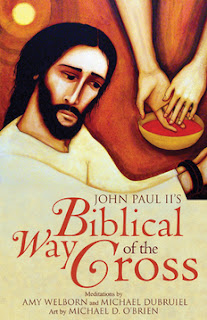
You can get John Paul II's Biblical Way of the Cross by Michael Dubruiel and Amy Welborn here.  

In 1991, Pope John Paul II introduced a new Bible-based interpretation of the Stations of the Cross. This devotional guide invites readers to prayerfully walk in solidarity with Jesus on his agonizing way of the cross—from his last torturous moments in the Garden of Gethsemane to his death and burial.

Now with full-color station images from previously unpublished paintings by Michael O'Brien, this booklet creates an ideal resource for individual or group devotional use, particularly during the Lenten season.

"michael Dubruiel"

Thursday, February 21, 2019

What is a Novena?


When Jesus ascended into heaven, he told his Apostles to stay where they were and to "wait for the gift" that the Father had promised: the Holy Spirit.  The Apostles did as the Lord commanded them. "They all joined together constantly in prayer, along with the women and Mary the mother of Jesus, and with his brothers" (Acts 1:14). Nine days passed; then, they received the gift of the Holy spirit, as had been promised. May we stay together with the church, awaiting in faith with Our Blessed Mother, as we trust entirely in God, who loves us more than we can ever know. 

"michael Dubruiel"

Wednesday, February 20, 2019

Free Lent Devotional

When we look back over our lives, we often find that every
event is intricately interwoven with another, and then another,
with bright spots of serendipity when we “just happened” to be
in the right spot at the right time at key moments. This realization
will deepen the mystery that is life; regardless how long or
short our life, our mission and purpose is God’s. If he seems slow
to respond, look to the cross of Christ, which illumines even the
lag time between the promise and the fulfillment.


Tuesday, February 19, 2019

Michael Dubruiel

Most of us think of the commandments as "something" not to do, but this is not Benedict's take. He sees them as something that requires action on our part daily. The type of action required is either to "fight" against the urges that keep us from fulfilling God's commands or to "flee" the devil as we run toward God.
Fighting or fleeing are the actions demanded of the disciple of Christ. Most of us may find that we are moved to do neither. It could be that in our complacent lifestyle that following God's commandments doesn't seem to ask much of us. We peer out of the windows of our house or car and see the world outside of our selves and are quite unmoved by the plight of those who live down the street or in another neighborhood. We somehow listen to the Gospels and confuse Jesus with someone who "didn't care" and wouldn't have lifted a finger to help anyone.
If this definition hits close to home, then you know what you must "fight" in order to fulfill God's commands daily--indifference. If on the other hand this definition makes you angry and you don't like the mean guy saying that perhaps you aren't a "good" Christian after all, then you need to flee the devil who has taken hold of your life (coming no doubt as an angel of light) and run to God who will empower you to fulfill His commands.
This counsel is against complacency. It is against thinking that we have ever arrived and now all we need to do is sit back and relax. It is a warning against the riches that can blind us to the truth of the Gospel which can neither be lost by the gnawing of a moth or the rot of rust. Works are demanded of us daily in order that God's will might be done on earth as it is in Heaven.

More by Michael Dubruiel

Friday, February 15, 2019

When is Ash Wednesday?


Here's a free book that you can use for daily devotions during Lent, which begins on March 6, 2019

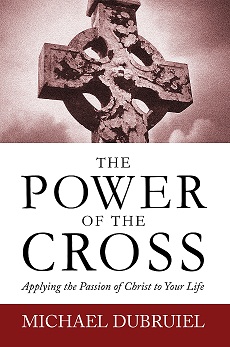
The Power of the Cross by Michael Dubruiel


Here you may download a free .pdf copy of The Power of the Cross by Michael Dubruiel.

Just click here.

You can read it on Scribd, here,

Also: Michael Dubruiel recorded a series of interviews with KVSS radio based on the book. You can find those interviews here.


Here is a link to the first episode

Thursday, February 14, 2019

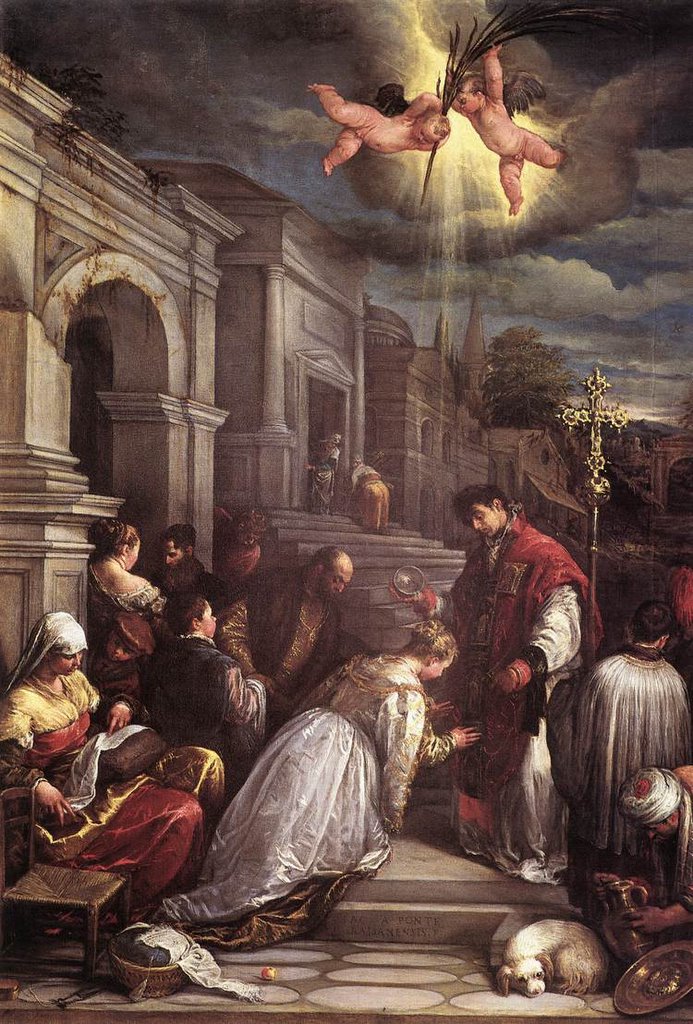
The Real St. Valentine Michael Dubruiel


From the CATHOLIC ENCYCLOPEDIA:
At least three different Saint Valentines, all of them martyrs, are mentioned in the early martyrologies under date of 14 February. One is described as a priest at Rome, another as bishop of Interamna (modern Terni), and these two seem both to have suffered in the second half of the third century and to have been buried on the Flaminian Way, but at different distances from the city. In William of Malmesbury's time what was known to the ancients as the Flaminian Gate of Rome and is now the Porta del Popolo, was called the Gate of St. Valentine. The name seems to have been taken from a small church dedicated to the saint which was in the immediate neighborhood. Of both these St. Valentines some sort of Acta are preserved but they are of relatively late date and of no historical value. Of the third Saint Valentine, who suffered in Africa with a number of companions, nothing further is known.

Michael Dubruiel's Books 

Wednesday, February 13, 2019

Parish Stations of the Cross for Lent


In 1991, Pope John Paul II introduced a new Bible-based interpretation of the Stations of the Cross. This devotional guide invites readers to prayerfully walk in solidarity with Jesus on his agonizing way of the cross—from his last torturous moments in the Garden of Gethsemane to his death and burial.

Now with full-color station images from previously unpublished paintings by Michael O'Brien, this booklet creates an ideal resource for individual or group devotional use, particularly during the Lenten season.

Monday, February 11, 2019

Our Lady of Lourdes - February 11

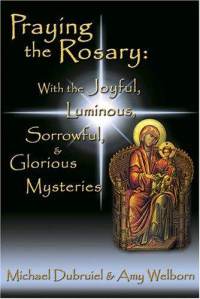
Michael Dubruiel conceived and put together the small hardbound book, Praying the Rosary.  Click on the cover for more information.

"Michael Dubruiel"


The Gospels show that the gaze of Mary varied depending upon the circumstances of life. So it will be with us. Each time we pick up the holy beads to recite the Rosary, our gaze at the mystery of Christ will differ depending on where we find ourselves at that moment.

Thereafter Mary’s gaze, ever filled with adoration and wonder, would never leave him. At times it would be a questioning look, as in the episode of the finding in the Temple: “Son, why have you treated us so?” (Lk 2:48); it would always be a penetrating gaze, one capable of deeply understanding Jesus, even to the point of perceiving his hidden feelings and anticipating his decisions, as at Cana (cf. Jn 2:5). At other times it would be a look of sorrow, especially beneath the Cross, where her vision would still be that of mother giving birth, for Mary not only shared the passion and death of her Son, she also received the new son given to her in the beloved disciple (cf. Jn 19:26-27). On the morning of Easter hers would be a gaze radiant with the joy of the Resurrection, and finally, on the day of Pentecost, a gaze afire with the outpouring of the Spirit (cf. Acts 1:14) [Rosarium Virginis Mariae, no. 10].


As we pray the Rosary, then, we join with Mary in contemplating Christ. With her, we remember Christ, we proclaim Him, we learn from Him, and, most importantly, as we raise our voices in prayer and our hearts in contemplation of the holy mysteries, this “compendium of the Gospel” itself, we are conformed to Him.


Sunday, February 10, 2019

What Road Will You Choose?

Those of us who carry the cross of Christ, who see ourselves
as pilgrims headed for that City of God, are bound to see things
very differently. We give glory to God in all things, and seek
God’s blessing upon all of our undertakings. We will not content
ourselves with some self-serving “spiritual quest” that has more
to do with love of self than love of God. We understand that
physical beauty is transitional at best. What matters most is to
become the person God created us to be; which is to be more like
Christ. So we refuse to let ourselves get caught up in some endless
cycle of trying to become someone we are not.

When Jesus told the apostles that he must suffer at the hands
of the rulers and be crucified, Peter told him that it would never
happen. Jesus said to Peter, “Get behind me Satan!” He understood
that God’s way is not our way—and yet, ultimately it is the
only way to eternal life.

The choice is yours: Which road will you choose? And who
will be your companion for the journey? Are you going to believe
those who pressure you to conform to the self-indulgent values
of the City of Man? Or will you take the higher road, bound for
the City of God?


-The Power of the Cross  by Michael Dubruiel
"michael dubruiel"

Saturday, February 9, 2019

Free Catholic Book

In standing up for justice, we must not become tyrants.
Those who lead successful revolutions against injustice often
become the next abusive regime. The cross of Christ teaches us
a path of humility and obedience to God alone, not to any ideology
but to Christ. Standing up for what is right is the duty of
every child of God, and the Son of God has shown us the way.
We strive to be like him, not to obtain some position or false
power. The cross of Christ restores our status as children of God;
like Our Lord we should ever remember that we are children of
God and trust in Him alone.


-The Power of the Cross  by Michael Dubruiel
"michael dubruiel"

Thursday, February 7, 2019

Free Catholic Book

The human race has been fighting the battle against pride
since the Fall. Discontent with the lofty position God had given
them, they wanted to be just like God—but independent of
him. This disordered desire continues to be at the heart of human
nature. Only when God’s spirit lives within us to the fullest are
we able to be most fully human. And the only way to be filled
with God’s spirit is to empty ourselves of any false sense of who
we are, or who we think we have to be. This is the way of humility,
what St. Paul calls having “the mind of Christ” (1 Corinthians
2:16).
In the gospels, Jesus warns his disciples against desiring titles
and lofty honors. If we achieve greatness in life, as Cardinal del
Val did, we must guard against becoming attached to the position
or to the glory attached to it. Cardinal del Val gave the following
spiritual advice often to those who came to him for
counsel:
Have a great devotion to the Passion of Our Lord.
With peace and resignation, put up with your daily
troubles and worries. Remember that you are not a disciple
of Christ unless you partake of His sufferings and
are associated with His Passion. The help of the grace
of silence was the only thing that enabled the saints to
carry their extremely heavy crosses. We can show our
love for Him by accepting with joy the cross He sends
our way.
The cross sheds light on the way of humility; it is the path
that Christ took and the surest path for us to receive all the blessings
that Christ wishes to bestow upon us.

-The Power of the Cross  by Michael Dubruiel


"michael dubruiel"

Wednesday, February 6, 2019

St. Paul Miki - February 6

From the Office of Readings:

Our brother, Paul Miki, saw himself standing now in the noblest pulpit he had ever filled. To his “congregation” he began by proclaiming himself a Japanese and a Jesuit. He was dying for the Gospel he preached. He gave thanks to God for this wonderful blessing and he ended his “sermon” with these words: “As I come to this supreme moment of my life, I am sure none of you would suppose I want to deceive you. And so I tell you plainly: there is no way to be saved except the Christian way. My religion teaches me to pardon my enemies and all who have offended me. I do gladly pardon the Emperor and all who have sought my death. I beg them to seek baptism and be Christians themselves”.
Then he looked at his comrades and began to encourage them in their final struggle. Joy glowed in all their faces, and in Louis’ most of all. When a Christian in the crowd cried out to him that he would soon be in heaven, his hands, his whole body strained upward with such joy that every eye was fixed on him.
Anthony, hanging at Louis’ side, looked toward heaven and called upon the holy names – “Jesus, Mary!” He began to sing a psalm: “Praise the Lord, you children!” (He learned it in catechism class in Nagasaki. They take care there to teach the children some psalms to help them learn their catechism).
Others kept repeating “Jesus, Mary!” Their faces were serene. Some of them even took to urging the people standing by to live worthy Christian lives. In these and other ways they showed their readiness to die.
Then, according to Japanese custom, the four executioners began to unsheathe their spears. At this dreadful sight, all the Christians cried out, “Jesus, Mary!” And the storm of anguished weeping then rose to batter the very skies. The executioners killed them one by one. One thrust of the spear, then a second blow. It was over in a very short time.

Michael Dubruiel 

Tuesday, February 5, 2019

RCIA Resources


Michael Dubruiel
The How-To Book of the Mass by Michael Dubruiel

 not only provides the who, what, where, when, and why of the most time-honored tradition of the Catholic Church but also the how.
In this complete guide you get:
  • step-by-step guidelines to walk you through the Mass
  • the Biblical roots of the various parts of the Mass and the very prayers themselves
  • helpful hints and insights from the Tradition of the Church
  • aids in overcoming distractions at Mass
  • ways to make every Mass a way to grow in your relationship with Jesus
If you want to learn what the Mass means to a truly Catholic life—and share this practice with others—you can’t be without The How-To Book of the Mass. Discover how to:
  • Bless yourself
  • Make the Sign of the Cross
  • Genuflect
  • Pray before Mass
  • Join in Singing the Opening Hymn
  • Be penitential
  • Listen to the Scriptures
  • Hear a Great Homily Everytime
  • Intercede for others
  • Be a Good Steward
  • Give Thanks to God
  • Give the Sign of Peace
  • Receive the Eucharist
  • Receive a Blessing
  • Evangelize Others
  • Get something Out of Every Mass You Attend
"Is this not the same movement as the Paschal meal of the risen Jesus with his disciples? Walking with them he explained the Scriptures to them; sitting with them at table 'he took bread, blessed and broke it, and gave it to them."1347, Catechism of the Catholic Church

Find more about The How to Book of the Mass here.

Sunday, February 3, 2019

Michael Dubruiel

Michael Dubruiel died ten years ago today - February 3, 2009.


"Michael Dubruiel"

Michael Dubruiel died on February 3, 2009 after suffering a heart attack while on the treadmill at the Mountain Brook, AL YMCA.


You may read about Michael's passing at his wife Amy's blog here.

More photos of Michael are here.

The last column he wrote for the diocesan newspaper, the night before he died, is here.

Saturday, February 2, 2019

Feast of the Presentation - February 2

From 2006:


Something to think about the next time you come forward to receive Holy Communion:
(Simeon) took him up in his arms and blessed God and said, "Lord, now lettest thou thy servant depart in peace, according to thy word; for mine eyes have seen thy salvation which thou hast prepared in the presence of all peoples, a light for revelation to the Gentiles, and for glory to thy people Israel.

Michael Dubruiel 

Thursday, January 31, 2019

Michael Dubruiel Interview

You can listen to an interview program with Michael Dubruiel about the first four chapters of his book, The Power of the Cross. The interview is with Kris McGregor of KVSS radio.


Episode 2 – The Cross of Christ teaches us…

– Michael discusses:

 Day 1 – Our Mission Day
2 – To Live the Gospel Day
3 – How to Pray Day
4 – About Repentance Day
5 – How to Trust and Give Thanks Day
 6 – Reconciliation Day
7 – How to Love
"michael Dubruiel"


You can find out more about The Power of the Cross here, including a free download of the book. 

Wednesday, January 30, 2019

Free Catholic Book

The human race has been fighting the battle against pride
since the Fall. Discontent with the lofty position God had given
them, they wanted to be just like God—but independent of
him. This disordered desire continues to be at the heart of human
nature. Only when God’s spirit lives within us to the fullest are
we able to be most fully human. And the only way to be filled
with God’s spirit is to empty ourselves of any false sense of who
we are, or who we think we have to be. This is the way of humility,
what St. Paul calls having “the mind of Christ” (1 Corinthians
2:16).
In the gospels, Jesus warns his disciples against desiring titles
and lofty honors. If we achieve greatness in life, as Cardinal del
Val did, we must guard against becoming attached to the position
or to the glory attached to it. Cardinal del Val gave the following
spiritual advice often to those who came to him for
counsel:
Have a great devotion to the Passion of Our Lord.
With peace and resignation, put up with your daily
troubles and worries. Remember that you are not a disciple
of Christ unless you partake of His sufferings and
are associated with His Passion. The help of the grace
of silence was the only thing that enabled the saints to
carry their extremely heavy crosses. We can show our
love for Him by accepting with joy the cross He sends
our way.
The cross sheds light on the way of humility; it is the path
that Christ took and the surest path for us to receive all the blessings
that Christ wishes to bestow upon us.

-The Power of the Cross  by Michael Dubruiel


"michael dubruiel"

Tuesday, January 29, 2019

Confirmation Gift

Michael Dubruiel conceived and put together the small hardbound book, Praying the Rosary.  Click on the cover for more information.
"Michael Dubruiel"
The Gospels show that the gaze of Mary varied depending upon the circumstances of life. So it will be with us. Each time we pick up the holy beads to recite the Rosary, our gaze at the mystery of Christ will differ depending on where we find ourselves at that moment.
Thereafter Mary’s gaze, ever filled with adoration and wonder, would never leave him. At times it would be a questioning look, as in the episode of the finding in the Temple: “Son, why have you treated us so?” (Lk 2:48); it would always be a penetrating gaze, one capable of deeply understanding Jesus, even to the point of perceiving his hidden feelings and anticipating his decisions, as at Cana (cf. Jn 2:5). At other times it would be a look of sorrow, especially beneath the Cross, where her vision would still be that of mother giving birth, for Mary not only shared the passion and death of her Son, she also received the new son given to her in the beloved disciple (cf. Jn 19:26-27). On the morning of Easter hers would be a gaze radiant with the joy of the Resurrection, and finally, on the day of Pentecost, a gaze afire with the outpouring of the Spirit (cf. Acts 1:14) [Rosarium Virginis Mariae, no. 10].

As we pray the Rosary, then, we join with Mary in contemplating Christ. With her, we remember Christ, we proclaim Him, we learn from Him, and, most importantly, as we raise our voices in prayer and our hearts in contemplation of the holy mysteries, this “compendium of the Gospel” itself, we are conformed to Him.

Monday, January 28, 2019

Thomas Aquinas - January 28

From 2003, by Michael Dubruiel

Aquinas Thought of Everything


Below is a quote from Summa Contra Gentiles. I've been familar with the notion that St. Thomas said we'd all be 33 in Heaven regardless of when we died (before or after that age), but no one every seemed to know where he'd said it. Well here it is, along with an interesting discussion on the other qualities of the glorified body:


From Jacques Maritain Center: GC 4.88:


"STILL we must not suppose, what some have thought, that female sex has no place in the bodies of the risen Saints. For since resurrection means the reparation of the defects of nature, nothing of what makes for the perfection of nature will be withdrawn from the bodies of the risen. Now among other organs that belong to the integrity of the human body are those which minister to generation as well in male as in female. These organs therefore will rise again in both. Nor is this conclusion impaired by the fact that there will be no longer any use of these organs (Chap. LXXXIII). If that were any ground for their absence from the risen body, all the organs bearing on digestion and nutrition should be absent, for there will not be any use for them either: thus great part of the organs proper to man would be wanting in the risen body. We conclude that all such organs will be there, even organs of which the function has ceased: these will not be there without a purpose, since they will serve to make up the restored integrity of the natural body.*


Neither is the weakness of the female sex inconsistent with the perfection of the resurrection. Such weakness is no departure from nature, but is intended by nature.* This natural differentiation will argue the thoroughgoing perfection of nature, and commend the divine wisdom that arranges creation in diversity of ranks and orders. Nor is there anything to the contrary in the expression of the Apostle: Till we all meet and attain to the unity of faith and recognition of the Son of God, even to a perfect man, to the measure of the full stature of Christ (Eph. iv, 13). This does not mean that in that meeting in which the risen shall go forth to meet Christ in the air* every one shall be of the male sex, but it indicates the perfection and strength of the Church, for the whole Church shalt be like a perfect, full-grown man, going out to meet Christ.*


Again, all must rise at the age of Christ,* which is the age of perfect manhood, for the sake of the perfection of nature, which is at its best in this age above others.

Sunday, January 27, 2019

What is a Novena?


When Jesus ascended into heaven, he told his Apostles to stay where they were and to "wait for the gift" that the Father had promised: the Holy Spirit.  The Apostles did as the Lord commanded them. "They all joined together constantly in prayer, along with the women and Mary the mother of Jesus, and with his brothers" (Acts 1:14). Nine days passed; then, they received the gift of the Holy spirit, as had been promised. May we stay together with the church, awaiting in faith with Our Blessed Mother, as we trust entirely in God, who loves us more than we can ever know. 

"michael Dubruiel"
Divine Mercy Novena

Saturday, January 26, 2019

Lent Stations of the Cross

Lent begins on March 6. It's time to order parish and school resources.


In 1991, Pope John Paul II introduced a new Bible-based interpretation of the Stations of the Cross. This devotional guide invites readers to prayerfully walk in solidarity with Jesus on his agonizing way of the cross—from his last torturous moments in the Garden of Gethsemane to his death and burial.

Now with full-color station images from previously unpublished paintings by Michael O'Brien, this booklet creates an ideal resource for individual or group devotional use, particularly during the Lenten season.