Thursday, August 24, 2023

Michael Dubruiel's Books

    From Michael Dubruiel, originally published in 2003. 

Michael Dubruiel


 Today, both readings taken from the Church's Liturgy of the Hours for today's Office of Readings have selections that deal with clothing. First from the Book of Revelation:


“And to the angel of the church in Sardis write: ’The words of him who has the seven spirits of God and the seven stars. “’I know your works; you have the name of being alive, and you are dead. Awake, and strengthen what remains and is on the point of death, for I have not found your works perfect in the sight of my God. Remember then what you received and heard; keep that, and repent. If you will not awake, I will come like a thief, and you will not know at what hour I will come upon you. Yet you have still a few names in Sardis, people who have not soiled their garments; and they shall walk with me in white, for they are worthy. He who conquers shall be clad thus in white garments. I will not blot his name out of the book of life; I will confess his name before my Father and before his angels. He who has an ear, let him hear what the Spirit says to the churches.’

There are two aspects about this reading that I find striking; the first is that "you have the name of being alive, and you are dead", and the second, "Yet you still have a few names in Sardis, people who have not soiled their garments."

What bothers me about the present crisis is something that I have already been through myself, a revelation of what the church is like from the inside. It has taken me years to recover from this and I fear that when others encounter the elements of the structures of the church that are corrupt they too will suffer a crisis of faith. So this reading seems very relevant to the present crisis. Here we find Our Lord addressing the Church and telling this particular church that they are a "fraud". They have the name of being alive (sharing in his resurrection) but they are dead, i.e. they do not act as though they believe in the resurrection for their actions bespeak more of an Epicurean philosophy of "eat, drink and be merry for tomorrow we die."

There have always been elements within the church that are dead. Some of them have died the slow death by being caught up in their position of authority (forgetting that it is from the Lord), others caught up in the adulation of the moment and wishing to remain there forget that the Lord's Palm Sunday is only a stop on the journey to Calvary. Whatever the reasons, it is a fact that good people can lose sight of God and it is also a fact that bad people have often found refuge in the Church and benefited from the good will of believers. It is not for us to figure out who is the wheat or tares, which are the sheep and which the goats.

Eucharistic Revival


Michael Dubruiel


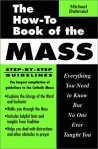
The How-To Book of the Mass by Michael Dubruiel  is the only book that not only provides the who, what, where, when, and why of themost time-honored tradition of the Catholic Church but also the how.
In this complete guide you get:
  • step-by-step guidelines to walk you through the Mass
  • the Biblical roots of the various parts of the Mass and the very prayers themselves
  • helpful hints and insights from the Tradition of the Church
  • aids in overcoming distractions at Mass
  • ways to make every Mass a way to grow in your relationship with Jesus
If you want to learn what the Mass means to a truly Catholic life—and share this practice with others—you can’t be without The How-To Book of the Mass. Discover how to:
  • Bless yourself
  • Make the Sign of the Cross
  • Genuflect
  • Pray before Mass
  • Join in Singing the Opening Hymn
  • Be penitential
  • Listen to the Scriptures
  • Hear a Great Homily Everytime
  • Intercede for others
  • Be a Good Steward
  • Give Thanks to God
  • Give the Sign of Peace
  • Receive the Eucharist
  • Receive a Blessing
  • Evangelize Others
  • Get something Out of Every Mass You Attend
"Is this not the same movement as the Paschal meal of the risen Jesus with his disciples? Walking with them he explained the Scriptures to them; sitting with them at table 'he took bread, blessed and broke it, and gave it to them."1347, Catechism of the Catholic Church

Find more about The How to Book of the Mass here.

Wednesday, August 23, 2023

Michael Dubruiel: 73 Steps to Spiritual Communion with God - 33a

  This is a continuation of the 73 Steps to Spiritual Communion with God by Michael Dubruiel. The previous posts are below and in the archives to the right. This is the 33th step part 1:


(33) To bear persecution for justice sake (cf Mt 5:10).


St. Benedict references one of the Beatitudes for this counsel, "Blessed are those who are persecuted for righteousness' sake, for theirs is the kingdom of heaven," (Matthew 5:10). If we are just and right in what people choose to persecute us for, then we should bear it patiently.


Many people suffer persecution for doing what is right and unfortunately often at the hands of religious people. Our Lord told his disciples that, "indeed, the hour is coming when whoever kills you will think he is offering service to God," (John 16:2). One have only to open the papers and to read of crimes against human beings committed by people of every religious belief out of conviction that they are doing the will of God.


Jesus promised his followers, " Remember the word that I said to you, `A servant is not greater than his master.' If they persecuted me, they will persecute you," (John 15:20). Therefore, again in imitation of Our Lord we should bear persecution when we are not at fault with patience.


One of the greatest examples of this patient endurance of persecution in our own day is the nonviolent civil rights movement of the late 1950's and 1960's. There are memorials and historical markers where horrible persecutions took place in various cities through the south. The test of time has proved the righteousness of the cause, but those who stood up suffered horribly at the time. They took their example from the Scriptures.


Michael Dubruiel

Monday, August 21, 2023

Queenship of Mary - August 22

   vvToday is another Marian feast - the Queenship of Mary.  It's also one of the mysteries of the Rosary, and so it's appropriate to talk about the Rosary as we contemplate the feast. Michael Dubruiel conceived and put together the small hardbound book, Praying the Rosary.  Click on the cover for more information.


Sunday, August 20, 2023

Michael Dubruiel: 73 Steps to Spiritual Communion with God - 32b


 This is a continuation of the 73 Steps to Spiritual Communion with God by Michael Dubruiel./The previous posts are below and in the archives to the right. This is the 32th step part 2:


(32) Not to curse them that curse us, but rather to bless them.


"Perhaps the LORD is telling him to curse me." An interesting thought, and again one that can only lead to a deeper relationship with God. To at least admit to seeing God's hand in all things.


Most of the curses that I receive are from those who don't like the way I drive (and they are usually right to offer a gesture of displeasure) or those who don't like what I write (again they are often right--things are seldom one way or another but grayer). May I bless them all.


A blessing is only possible when we see ourselves as blessed by God, then we share the abundance of what God has given us with those who wish us evil. We acknowledge God as the final judge and we are selves are not to quick to judge (as David wasn't in the above). Interestingly, when David is restored to the throne in Israel, Shimei (the cursing stone thrower) is brought before the king and does have his head lopped off.


Joseph Dubruiel

August 20 - St. Bernard

    Happy feast day to my son Joseph, as he would say Bee-nard


From Asia News Italy:

The effectiveness of St Bernard, said the pontiff, lay in his ability to “put forward truths of the faith in a manner so clear and incisive that it fascinated the listener and prompted the soul to meditation and prayer.” But this was the fruit of a personal experience of “divine charity, revealed fully in the crucified and risen Christ”. The pope continued: “The echo of a rich inner experience, that he managed to communicate to others with amazing persuasive ability, is found in each of his writings. For him, the greatest strength of spiritual life is love.”

Benedict XVI also recalled a text that the saint dedicated to Pope Eugene III, his pupil and spiritual son, the De Consideratione, based on the fundamental theme of “inner meditation”. “One must guard oneself, observed the saint, from the dangers of excessive activity, whatever the condition and office covered, because many occupations often lead to ‘hardness of heart’, ‘they are nothing other than suffering of the spirit, loss of intelligence, dispersion of grace’ (II,3).” It is likely that Benedict XVI was making this emphasis with himself in mind, being so taken up by countless commitments of his work. He said: “This caution applies to all kinds of occupations, even those inherent to the government of the Church.” And he cited Bernard’s “provocative” words to Eugene III: “This is where your damned occupations can drag you, if you continue to lose yourself in them... leaving nothing of you to yourself.”

To reaffirm the primacy of prayer and contemplation, the pope suggested praying to St Bernard himself and to the Virgin Mary. “We entrust,” added Benedict XVI, “this desire to the intercession of Our Lady, who he loved from childhood with a tender and filial devotion to the extent of deserving the title of “Marian Doctor”. We invoke her so that she may obtain the gift of true and lasting peace for the whole world. St Bernard, in a celebrated discourse of his, compared Mary to a star that navigators gaze upon to avoid losing their way:

‘Wading through the events of this world, rather than walking on land, you have the impression of being tossed about among billows and storms; do not turn your eyes away from the splendour of this star if you do not want to be swallowed by the waves... Look at the star, invoke Mary… Following Her, you will not lose your way… If She protects you, you have no fear, if She guides you, you will not get tired and if She is propitious towards you, you will reach your goal’ (Hom. super Missus est, II, 17)”.


-Michael Dubruiel 

Friday, August 18, 2023

Michael Dubruiel: 73 Steps to Spiritual Communion with God - 32a

    This is a continuation of the 73 Steps to Spiritual Communion with God by Michael Dubruiel./The previous posts are below and in the archives to the right. This is the 32th step, part 1:


(32) Not to curse them that curse us, but rather to bless them.


There is an image that comes to mind when I read this counsel. It is the image of a bishop (no one in particular) walking up the aisle in procession at the beginning of Mass or at the conclusion of Mass, turning from side to side and blessing all those in attendance. What he is doing at that moment (no doubt every bishop has more than their share of people who are cursing them), is what we are all to do--at every moment of everyday.


I'm not real good at this, as anyone who knows me well will tell you, I'm more apt to criticize those who curse me, not bless them. So I certainly need God's help in this regard.


One might wonder what benefit blessing those who curse us could possibly have. Here is a hint from Scripture. In the Second Book of Samuel, when David had been overthrown by his son Absalom and is fleeing the city of Jerusalem, a man comes out and curses him. Shimei, throwing stones and "saying as he cursed: 'Away, away, you murderous and wicked man! (2 Sam. 16:7). In response to this outrage one of David's guards says to the king, "Why should this dead dog curse my lord the king? Let me go over, please, and lop of his head," (2 Sam. 16:9)


David's response to this is interesting and not at all what one would expect (if you are an avid reader of the Old Testament that is). Here is David's response, "Suppose the LORD has told him to curse David; who then dare to say 'Why are you doing this?' (2 Sam. 16:10). So they went on and Shimei "kept abreast of them on the hillside, all the while cursing and throwing stones and dirt as he went," (2 Sam.16:13).

Michael Dubruiel