Tuesday, January 24, 2023

The Conversion of Paul - January 25

    The Cross of Christ Illumines. . . Blindness “ by Michael Dubruiel


As I made my journey and drew near to Damascus, about noon a great light from heaven suddenly shone about me. And I fell to the ground and heard a voice saying to me, ‘Saul, Saul, why do you persecute me?’ And I answered ‘Who are you, Lord?’ And he said to me, ‘I am Jesus of Nazareth whom you are persecuting.” Now those who were with me saw the light but did not hear the voice of the one who was speaking to me. And I said, ‘What shall I do, Lord?’ And the Lord said to me, ‘Rise, and go to Damascus, and you will be told all that is appointed for you to do.’ And when I could not see because of the brightness of that light, I was led by the hand by those who were with me, and came into Damascus.” ACTS 22:6–11 


Jesus said, “For Judgment I came into this world, that those who do not see may see, and that those who see may become blind.” Some of the Pharisees near him heard this, and they said to him, “Are we also blind?” Jesus said to them, “If you were blind, you would have no guilt; but now that you say, ‘We see,’ your guilt remains.” JOHN 9:39–41 


The most unique Holy Saturday I ever experienced occurred when my wife and I decided to go to a monastery for Holy Week . Saturday was a rainy day and we decided to go to a nearby spot that was advertised up and down the interstate as the place to visit when you were passing through this part of the country— it was a cave. What better spot to spend Holy Saturday, I reasoned, than under the earth? After all, Jesus’ body had lain in a tomb on that first Holy Saturday.

 So we drove a few miles away from the monastery and joined a group of other travelers in an out-of-the-way location to descend into the earth and explore one of nature’s wonders. What I remember most about the tour of the cave had little to do with the stalactites or the stalagmites but something else that we experienced once we had gone deep into the cave. The tour guide asked us, “How many of you think you have experienced total darkness?” A few people raised their hands. He then told us that he was going to turn off the artificial lighting that illuminated the cave so that we could experience what the first people who had discovered this cave experienced when their light went out. There was nothing but total, pitch darkness. I held my hand in front of my face but could see absolutely nothing. I knew that it was there because I could sense it but I could see absolutely nothing, no shadow, no outline—just a horrible darkness. It was the closest that I have ever come to having some understanding of what it must be like to be totally blind.

 In Pilgrim at Tinker Creek, in a chapter entitled “Seeing,” Annie Dillard wrote about people born blind whose sight was restored by a medical procedure. The reaction of those thus healed wasn’t what one might expect. Some wanted to go back to the darkness—they found the light too much. Others enjoyed the gift of vision, but to those who had been in darkness since birth it seemed to them that everything was made of light. Blinded by the Light In John’s Gospel, Jesus divides the world into two camps: those who encounter his light and have their sight restored, and those who encounter that light and are blinded. Jesus told Nicodemus, “And this is the judgment, that the light has come into the world, and men loved darkness rather than light, because their deeds were evil” (John 3:19).

In John’s Gospel, Jesus heals a blind man, who has not only his physical sight restored but also comes to see that Jesus is worthy of worship. The Pharisees who question the blind man refuse to believe, no matter how much evidence is brought forward to prove that Jesus had healed him. Another Pharisee, Saul of Tarsus, later persecuted the followers of Jesus. While setting out on one such mission, Saul was struck by a light from heaven, and heard the voice of Jesus, the suffering Christ. Saul was blinded on his way to Damascus, where a follower of Jesus healed him. Saul became St. Paul, one of the greatest followers of Christ. The preaching of Paul would focus on the crucified Christ, leading many artists to portray the scene of Paul’s conversion as an encounter with a cross of light.

None of the Pharisees, including Saul, thought that persecuting the followers of Christ was evil; in fact, they thought they were doing the will of God. We all risk falling into the same trap. How well do you and I truly see? Do we see everything made of light? Or do we only partially see reality as it is?

A World Made of Light 

There have been times in my life when I have called upon God to save or help me, and God has answered in dramatic ways. At
 first I gave thanks for God’s intervention in my life. But with time my inner Pharisee began to question the events: Was God really responsible? There are those who believe that we live in an age when miracles have ceased, but I know better. Miracles abound—we just don’t always recognize them. Those cured of physical blindness perceive the world to be made of light; the same is true of those cured of spiritual blindness. What seemed dark and hopeless suddenly becomes a path to glory. The psalmist reflects this spiritual vision when he prays in perhaps the best-known psalm, “Even though I walk through the valley of the shadow of death, I fear no evil; for thou art with me” (Psalm 23:4). Today there are eye surgeries that allow people to see clearly without corrective lenses. We need the “surgery of the cross” to restore our vision, allowing us to see the world as God sees it. The person filled with the Light perceives light, even in apparent total darkness. As we read in the Gospel of Matthew: “The eye is the lamp of the body. So, if your eye is sound, your whole body will be full of light; but if your eye is not sound, your whole body will be full of darkness. If then the light in you is darkness, how great is the darkness!” (Matthew 6:22–23). Lord Jesus, touch our eyes that we might see!


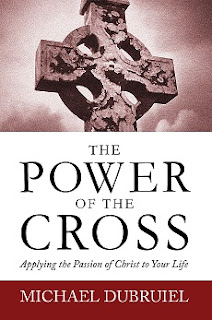
The Power of the Cross is a book well-suited to daily reading during Lent. The book is available here in pdf version. Daily excerpts will be reprinted in this space during Lent.

"michael Dubruiel"


Monday, January 23, 2023

January 24 - Francis de Sales

    Today is the feast of St. Francis de Sales the Patron Saint of Writers


To read more about him, check out the CATHOLIC ENCYCLOPEDIA: St. Francis de Sales


There are two elements in the spiritual life: first, a struggle against our lower nature; secondly, union of our wills with God, in other words, penance and love. St. Francis de Sales looks chiefly to love. Not that he neglects penance, which is absolutely necessary, but he wishes it to be practised from a motive of love. He requires mortification of the senses, but he relies first on mortification of the mind, the will, and the heart. This interior mortification he requires to be unceasing and always accompanied by love. The end to be realized is a life of loving, simple, generous, and constant fidelity to the will of God, which is nothing else than our present duty. The model proposed is Christ, whom we must ever keep before our eyes. "You will study His countenance, and perform your actions as He did" (Introd., 2nd part, ch. i). The practical means of arriving at this perfection are: remembrance of the presence of God, filial prayer, a right intention in all our actions, and frequent recourse to God by pious and confiding ejaculations and interior aspirations.

More by Michael Dubruiel

Sunday, January 22, 2023

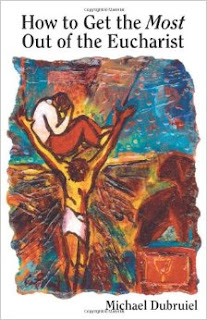
Michael Dubruiel: How to Get the Most out of the Eucharist, part 5a


From How to Get the Most Out of the Eucharist by Michael Dubruiel


Michael Dubruiel


Chapter 1 - Serve, Part 1


“You shall worship the Lord your God and him only shall you serve.”

M ATTHEW 4:10

In my home parish, St. John the Baptist in Fort Wayne, Indiana, the words Parate Viam Domini are inscribed over the front doors. The two years of Latin that I had in college and my knowledge of Scripture are enough for me to figure out that the message greeting me each Sunday are the words of St. John the Baptist in the desert, “Prepare the way of the Lord.” It is an excellent message to set the tone for the mystery that is about to be celebrated.


PREPARATION


I remember how differently I approached the Mass when as a young man I began to serve at the Eucharist as an altar boy. Before I could serve for the first time, I had to attend training sessions so that I knew what gestures and movements I was to make, and had to study the Latin responses so that I could answer the prayers of the priest at the appropriate time.Sometimes school was sacrificed so that I could serve a funeral mass,or a Saturday afternoon so that the priest could be attended to as he witnessed the marriage vows of a couple celebrating the Sacrament of Matrimony.


The thought and preparation that went into serving at the Eucharist required a sacrifice on my part but kept me focused on why I was there. Adults who serve as lectors, ushers, extraordinary ministers of the Eucharist,and choir members often mention feeling similar sentiments when they first take on these acts of service. Yet with time we are all apt to find ourselves going through the motions without much preparation and indeed without much thought about the fact that we are serving God in our respective roles at the Eucharist, and this inattentiveness is to our detriment. Making preparations is the work of a servant, and in the celebration of the Eucharist it is the work of every disciple of Christ.


Saturday, January 21, 2023

Michael Dubruiel: How to Get the Most out of the Eucharist, part 4b


From How to Get the Most Out of the Eucharist by Michael Dubruiel


Michael Dubruiel


Jesus told a parable about what happens when a storm comes that lashes out against our very lives (see Matthew 7:24–27). He said that the wise person builds his house (his life) on solid ground,on rock (the image that he used to speak about his church and Peter). The foolish person builds on sand and is destroyed by the storms of life.

The work of building the foundation on which our lives depend takes place every time we participate in the Eucharist. While I was putting the finishing touches on this book I traveled to Florida, right after Hurricane Frances had made a direct hit near Stuart, Florida. I had been scheduled to give a talk in nearby Palm Beach Gardens two days after the storm had hit.The talk was canceled because the church, St. Patrick’s, was without power, but I had the opportunity to meet with the pastor of the parish, Father Brian Flanagan, and some of the parish staff. In the midst of much devastation what remains vivid in my mind is how peaceful everyone there was. I know Father Brian to be a man whose deep faith is rooted in the Eucharist, and what I experienced in those days immediately following Hurricane Frances was a literal exposition of Jesus’s parable — the storm had come,but because the lives of the people I met were built on solid rock, they were not destroyed.

Isn’t this what we all want, a joy that the world cannot take away, no matter what might happen? Our Lord offers it to us at every Eucharist. It is my hope that this small book will help you to better experience this joy, and to discover the richness the Lord’s Eucharistic presence can add to your life.


Friday, January 20, 2023

Michael Dubruiel: How to Get the Most out of the Eucharist, part 4a


From How to Get the Most Out of the Eucharist by Michael Dubruiel


Michael Dubruiel


I was giving a talk at a Catholic parish in rural Ohio a few years ago about the topic of this book.When I had concluded my presentation someone asked,“Why do people care so little about their faith today?”
I told them of a man, a non-Catholic, I had known who cared little about his faith but attended Mass every week with his Catholic wife because he wanted to make her happy. He did this for years, to the point that several priests tried to convince him that he should convert to the Catholic faith since he had been attending the Eucharist for so many years. He refused.
Then he was diagnosed with bone cancer. His condition deteriorated rapidly. In a few months he went from being robust and strong to bedridden and totally dependent upon others.He called for a priest, who heard his first confession and then offered the Eucharist at his bedside, where he received his First Holy Communion. In the last months of his life, his Catholic faith was all that mattered to him.
This led a woman in the group to recall an incident when a tornado had wiped out her family’s farm and the family had sat huddled together in the storm cellar, praying the Rosary. At that moment their faith had mattered more than anything else in the world to them.
Someone else mentioned that in the weeks following the 9/11 terrorist attacks on this country he had noticed more people in the Church and more fervency in the way people seemed to pray.
Our faith is a matter of life and death and our faith is totally centered on Jesus Christ.The Scriptures reveal that Jesus did not leave us as orphans but founded a Church. He made the very human apostle Peter the first leader of this Church. He left a memorial of his saving death in the Eucharist and commanded his disciples to perform it.


Getting the most out of the Eucharist is an urgent task, then, because our very life depends upon Christ, and Jesus comes to us in the celebration of his passion, death, and resurrection at every Eucharist. Jesus said that he is the vine and that we are the branches. In the Eucharist we receive the very life that connects us to Christ the Vine.


Thursday, January 19, 2023

Michael Dubruiel: How to Get the Most out of the Eucharist, part 3


From How to Get the Most Out of the Eucharist by Michael Dubruiel


Michael Dubruiel

A Note of Caution


Now, I want to be clear that what I am proposing in this book is not the “victim-ism” that was sometimes prevalent in the older spirituality of “offering it up.” In every situation we are free to choose how we will respond to an event: we can blame someone else for what is happening, or we can feel powerless and do 

nothing. It is my contention that neither of these responses is Christlike. The experience of “offering up” our lives to God needs to be a positive and co-redemptive act. Thankfully, with God’s help we are all capable of freely choosing to respond in this fashion.

Those who promoted the spirituality of “offering it up” in a previous age often quoted St.Paul’s words to the Colossians:“Now I rejoice in my sufferings for your sake, and in my flesh I complete what is lacking in Christ’s afflictions for the sake of his body, that is, the church” (Colossians 1:24). In offering our sacrifice at the Eucharist, in the same way that we offer up any suffering we endure in life, we take whatever is negative and turn it into a positive, life-giving force both in our own lives and in the lives of those around us. We make up for what is “lacking” for the sake of  “his body,”the Church — that is,ourselves in communion with all Christians with all of our imperfections and all of our failings. “The miracle of the church assembly lies in that it is not the ‘sum’ of the sinful and unworthy people who comprise it, but the body of Christ,” Father Alexander Schmemann remarked.This is the power of the cross of Jesus Christ,taking what appears to be weakness and allowing God to transform it into strength!

Wednesday, January 18, 2023

Michael Dubruiel: How to Get the Most out of the Eucharist, part 2


From How to Get the Most Out of the Eucharist by Michael Dubruiel


Michael Dubruiel


THE EUCHARIST AS A SACRIFICE


The solution to this modern dilemma is simple — put Jesus back at the center of the Eucharist and you immediately change all of this. In his encyclical Pope John Paul II says, “In giving his sacrifice to the Church, Christ has also made his own the spiritual sacrifice of the Church, which is called to offer herself in union with the sacrifice of Christ.This is the teaching of the Second Vatican Council concerning all the faithful: ‘Taking part in the Eucharistic Sacrifice,which is the source and summit of the whole Christian life,they offer the divine victim to God,and offer themselves along with it.’ 

As we participate in the Eucharist, not only do we participate in Christ’s sacrifice on Calvary but we are called to share in that sacrifice.Just knowing this should change how we view everything that irks us at Mass. Are you:

    Suffering mental anguish — like a crown of thorns is upon your head?
    Weighed down by worldly concerns — like the weight of the cross is on you?
    Feeling powerless — like you are nailed to a cross?

If we take away a sacrificial attitude toward the Eucharist, we are likely to fail to see the connection between our lives and what we do at Mass.We are apt to sit in judgment, waiting to be entertained (whether we are conservative or liberal, what we want to see differs but the attitude is the same). When we fail to bring a sacrificial attitude to the Eucharist, our participation seems at times to be modeled more after Herod’s banquet, where Simone’s dance cost the Baptist his head, than after the Last Supper of Our Lord, where there was every indication that partaking in this banquet was likely to cost the disciples their own lives. (Indeed, ten of the twelve were martyred,Judas took his own life,and John survived being boiled alive in a cauldron of oil.)

When was the last time that you celebrated the Eucharist with the thought that you were being asked to “offer yourself” — to give your very life? Chances are, You haven’t thought of it,but you may have experienced it …
    By thinking “I could be doing something else.”
    By asking “Why am I here?”
Yet you weren’t doing anything else and you were there — what was missing was the free offering of “your sacrifice,” the choice to offer your suffering along with that of the Passion of Our Lord.

Participation in the Eucharist requires that we die to ourselves and live in Christ. If we want to get the most out of the Eucharist, then sacrifice is the key. This is what has been lost on many of us, and if we want to reclaim all the spiritual riches that are available to us we must relearn what it means not only to “offer it up” but indeed to offer ourselves up.