Wednesday, May 26, 2021

Jesus of Nazareth by Pope Benedict XVI - Part 2

  by Michael Dubruiel...from 2007


The pope's methodology is to take a scene from the Bible, like the Lord's baptism and then to draw on that scene from the entire Bible, to show what modern scholarship has done to help us to understand the historical context of the scene, tell us how the early Church fathers interpreted the scene, how would it have been viewed in Judaism (he uses the reflections of a Rabbi when discussing the Sermon on the Mount) and then to give the reader the meaning of this event for them. Along the way he answers questions to the many objections modern people bring to their encounter with Jesus.
As someone who has studied theology for a number of years and been exposed to every screwball theology out there, I found this book to be a corrective lens to refocus and correct my vision of who Jesus is and what following him means. What impresses me (and I'm not easily impressed) is that the Pope takes on the "screwball (my term, not his)" theologies in such a way as to making them seem silly (although he is incredibly charitable in his approach).
This book will have a great effect on renewing the Church and centering it on an image of Christ that is Biblical and credible, erasing years of poor and faulty preaching and teaching.
If you are not Catholic, but a Christian you will love this book too. In fact I predict you will be come a big fan of Joseph Ratzinger and will want to read his many published works to encounter someone rooted in Scripture and conversant with modern attacks on it. If you are a non Christian I think you will find in the book an excellent introduction to what Christians believe about the God-man from Nazareth. To all you parents out there who sent your kids to Catholic schools and now wish they would practice their faith, give them this book and reintroduce them to Jesus of Nazareth.

Tuesday, May 25, 2021

Jesus of Nazareth by Pope Benedict XVI - Part 1

  by Michael Dubruiel...from 2007


I think with the release of this book (which I got yesterday and read straight through) the pope is positioning himself to be the St. Thomas Aquinas of our age. How or why do I say this? Because like St. Thomas who answered the objections to the Faith in his day, this pope is doing the same.
A few months ago someone asked me what book I would recommend that they give to their adult children who no longer practiced the faith, without hesitation I named this book as the one. At the time I had only read some excerpts available online from Germany and Italy. It was an act of faith then, now that I have the book I know that my recommendation was justified.
This is a great book, magisterial (even though the pope doesn't want it thought of in that way). It is not just another book about Jesus, it a revolutionary book about Jesus...in that it recaptures why people have had their lives changed by their belief in Jesus for over 2,000 years.
What makes this book so special? It is like a modern Summa (those who know St. Thomas Aquinas will understand me here) in that it answers modern questions of doubt, skepticism and even inquiry on not only who Jesus is, but why Jesus is the most important person anyone has ever or can ever know.

Monday, May 24, 2021

Octave of Pentecost


The letter to the Hebrews draws a strong connection
between the cross and prayer. Because every moment of our
earthly existence is threatened by death, and we know neither the
day nor the hour when that existence will come to an end, we,
too, need to cry out to the God who can save us. Like Moses, we
need the help of our fellow Christians to hold up our arms when
they grow tired. We, too, need the help of the Holy Spirit to
make up for what is lacking in our prayer. 


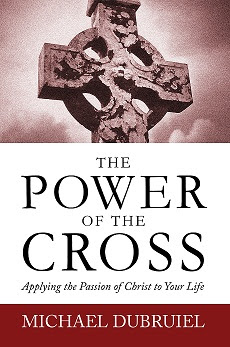
-The Power of the Cross 


'


Sunday, May 23, 2021

Jesus Prayer

   -by Michael Dubruiel


Since the time of early Christianity, there have been forms
of prayer that use breathing as a cadence for prayer. The Jesus
Prayer and the Rosary, along with various forms of contemplative
prayer, are all variations of this type of prayer. The real prayer
behind all of these methods is the prayer of surrender: “Into
your hands I commend my spirit.” This was the prayer that Jesus
prayed to the Father from the cross.

Though confession alone does not remove the temporal penalty
of sin, healing still is possible by God’s grace. Prayer, reading the
Scripture, giving alms, doing good works all are acts that have
had indulgences attached to them by the Church. By obtaining
an indulgence, the Christian receives healing from the temporal
penalty of even the gravest sins, reducing or eliminating altogether
the time of purification needed in purgatory (CCC 1471).

Ideally, the Christian is motivated to perform these spiritual
exercises not from fear of punishment but out of love for God.
As we read in the preceding passage, St. Paul tells the Ephesians
to offer themselves as a spiritual sacrifice with Christ, who has
paid the debt of our sins. Seeing Christ on the cross and meditating
on his love for us should help us to understand how much
God loves


-The Power of the Cross  by Michael Dubruiel
"michael dubruiel"

Saturday, May 22, 2021

Pentecost - a Glorious Mystery

  Michael Dubruiel conceived and put together the small hardbound book, Praying the Rosary.  Click on the cover for more information.


"Michael Dubruiel"


The Gospels show that the gaze of Mary varied depending upon the circumstances of life. So it will be with us. Each time we pick up the holy beads to recite the Rosary, our gaze at the mystery of Christ will differ depending on where we find ourselves at that moment.

Thereafter Mary’s gaze, ever filled with adoration and wonder, would never leave him. At times it would be a questioning look, as in the episode of the finding in the Temple: “Son, why have you treated us so?” (Lk 2:48); it would always be a penetrating gaze, one capable of deeply understanding Jesus, even to the point of perceiving his hidden feelings and anticipating his decisions, as at Cana (cf. Jn 2:5). At other times it would be a look of sorrow, especially beneath the Cross, where her vision would still be that of mother giving birth, for Mary not only shared the passion and death of her Son, she also received the new son given to her in the beloved disciple (cf. Jn 19:26-27). On the morning of Easter hers would be a gaze radiant with the joy of the Resurrection, and finally, on the day of Pentecost, a gaze afire with the outpouring of the Spirit (cf. Acts 1:14) [Rosarium Virginis Mariae, no. 10].


As we pray the Rosary, then, we join with Mary in contemplating Christ. With her, we remember Christ, we proclaim Him, we learn from Him, and, most importantly, as we raise our voices in prayer and our hearts in contemplation of the holy mysteries, this “compendium of the Gospel” itself, we are conformed to Him.


Friday, May 21, 2021

St. Rita of Cascia - May 22


From The Church's Most Powerful Novenas by Michael Dubruiel:


Rita Lotti was born near Cascia in Italy in the fourteenth century, the only child of her parents, Antonio and Amata. Her parents were official peacemakers in a turbulent environment of feuding families.
At an early age Rita felt called to religious life; however, her parents arranged for her to be married to Paolo Mancini. Rita accepted this as God’s will for her, and the newlyweds were soon blessed with two sons.
One day while on his way home, Paolo was killed. Rita’s grief was compounded with the fear that her two sons would seek to avenge their father’s death, as was the custom of the time. She began praying and fasting that God would not allow this to happen. Both sons soon fell ill and died, which Rita saw as an answer to her prayers.
Now alone in the world, Rita sought to enter religious life, feeling that God had cleared the path for her to fulfill the vocation that she had felt was hers from childhood. Yet she found that the convent she so desired to enter was reluctant to accept her due to fears that the political rivals that had killed her husband would bring violence on them.
She finally brought peace between the rivals and was able to enter the Convent of St. Mary Magdalene of the Augustinian Nuns. In religious life, Rita was noted for her holiness. She spent her days not only in prayer and contemplation but also in service to the sick and the poor.
One day while kneeling in prayer and contemplating the passion of Jesus, she received the wound of one thorn from the crown of thorns that she bore until her death some fifteen years later.
Devotion to St. Rita was almost nonexistent for five hundred years, but with her canonization in 1900, all of that has changed. She is truly a saint for every state in life, having spent her life as a married woman, a mother, a widow, and a religious.

Thursday, May 20, 2021

Graduation Gift for Catholics

   You can purchase Michael Dubruiel's books here - 


Books like The How to Book of the Mass and How to Get the Most Out of the Eucharist. 

How to Get the Most Out of the Eucharist gives you nine concrete steps to help you join your own sacrifice to the sacrifice of Christ as you:

Serve: Obey the command that Jesus gave to his disciples at the first Eucharist.
Adore: Put aside anything that seems to rival God in importance.
Confess: Believe in God’s power to make up for your weaknesses.
Respond" Answer in gesture, word, and song in unity with the Body of Christ.
Incline: Listen with your whole being to the Word of God.
Fast: Bring your appetites and desires to the Eucharist.
Invite: Open yourself to an encounter with Jesus.
Commune: Accept the gift of Christ in the Eucharist.
Evangelize :Take him and share the Lord with others.

Michael Dubruiel