Thursday, June 27, 2019

Fulton Sheen's Body Moved

Fulton Sheen's body was moved from New York to Peoria.


Bishop Sheen’s “Now-moment” corresponds to the thinking of the great spiritual writer Jean Pierre de Caussade. In Abandonment to Divine Providence, Fr. Caussade gives the reader a sure way of knowing the will of God at any moment—by simply confronting the present moment with all its reality. It seems simple, but if we reflect for a second most of us will find that we spend most of our lives avoiding the present moment.
A few years ago an English translation of the Father Caussade’s work appeared in the United States changing the original title to read “The Sacrament of the Present Moment.” This captures the essence of Father Caussade’s work and Bishop Sheen’s meditation that in the present time we are presented with an opportunity that is truly unique. Each moment is sacramental.
Most of us are capable of presenting ourselves with some amount of reflection as we celebrate the sacraments. If we celebrated the sacrament of Baptism as an adult certainly we came expecting to be changed by God. Each time we enter a confessional surely we have examined our conscience beforehand and are penitent expecting to be forgiven by God. Undoubtedly every time we approach the altar to receive the Eucharist we expect to encounter God. But what about the other moments of our lives?
As we awake in the morning, is our first thought of God? As we greet our brothers and sisters throughout the day do we expect that God might be present? Every moment of our lives is an opportunity to encounter God who is always present.
Spend some time reflecting on the following:
1. Go over the events of the present day and ask yourself where God might have been in each of them. Is there a consistent pattern to your day?
2. Reflect on the life of your favorite saint, and meditate on how he or she dealt with the people they met in their daily journeys. How could you imitate this saint? What enabled the saint to act in the way he or she did toward others?
3. Imagine as you leave from this time of prayer that God wishes to continue to be present to you as you go forth. How will you react to his presence in others?
PrayerLord, help me to search for you in the garden of life in the same way that St. Mary Magdalene did when she found your tomb empty. May my search be rewarded as hers was by knowledge of your abiding presence. Amen.
"michael dubruiel" "fulton sheen"

Our Lady of Perpetual Help June 27 Michael Dubruiel

An article by Michael Dubruiel, here:

The icon features the child Jesus fleeing into his Mother's protective arms as the Archangels Michael and Gabriel show Him the instruments of crucifixion. The Greek letters spell out the first letters of Mary and Jesus' names.

The icon arrived in Rome in the 15th century after a merchant who had heard about a miraculous image on the island of Crete went to the island and stole it. When he arrived in Rome with the icon among his wares, he fell very ill. As he lay dying, he ordered that a friend place the icon in a church, perhaps hoping that it would alleviate his suffering. The friend took the icon to his own home, where his wife hung it in their bedroom.

The Virgin evidently was not pleased with this arrangement, and several times appeared to the man and told him that she wished for her image to be placed in a church. The man, despite the miraculous visitation, was not moved to relinquish control of the image. The Blessed Virgin next appeared to the man's daughter and asked that the icon be enshrined in a church between the two very large churches of St. Mary Major and St. John Lateran. The daughter communicated this to her father and he relented, and so the icon was enshrined in 1499 in St. Matthew's, the church that lies between the two larger edifices.


"Michael Dubruiel"

Wednesday, June 26, 2019

73 Steps to Spiritual Communion with God 10 a Michael Dubruiel

This is a continuation of the 73 Steps to Spiritual Communion with God by Michael Dubruiel. The previous are posted below among the other posts and last week's archives. Here is the tenth Step part one:


(10) To deny one's self in order to follow Christ (cf Mt 16:24; Lk 9:23).


Denial has come to mean, not facing reality. This is not the type of "denial" that St. Benedict is promoting. Rather it is just the opposite, it is to deny the falsehood of the self that always feels threatened. This false "self" does not exist but is the result of Original Sin and we all struggle with it throughout our lives.


There is a part of us that feels that we must always be vigilant unless someone get one up on us. It is the part of our personality that puts up walls, that is afraid to be our true selves. Simply it is that part of us that fears being embarrassed, thought ill of or that we secretly fear is the definition of who we really are and we work tirelessly to keep everyone from learning the truth.


Of course, the truth is that this is not who we really are at all.


We are just the opposite of the Son of God. Jesus was God but as St. Paul says in Philippians, "did not deem equality with God." Jesus ate and drank with sinners, he associated with some very ungodly people.l

Tuesday, June 25, 2019

73 Steps to Communion with God - 9b Michael Dubruiel

This is a continuation of the 73 Steps to Spiritual Communion with God by Michael Dubruiel. The previous are posted below among the other posts and last week's archives. Here is the ninth Step, part two:


(9) And what one would not have done to himself, not to do to another (cf Tob 4:16; Mt 7:12; Lk 6:31).


I suppose that recognizing this, is the first step to diagnosing it as a problem that is destroying us as a society. St. Benedict’s maxim can serve as a corrective. The first step is to really feel, what it is that I feel.


How do I feel when someone smiles at me? It feels good, I feel important or at least that this person is well disposed toward me which is also a good feeling. If this is so I should offer a smile to those who life cast in my path today.


How do I feel when someone treats me in a manner that makes me feel that my existence is inconsequential to them? Probably not very good, then I need to even in a small way acknowledge everyone as an important part of God’s plan for me today.


We tend to be a society in touch with their feelings. It is a small step to return back to a more civil manner of existence where I believe that there is not just “me” but us on this planet. Everyone is important in God’s plan. My feelings are the key to defining how I should treat others in the way that God wants me to do.

Monday, June 24, 2019

73 Steps to Communion with God - 9a Michael Dubruiel

This is a continuation of the 73 Steps to Spiritual Communion with God by Michael Dubruiel. The previous are posted below among the other posts and last week's archives. Here is the ninth Step, part one:


(9) And what one would not have done to himself, not to do to another (cf Tob 4:16; Mt 7:12; Lk 6:31).


The Golden Rule is well known across cultures. At an early age we are taught to treat others in the same way that we wish to be treated. Has this rule fallen on deaf ears though in our time?


Could it be that we no longer think about others or care about them? What is it that has desensitized us from the needs of others?


Forty years ago people marched upon the towns and villages of the south to protest the way people of color were still being treated; almost a century since the cessation of slavery. Something of the Golden Rule motivated those marches and when television cameras broadcast those images to the rest of the nation soon others changed their opinions too.


But forty years later it seems that the multiplicity of those images along with the dramatization of similar images has lessened the impact of reality. Like a collective hypnosis we seem not to be affected by the plight of our fellow human anymore. Like a callous that develops from constant friction, the flood of images of suffering and hurting individuals has dampened our ability to care.


Sunday, June 23, 2019

Feast of Corpus Christi by Michael Dubruiel

Eucharist means..."thanksgiving"

Michael Dubruiel wrote a book to help people deepen their experience of the Mass.  He titled it, How to Get the Most Out of the Eucharist.  You can read about it here. 


How to Get the Most Out of the Eucharist gives you nine concrete steps to help you join your own sacrifice to the sacrifice of Christ as you:
  • Serve: Obey the command that Jesus gave to his disciples at the first Eucharist.
  • Adore: Put aside anything that seems to rival God in importance.
  • Confess: Believe in God’s power to make up for your weaknesses.
  • Respond" Answer in gesture, word, and song in unity with the Body of Christ.
  • Incline: Listen with your whole being to the Word of God.
  • Fast: Bring your appetites and desires to the Eucharist.
  • Invite: Open yourself to an encounter with Jesus.
  • Commune: Accept the gift of Christ in the Eucharist.
  • Evangelize :Take him and share the Lord with others.


Filled with true examples, solid prayer-helps, and sound advice, How to Get the Most Out of the Eucharist shows you how to properly balance the Mass as a holy banquet with the Mass as a holy sacrifice. With its references to Scripture, quotations from the writings and prayers of the saints, and practical aids for overcoming distractions one can encounter at Mass, this book guides readers to embrace the Mass as if they were attending the Last Supper itself.

Saturday, June 22, 2019

Feast of Corpus Christi Michael Dubruiel

For the Feast of Corpus Christi:

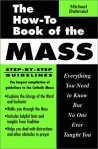
The How to Book of the Mass  by Michael Dubruiel would be a great read.


Michael Dubruiel
The How-To Book of the Mass is the only book that not only provides the who, what, where, when, and why of themost time-honored tradition of the Catholic Church but also the how.
In this complete guide you get:
  • step-by-step guidelines to walk you through the Mass
  • the Biblical roots of the various parts of the Mass and the very prayers themselves
  • helpful hints and insights from the Tradition of the Church
  • aids in overcoming distractions at Mass
  • ways to make every Mass a way to grow in your relationship with Jesus
If you want to learn what the Mass means to a truly Catholic life—and share this practice with others—you can’t be without The How-To Book of the Mass. Discover how to:
  • Bless yourself
  • Make the Sign of the Cross
  • Genuflect
  • Pray before Mass
  • Join in Singing the Opening Hymn
  • Be penitential
  • Listen to the Scriptures
  • Hear a Great Homily Everytime
  • Intercede for others
  • Be a Good Steward
  • Give Thanks to God
  • Give the Sign of Peace
  • Receive the Eucharist
  • Receive a Blessing
  • Evangelize Others
  • Get something Out of Every Mass You Attend
"Is this not the same movement as the Paschal meal of the risen Jesus with his disciples? Walking with them he explained the Scriptures to them; sitting with them at table 'he took bread, blessed and broke it, and gave it to them."1347, Catechism of the Catholic Church

Find more about The How to Book of the Mass here.