Tuesday, June 20, 2017

73 Steps to Spiritual Communion with God 11

This is a continuation of the 73 Steps to Spiritual Communion with God by Michael Dubruiel. The previous are posted below among the other posts and last week's archives. Here is the eleventh Step:


(11) To chastise the body (cf 1 Cor 9:27).


I work out in a gym about five times a week usually on my way home for work. There are a few regulars who are always there, both when I arrive and still there when I leave. They push their bodies to the absolute limit and their bodies show the results. Most people envy them but few are willing to put their bodies through the rigors required for such results.


I begin with this example for obvious reasons. When it comes to spirituality most people react negatively to the thought of monks beating themselves with flagelants or wearing hair shirts and I think rightly so, but as often happens when we reject a faulty interpretation, we seldom replace it with a correct one.


About a year ago I was giving a tour of a Benedictine Monastery, where I had attended college almost twenty years ago, to some visitors. Being a curious soul I know the place inside and out. Among the visitors was an author that I had worked with and her friend, along with another Benedictine Nun, all who were attending a conference at a nearby convent.


In the course of our tour we came upon the Chapter room of the monastery. The walls and ceiling of the Chapter Room were illustrated beautifully by a Swiss monk who had lived at the monastery in the early mid-1900's. The ceiling contained the signs of the zodiac illustrating the whole of life, the walls illustrated some of the steps that St. Benedict mentions in his rule (the subject of this series).


He illustrated this step by showing several monks flogging themselves. I mentioned that this was from the rule and the Benedictine sister immediately said that it wasn't. I mildly protested but she insisted. Later when we arrived at the bookstore, I openned the Rule of St. Benedict to the page and pointed out to her where it was. She was undetered, "It's a poor translation."


She mentioned another translation, but here again the wording was the same. Finally, she said,"well who believes that anymore?"


"Bodybuilders," I answered.


Chastising our flesh is a way of mastering our bodies and our wills.


One of my favorite soon to be saints, Father Solanus Casey, jogged. I think I read somewhere that he did so to punish his flesh. Chastising the body can be a healthy enterprise.


A famous Franciscan friar, who is a little overweight and has had numerous heart problems, told me recently that he was finally taking care of his body since he saw hopeful signs in the church.


A recent country song perhaps gives us this point best in modern language, "She treats her body like a temple, I treat mine like a honky tonk." If we believe that our body is the temple of the Holy Spirit, then we will maintain it in a way that show that we treasure it.

Monday, June 19, 2017

73 Steps to Spiritual Communion with God. - 10

This is a continuation of the 73 Steps to Spiritual Communion with God by Michael Dubruiel. The previous are posted below among the other posts and last week's archives. Here is the tenth Step:


(10) To deny one's self in order to follow Christ (cf Mt 16:24; Lk 9:23).


Denial has come to mean, not facing reality. This is not the type of "denial" that St. Benedict is promoting. Rather it is just the opposite, it is to deny the falsehood of the self that always feels threatened. This false "self" does not exist but is the result of Original Sin and we all struggle with it throughout our lives.


There is a part of us that feels that we must always be vigilant unless someone get one up on us. It is the part of our personality that puts up walls, that is afraid to be our true selves. Simply it is that part of us that fears being embarrassed, thought ill of or that we secretly fear is the definition of who we really are and we work tirelessly to keep everyone from learning the truth.


Of course, the truth is that this is not who we really are at all.


We are just the opposite of the Son of God. Jesus was God but as St. Paul says in Philippians, "did not deem equality with God." Jesus ate and drank with sinners, he associated with some very ungodly people.


None of us has to battle such odds. We are not God, but as the fruit of original sin we have all inherited the notion that we are supposed to be God. So most of us spend our lives not exercising the talents and gifts that God has blessed us with because we fear that we will fail to use them perfectly.


I wonder how many there are who have been graced with the gift of healing the sick but who never reach out to the sick because they fear the embarrassment that might come their way? Or how many talented leaders stand idly by while those not gifted lead?


Denying oneself means letting go of the fears that we do not possess abilities of god proportions and stepping out in faith knowing that God will provide what is lacking to our talents as we exercise them for the good of humanity.


Perhaps the most commonly told parable by Jesus about the Kingdom of God is that of the King or landowner who passes out talents before taking a trip. Those who invest in their talents are praised upon the Master's return whereas the one who buries his talents is condemned.


Why did the servant bury his talents? Because he was afraid.


Why does Jesus tell the parable? So his followers will not fall into the same predicament. Yet how many Christians will hear the words, deny yourself and immediately interpret the Lord's words as though he were advocating burying one's talents? Unbelievable!


Deny the fear of making a mistake, taking a risk of what might happen if you follow Our Lord to Jerusalem. The disciples told Jesus that if they went to Jerusalem he certainly would be killed, did he not fear for his life? Thomas often cast as the doubter but in fact probably the supreme believer says, "let us go to die with him!"


When we let go of the fear of what others think about us when it comes to using the talents and abilities that God has given us then we will truly build the Kingdom of God. Denying that part of ourselves that would bury our talents our of fear is true humility.

Sunday, June 18, 2017

Feast of Corpus Christi by Michael Dubruiel

For the Feast of Corpus Christi:

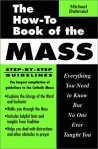
The How to Book of the Mass  by Michael Dubruiel would be a great read.


Michael Dubruiel
The How-To Book of the Mass is the only book that not only provides the who, what, where, when, and why of themost time-honored tradition of the Catholic Church but also the how.
In this complete guide you get:
  • step-by-step guidelines to walk you through the Mass
  • the Biblical roots of the various parts of the Mass and the very prayers themselves
  • helpful hints and insights from the Tradition of the Church
  • aids in overcoming distractions at Mass
  • ways to make every Mass a way to grow in your relationship with Jesus
If you want to learn what the Mass means to a truly Catholic life—and share this practice with others—you can’t be without The How-To Book of the Mass. Discover how to:
  • Bless yourself
  • Make the Sign of the Cross
  • Genuflect
  • Pray before Mass
  • Join in Singing the Opening Hymn
  • Be penitential
  • Listen to the Scriptures
  • Hear a Great Homily Everytime
  • Intercede for others
  • Be a Good Steward
  • Give Thanks to God
  • Give the Sign of Peace
  • Receive the Eucharist
  • Receive a Blessing
  • Evangelize Others
  • Get something Out of Every Mass You Attend
"Is this not the same movement as the Paschal meal of the risen Jesus with his disciples? Walking with them he explained the Scriptures to them; sitting with them at table 'he took bread, blessed and broke it, and gave it to them."1347, Catechism of the Catholic Church

Find more about The How to Book of the Mass here.

Saturday, June 17, 2017

Feast of Corpus Christi

Eucharist means..."thanksgiving"

Michael Dubruiel wrote a book to help people deepen their experience of the Mass.  He titled it, How to Get the Most Out of the Eucharist.  You can read about it here. 


How to Get the Most Out of the Eucharist gives you nine concrete steps to help you join your own sacrifice to the sacrifice of Christ as you:
  • Serve: Obey the command that Jesus gave to his disciples at the first Eucharist.
  • Adore: Put aside anything that seems to rival God in importance.
  • Confess: Believe in God’s power to make up for your weaknesses.
  • Respond" Answer in gesture, word, and song in unity with the Body of Christ.
  • Incline: Listen with your whole being to the Word of God.
  • Fast: Bring your appetites and desires to the Eucharist.
  • Invite: Open yourself to an encounter with Jesus.
  • Commune: Accept the gift of Christ in the Eucharist.
  • Evangelize :Take him and share the Lord with others.


Filled with true examples, solid prayer-helps, and sound advice, How to Get the Most Out of the Eucharist shows you how to properly balance the Mass as a holy banquet with the Mass as a holy sacrifice. With its references to Scripture, quotations from the writings and prayers of the saints, and practical aids for overcoming distractions one can encounter at Mass, this book guides readers to embrace the Mass as if they were attending the Last Supper itself.

Friday, June 16, 2017

73 Steps to Spiritual Communion with God - 9

This is a continuation of the 73 Steps to Spiritual Communion with God by Michael Dubruiel. The previous are posted below among the other posts and last week's archives. Here is the ninth Step:


(9) And what one would not have done to himself, not to do to another (cf Tob 4:16; Mt 7:12; Lk 6:31).


The Golden Rule is well known across cultures. At an early age we are taught to treat others in the same way that we wish to be treated. Has this rule fallen on deaf ears though in our time?


Could it be that we no longer think about others or care about them? What is it that has desensitized us from the needs of others?


Forty years ago people marched upon the towns and villages of the south to protest the way people of color were still being treated; almost a century since the cessation of slavery. Something of the Golden Rule motivated those marches and when television cameras broadcast those images to the rest of the nation soon others changed their opinions too.


But forty years later it seems that the multiplicity of those images along with the dramatization of similar images has lessened the impact of reality. Like a collective hypnosis we seem not to be affected by the plight of our fellow human anymore. Like a callous that develops from constant friction, the flood of images of suffering and hurting individuals has dampened our ability to care.


I suppose that recognizing this, is the first step to diagnosing it as a problem that is destroying us as a society. St. Benedict’s maxim can serve as a corrective. The first step is to really feel, what it is that I feel.


How do I feel when someone smiles at me? It feels good, I feel important or at least that this person is well disposed toward me which is also a good feeling. If this is so I should offer a smile to those who life cast in my path today.


How do I feel when someone treats me in a manner that makes me feel that my existence is inconsequential to them? Probably not very good, then I need to even in a small way acknowledge everyone as an important part of God’s plan for me today.


We tend to be a society in touch with their feelings. It is a small step to return back to a more civil manner of existence where I believe that there is not just “me” but us on this planet. Everyone is important in God’s plan. My feelings are the key to defining how I should treat others in the way that God wants me to do.


Thursday, June 15, 2017

73 Steps to Spiritual Communion with God by Michael Dubruiel - 8

This is a continuation of the 73 Steps to Spiritual Communion with God by Michael Dubruiel. The previous are posted below among the other posts and last week's archives. Here is the Seventh Step:


8- To honor all men (cf 1 Pt 2:17).


Often honor is confused with adoring or worshiping someone. For example when the commandment to honor one’s parents is rejected, what is usually rejected is the concept that I have to worship my parents, but that is not what honor means.


To honor someone is to respect them as an individual who is part of the whole. I honor you if I acknowledge the uniqueness that you bring to the human race. I honor you as a fellow human being, giving you all of the rights and respect that every human deserves. Added to this, is a deep respect for your person, your individuality.


Too often our problems with other people is rooted in our inability to see them and accept them as different from ourselves. The other is more introverted or extroverted—we want them to be like us. The other is too right brained or left brained—we want them to be like us.


Honoring an individual means first and foremost that we accept them as the unique individual that God has created them to be.


One would think that monks in a monastery would have little individuality. But in reality the monks I have been privileged to know in my life have exhibited the greatest individuality of any people that I have known. They all dress alike, their lives follow a similar ritual everyday, but their personalities and who God has created them to be shines forth.


The “true self” as Thomas Merton termed the individual who is not trying to live up to the expectations imposed outside of the self can only be freed up by a deep trust in God. We can nurture the "true self" in others by honoring them as unique individuals with a mission from God.

Wednesday, June 14, 2017

73 Steps to Spiritual Communion with God - 7

This is a continuation of the 73 Steps to Spiritual Communion with God by Michael Dubruiel. The previous are posted below among the other posts and last week's archives. Here is the Seventh Step:


7. Not to bear false witness (cf Mt 19:18; Mk 10:19; Lk 18:20).


Lying about what we witness in life, is one of those sins that always has the appearance of not being all that serious, until it continues to escalate like a snowball growing bigger and bigger; until we are no longer sure of what the truth is. It is not in our interest or anyone else’s to not tell the truth.


Jesus identified himself with the Truth. If we are in communion with Jesus then we too will be fountains of the truth. But the temptation to choose other than the truth is a large one and it almost always has as an underpinning the sense that to do so is in our best interest.


It is not.


Many times our inability to tell the truth reveals a deep spiritual void within. We bear false witness because somehow it will make us appear better, which at it’s heart means that we feel that there is something wrong with us to begin with. The temptation to bear false witness about another or an event I have witnessed is an invitation for me to ask, “What do I feel is wrong with myself?”


Why do I feel the need to speak about an event or a person in an untruthful way? The answer is more self-revelatory than illustrative of any real happening outside of myself? My answer allows me to peer into the hole within my soul.


Oh God help me to see myself as a valuable part of your creation. Allow me to see that the life I experience is alive with your presence and that others will always benefit from it.


But what about the other reasons, like, I don’t want to hurt someone?


Does the truth ever hurt? The answer is a loud and thunderous, yes it can hurt terribly. But is that bad?


Pain is a fact of life and to try to avoid it only delays the pain. Confronting it and accepting it leads to resurrection. The cross is a daily visitor to everyone. The choice is often whether we love people enough to be honest with them not hurt them but to help them to face reality in life.


Perhaps there is nothing more definitive about salvation than the one word--reality. A person who experiences the saving grace of God lives in reality, the world as it is.


The unsaved person lives a lie, perhaps it is a world of their creation. It is their fiction. It is impossible for others to be invited into this world of theirs because it is a non-existent place that they themselves do not even exist in. There is nothing sadder then to experience this firsthand, but it is the lot of those who refuse to accept the pain of daily life.


There is the obvious consequence of bearing false witness that I have purposely left to the end. Consequences are of little matter here, but for many they are the guiding force of their daily actions. St. Benedict did not counsel in his maxim—“consider the end when giving a witness.” He did not do so because he has already laid out for us what the end-(the consequence of every action is)—it is God.


God is the consequence for anyone who sets out on this path. My concern is for doing what God commands. True compassion results.


All of our excuses and reasons for not doing so—usually rationalized from a concern for consequences, are derived from a lack of respect for others (Benedict’s second maxim). We do not believe in our neighbor’s right to “handle” the truth. This is very sad.