Monday, March 6, 2017

Daily Lent Meditation by Michael Dubruiel

The Cross of Christ Teaches Us. . . to Live the Gospel


For it is not hearers of the law who are righteous before God, but the doers of the law who will be justified. When Gentiles who have not the law do by nature what the law requires, they. . . show that what the law requires is written on their hearts, while their conscience also bears witness and their conflicting thoughts accuse or perhaps excuse them on that day when, according to my gospel, God judges the secrets of men by Christ Jesus. ROMANS 2:13–16

 Then the King will say to those at his right hand, “Come, O Blessed of my Father, inherit the kingdom prepared for you from the foundation of the world; for I was hungry and you gave me food, I was thirsty and you gave me drink, I was a stranger and you welcomed me, I was naked and you clothed me, I was sick and you visited me, I was in prison and you came to me.” MATTHEW 25:34–36 

One day my mother came back from a day of shopping very upset. As she walked past a vagrant on her way into a store, the man had called out to her, “I’ll bet you would take more time to notice a dog.” My mother was saddened and shamed by the man’s accusation. In a way, he was right; she hadn’t even acknowledged the man’s existence. It was one short encounter in her busy life. Even so, I have never forgotten it, and neither has she.

In the Gospel of Matthew, Jesus spoke about the last judgment of the nations, and in particular the judgment of “nonbelievers,” which is how the Jewish people referred to the Gentile nations. When, in his letter to the Romans, St. Paul indicated how those who do not know Christ will be judged, referring to the “gospel,” very likely, he was referring to this passage from Matthew 25.

Those of us who know Christ have little excuse if we do not recognize him in the hungry, thirsty, stranger, naked, sick, or in prison. We have the good news of the gospel preached to us; we have heard it and are required to put it into practice.

Seeing the Hidden Christ 


The people who experienced Jesus in the flesh, we know, all experienced him in exactly the ways that he describes in Matthew 25, and part of understanding that is a lesson for all of us. We do not know when Our Lord might appear to us under the guise of the hungry, thirsty, stranger, naked, sick, or prisoner.

 I was hungry. . . Because he was fully human as well as fully God, Jesus had the same bodily needs we do. After fasting in the desert for forty days and nights, he was hungry. Several of the resurrection appearances have Jesus asking the disciples if they have anything to eat before they recognize who it is asking for relief from his hunger.

I was thirsty. . . “Give me a drink,” Jesus said to the Samaritan woman at the well, just before telling her of the living water. From the cross he cried out “I thirst,” and was given vinegar to drink.

I was a stranger. . . After his resurrection, Jesus was often not recognized, even by his own disciples. Mary Magdalene mistook him for a gardener. The disciples en route to Emmaus thought he was a stranger until he broke bread in their midst. The disciples fishing on the Sea of Galilee did not at first recognize the man on the shore, cooking fish and bread over a charcoal fire.

 I was naked. . . At the beginning of his life, Christ came forth naked from his Virgin Mother, who wrapped him in swaddling clothes and laid him in a manger. At the end, his executioners stripped him naked before nailing him to the cross. His burial shroud, donated by Joseph of Arimathea, was left behind at the Resurrection.

I was sick. . . Suffering from the soldier’s maltreatment, he burned with fever on the cross. Meanwhile, his enemies taunted him. “You healed so many others. . . now heal yourself!”

I was in prison. . . Imprisoned after his arrest in the Garden of Gethsemane, he went from the Sanhedrin, to Pilate to Herod and to Pilate again. At the hands of cruel Roman soldiers he was mocked and scourged. How many times have we missed an encounter with Jesus? How often do we walk past the destitute residing on the street or in prisons, nursing homes, and hospitals, not realizing that we are passing by the Son of God? “

Be not hearers, but doers. . .” St. Paul told the Romans.

Do we act any differently when someone is watching us? We slow down on the road if we spot a police officer coming in the other direction. We work a little harder if our boss is nearby. Yet when isn’t God in our presence?

The Passion of Jesus reveals that God is present even when he seems farthest away. We might even be tempted to think that God has abandoned those we choose to pass by. Yet nothing could be farther from the truth: “. . .as you did it to one of the least of these my brethren, you did it to me” (Matthew 25:40).

Almsgiving has always been a Christian penitential practice. It is one of the ways that we become more like Christ and take up our cross to follow him daily. Jesus gave to everyone who approached him; we, empowered by him, are called to share what he gives us with all whom we meet—and even those we must seek out.


The Power of the Cross is a book well-suited to daily reading during Lent. The book is available here in pdf version. Daily excerpts will be reprinted in this space during Lent.


"michael Dubruiel"

Sunday, March 5, 2017

First Sunday of Lent

The Cross of Christ Teaches Us. . . 
Our Mission


 And the angel of the Lord said to him, “Why have you struck your ass these three times? Behold, I have come forth to withstand you, because your way is perverse before me; and the ass saw me, and turned aside before me these three times. If she had not turned aside from me, surely just now I would have slain you and let her live.” Then Balaam said to the angel of the Lord, “I have sinned, for I did not know that thou didst stand in the road against me. Now therefore, if it is evil in thy sight, I will go back again.” And the angel of the Lord said to Balaam, “Go with the men; but only the word which I bid you, that shall you speak.” NUMBERS 22:32–35

 Then Jesus said to him, “Begone, Satan! for it is written, ‘You shall worship the Lord your God and him only shall you serve.’” Then the devil left him, and behold, angels came and ministered to him. MATTHEW 4:10–11 

One of the strangest stories in the Old Testament recounts the mission of the prophet Balaam. A pagan king wanted to conquer the Israelites, and wanted Balaam to help him achieve this ambition by pronouncing a curse on the enemy. So he summoned Balaam.

At first Balaam refused to come, but eventually Balaam set out on his donkey to meet with the king. Although this story is found in the Book of Numbers, it is the Second Letter of Peter that gives us insight to Balaam’s motives: “Forsaking the right way. . . they have followed the way of Balaam, the son of Be’or, who loved gain from wrongdoing, but was rebuked for his own transgression; a dumb ass spoke with human voice and restrained the prophet’s madness” (2 Peter 2:15–16).

Balaam was not setting out to do God’s will; he was trying to profit by the gifts that God had given him. Balaam was stopped en route by his donkey, which saw an angel barring the path. When Balaam beat his donkey, the animal protested that he was trying to save his master’s life. Finally Balaam’s eyes were opened to the angel of the Lord, who affirmed that, indeed, the donkey had saved his life. The angel told him to go along to the king: “Go. . . but only the word which I bid you, that shall you speak” (Numbers 22:35). In the end, Balaam blessed the Israelites, accomplishing God’s purposes. However, Peter’s epistle reveals that Balaam’s temptation moved him along the path to do the will of God. He did not start out intending to do good, but God intervened.

Spiritual U-Turns 


A friend once told me of the time he decided to give in to a certain temptation that he had been fighting for years. As he went to get into his car that night, he discovered that one of his car’s tires was flat. Most people would see a flat tire as a momentary inconvenience; my friend saw the flat tire as a sign from God. He stayed home that night, and from that moment on the temptation left him. God used my friend’s momentary lapse to put him on the pathway to holiness.

 Scripture has many examples of God using Satan’s ploys to accomplish his own purposes. The Gospel of Matthew offers one such example. When Jesus was about to begin his ministry in Israel, he went into the desert to fast for forty days—symbolic of the forty years the Israelites wandered in the desert. During that time, Satan presented three types of temptations to Our Lord. Ironically, each of the particular temptations Satan chose was related to the mission that God had given to Jesus. Each of them was a perversion of Jesus’ true mission and purpose.

Bread of Life. First the evil one tempted Jesus to turn stones to bread. After all, Jesus was hungry from fasting. However, Jesus knew that his greatest hunger was not physical but relational: He had a hunger only God could satisfy.

The significance of this temptation became clearer on the night before Jesus died, when he took the bread and changed it into his own Body and Blood. “I am the bread of life,” Jesus declared. “If anyone eats of this bread, he will live for ever; and the bread which I shall give for the life of the world is my flesh” (John 6:48, 51).

Those who partake in the Body and Blood of Christ under the appearance of bread and wine, wrote St. Cyril of Jerusalem, become “united in body and blood with Him.” Similarly, St. Pio of Pietrelcina (Padre Pio) observed that after communion, “the heart of Jesus and my own—allow me to use the expression— were fused. No longer were two hearts beating but only one. My own heart had disappeared, as a drop of water is lost in the ocean.” The miracle of the Eucharist is that Our Lord transforms our hearts of stone into hearts of flesh.

 Source of Life. In the second temptation, Satan tempted Jesus to demonstrate his power by throwing himself off the Temple roof, so the angels would rush to his defense. Jesus recognized that his enemy had twisted Scripture to achieve his own purposes. “You shall not tempt the Lord your God,” he replied firmly (Matthew 4:7).  The things that tempt us most in life can lead us to discover our true calling. 

As with the temptation to turn stones to bread, Satan’s temptation was a perversion of the real mission of Christ. By dying on the cross, Jesus threw himself into the hands of the Father, trusting that God would raise him on the third day.

When Franz Jaegerstaetter, a saintly Austrian who refused to fight in the Nazi army, faced certain death because of his refusal to give in to the Nazis’ wishes, Franz wondered if he were committing suicide. It was a meditation on the mission of Jesus, who went to Jerusalem knowing that they were going to kill him there, that finally convinced Franz that standing up to the evil of his day, no matter what the personal cost, was the right thing to do.

 Prince of Life. Finally the Lord was tempted to bow down to Satan in order to win the world. However, just as Jesus rejected the attempts of his followers to make him king or to win the kingdom by the sword, so he rejected this bloodless solution. Jesus knew that real victory would not come easily, and that his kingdom was not an earthly one. His message was not a popular one; ultimately it led to his death on the cross. This “King of the Jews,” as the Romans named him, knew of but one way to win over the world: “. . .when I am lifted up from the earth, [I] will draw all men to myself” (John 12:32).

Those who would be powerful continue to bow to Satan in order to win the world, selling their souls for a temporary advantage. Politicians, religious, and others who promote evil in order to win—whether the prize is power, approval, or other earthly glory—may succeed for a time. But such victory is fleeting, and leaves in its wake an emptiness that is as close to hell as one can get on this earth.

Find Your Mission 


Just as Satan tempted Christ with a perversion of his true mission, the things that tempt us most in life can lead us to discover our true calling. However, we will recognize God’s purpose for us only by the light of the cross. Using God’s gifts to achieve anything other than the divine plan will not bring long-term satisfaction. The path to true joy comes from placing our gifts under the control of the Holy Spirit, and allowing the cross of Christ to reveal Satan’s lies and deceptions for what they are. St. Augustine, who spent his early years tempted by the beauty of creation and even fathering an illegitimate child, later found in God the beauty he was seeking. “Too late, O ancient Beauty, have I loved Thee,” he wrote.

***********

The Power of the Cross is a book well-suited to daily reading during Lent. The book is available here in pdf version. Daily excerpts will be reprinted in this space during Lent.


"michael Dubruiel"

Wednesday, March 1, 2017

Ash Wednesday

The Power of the Cross is a book well-suited to daily reading during Lent. The book is available here in pdf version. Daily excerpts will be reprinted in this space during Lent.


"michael Dubruiel"


From the Introduction (part 4)

“What Do I Do Now?” 

Start reading this book. Each section is designed to be read and pondered on its own; read one of the entries each day, or take up  one section each week. There are parts of this book with which you may readily agree; other sections will probably anger you. Don’t worry about that; parts of this book elicit the same reaction in me. When faced with the cross, my inner demons rebel. Surrendering to the cross of Christ is the only way to rid oneself of whatever evil may be lurking in our lives. 

The way of the cross is the only sure way to joy and freedom. The world offers us happiness and rejects the cross, to be sure, but it is a happiness that is short lived. For those who embrace his cross, Jesus promises a joy that never ends. The evil one makes it hard for us to see the truth of Jesus’ claim at times. But those who seek the truth will experience—either first-hand or through living saints like Pearl—true reality: What the world promises is a lie. 

We are all headed to Cross City, whether we are following Christ or not. For those who follow Christ, Cross City is the gate to eternal life. For those who venture along that path without Christ, the cross brings only suffering and ultimately death. The crucified Christ is the Vine; we are called to be the branches. May his joy be in you, “that your joy may be full” (John 15:11).   More

For more about Michael Dubruiel.  

Reflections on Gethsemani


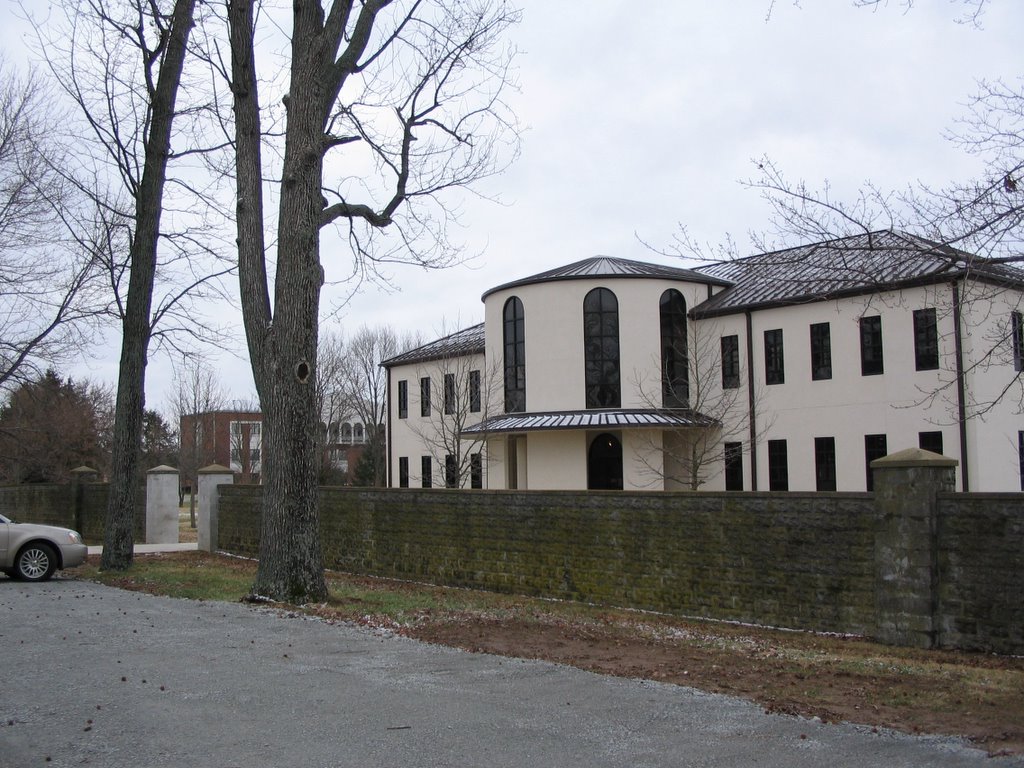
One time in the late 80's I was traveling with another friend of mine, Brian, on our way to Chicago. The first night we stopped at the Monastery of the Holy Spirit in Conyers, GA about twenty miles east of Atlanta.

Fr. Francis (originally a monk at Gethsemani and one of the founding monks of Holy Spirit, then in his 80's) met us at the Guest House door, "Will you stay?"

Anyone who has read Thomas Merton's Seven Storey Mountain knows this is what you expect to hear when you arrive at a Trappist monastery. There is a double meaning to the question..."Will you stay?" and join our community, "Will you stay?" in the guest house and finally since in the Rule of St. Benedict the stranger is to be welcomed as Christ...Will you stay? Lord as in "Stay with us Lord for the day is far spent."

We answered "yes" as in yes we'll stay in the guest house tonight, which we did and attended prayers and Mass--then left the next morning on our way to Gethsemani. We arrived in Gethsemani that afternoon (about seven hours later). No one greeted us or asked us if we would stay. There were a few other pilgrims wandering around but no monks visible. We were settled in the chapel for Vespers when the first monks began to emerge from the cloister and enter into the chapel. Brian leaned over to me and whispered, "Its the same guys."

Well not exactly. Driving toward Birmingham and away from Gethsemani I thought of my friend Peter who has been a big fan of the Trappists from way back. I knew that he had thought about entering the Monastery of Our Lady of the Holy Spirit at one timea and still made visits there frequently--I also knew that he had visited Gethsemani several times. His experience and mine of both monasteries knew that one welcomed strangers and the other saw them as an intrusion and to be fair because of Thomas Merton Gethsemani got a glut of strangers.

When I first stayed at Gethsemani the beds were very Trappist--really nothing more than a pallet with a two inch mattress on it. Years laters a beautiful, state of the art guest house was built that was more along the lines of mid range hotel. Now the Welcome Center--the times they are a changing.

I called Pete to share my views about the Welcome Center and I share them here because for the most part they were inaccurate as my return trip proved but they say a lot about how our minds process religious experiences. I told Pete:

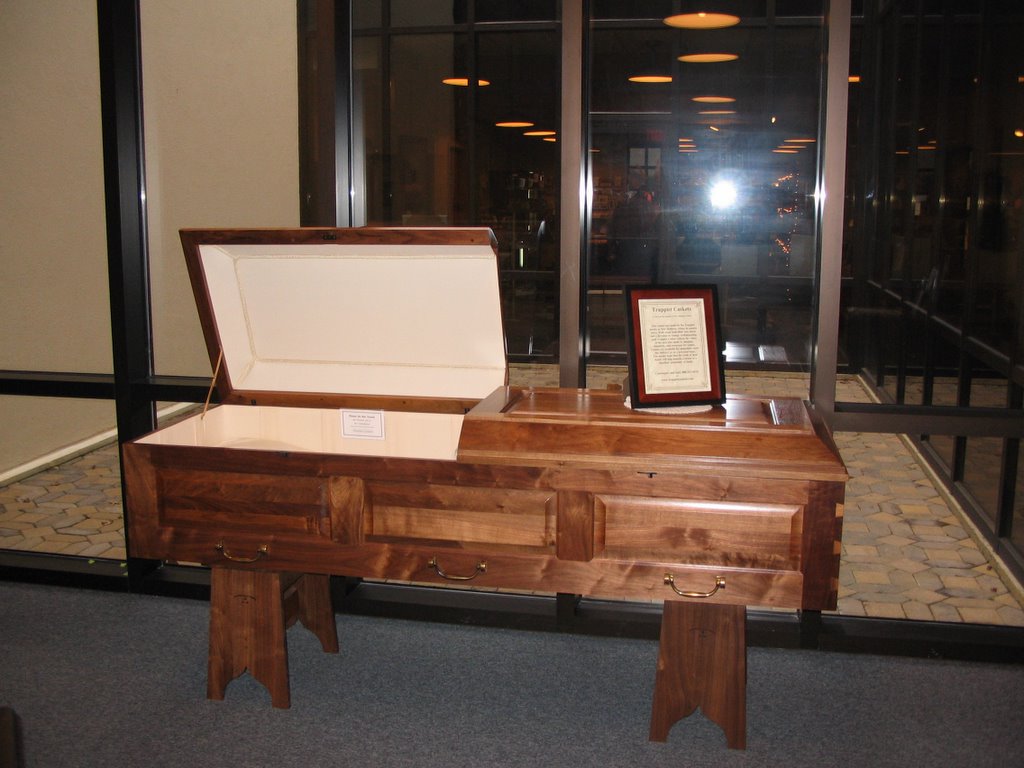
"The first thing you notice when you walk in through the cloister wall and into the building is a coffin...it is open but empty. In some ways it is symbolic of immediately reminding you of your final end and asking you the question what am I here for? Several monks were available to answer the question."

"Over the PA system there was an incessant crackling of flames--they made me think of the flames of Hell (another of the Last Things), when in fact a peak into the room to the left of the entrance showed that it was the Easter Fire being prepared and the flames providing the fire to illuminate the Easter Candle--symbolic of the light of Christ illuminating the darkness. The video featured the changing seasons...the crackling flames were replaced with crackling dead leaves falling from the trees surrounding the monastery, the barren trees introduced the funeral of a monk with living monks keeping vigil reading the psalms all night before the burial of their brother."

I told Pete that all of this left me with the impression that the Welcome Center was designed as a sort of funeral parlor and that unconsciously the monks were providing the guest with a modern morality play that the visitor was the staring player. Walking out of the Welcome Center I made my way toward the Chapel for Vespers--passing by another gate where the words "God Alone" were engraved. Long time readers of this blog will remember that this gate once graced the right hand column of this blog...the Gospel in two words, a reminder that after death all that matters will be God Alone...a reminder that in this life ultimately what matters is God Alone.

Then the Chapel and monks bending in unison at the waist singing "Praise to the Father, the Son and Holy Spirit both now and forever, until the end of the ages." punctuating the Psalms of praise and thanksgiving.

Death, Hell, Purgatory and Heaven all in a few minutes of each other. "Will you stay?"

No, not here anyway.

(Later my return to Getsemani later in the week and a more accurate description of the Welcome Center).

Tuesday, February 28, 2017

Free Lent Meditations

The Power of the Cross is a book well-suited to daily reading during Lent. The book is available here in pdf version. Daily excerpts will be reprinted in this space during Lent.


"michael Dubruiel"


From the Introduction (part 3)

If you’re like most people, there have been times in your life—if you’re like me, lots of times—when you have said, “If I knew then what I know now, I never would have done that!” In reality, experience alone seldom gives us the wisdom we need to avoid all future missteps, whether days or years from now. As much as we like to think we know what is best for us and for those entrusted to our care, much of life is still beyond our control. It’s frustrating—but it is also part of the human condition. 

The Apostle Paul said it best in his letter to the Romans: “I do not understand my own actions. For I do not do what I want, but I do the very thing I hate” (Romans 7:15). It’s called concupiscence, a fancy word for “disordered desire.” As human persons, we do not always desire what is best for us. Not the way God does. 

The good news is that it doesn’t have to be that way. God became one of us in Jesus Christ to help us break this vicious cycle. He shed his blood to break the power of sin in our lives, and to restore us into relationship with God the Father. 

Sounds great, doesn’t it? There’s just one small catch: We must be willing to be entirely transformed, starting from the inside. Everything must change: what we do, how we think, what we believe, and whom we follow. In the language of the Scriptures, we must “repent.” This doesn’t sound like great news at first—not to those who have deluded themselves into thinking that they are in control of their own lives. Yet to those who know better, it is the best news imaginable.

 Still, it all boils down to the cross. Not the beautifully engraved golden ornament you can put around your neck and forget. It’s the kind of cross Mel Gibson portrayed in The Passion of the Christ: full of pain and feelings of rejection, not to mention the blood and gore. The kind that requires you to die. It’s frightening. It’s agonizing. It’s risky. It’s nothing we would choose for ourselves, not in a million years. 

Ah, yes. But it is also necessary. There are two things to keep in mind, to help you put this in perspective. First, once you understand the gift that is being offered, the risk is hardly worth 
mentioning. The way of the cross is the only way to eternal glory. 

Second, the Lord does not expect us to walk this way alone. He gives us a helper, the Holy Spirit. He strengthens us through the sacraments. And Jesus also gives us his very life— body and blood, soul and divinity— in the Eucharist. My friend Pearl understood this, and received her Lord as often as she could. It was the incredible grace of this sacrament that gave her the strength to live out the mission God had given her to fulfill.

 On the other hand, you don’t have to be a spiritual “giant” to take up your cross like Pearl did. Those first disciples all fled when confronted with the cross of Christ at his arrest in the Garden of Gethsemane. They understood what was at stake, and they were afraid for their own lives. 

Yet something happened between Good Friday and Pentecost. Something changed those men, so they no longer feared earthly power but trusted in Christ. Through the empowerment of the Holy Spirit, they sought to do the will of God even if it meant giving up their lives—and for most of them, that is exactly what it did mean. 

Jesus extends the same invitation to you: Starting today, take up your cross. Forget the failings of the past. Don’t worry about what tomorrow will bring. Open yourself to God’s will for your life, with all its unsettling possibilities. Believe in the mercy of God that can withstand an honest appraisal of past sinful actions. Let go of your right to judge others or dictate terms. This is the power of the cross: In our weakness and humility, God’s love reigns supreme.    More

For more about Michael Dubruiel.  

Monday, February 27, 2017

Lent Daily Meditation Book

The Power of the Cross is a book well-suited to daily reading during Lent. The book is available here in pdf version. Daily excerpts will be reprinted in this space during Lent.

"michael Dubruiel"


From the Introduction (part 2)

 Enter by the narrow gate; for the gate is wide and the way is easy, that leads to destruction, and those who enter by it are many. For the gate is narrow and the way is hard, that leads to life, and those who find it are few. MATTHEW 7:13–14

Let’s be honest: Most of us, given the choice, opt for the wide and comfortable path, the route of our own design. We would never choose the cancer, the unemployment, the infertility. The narrow way is just too hard, too lonely. Even so, the cross of Christ bids us to follow where it leads us. In John 21:18–19, Jesus prophesied this destiny for Peter, when he said: “Truly, truly, I say to you, when you were young, you girded yourself and walked where you would; but when you are old, you will stretch out your hands, and another will gird you and carry you where you do not wish to go.” Sooner or later, as Peter discovered, a cross is offered to us. If we want to follow the Lord, we must not only accept it but embrace it. 


At some point in our lives we must acknowledge that our ways are not God’s way. We find one such example in the Gospel of Luke. On the day of his resurrection, Jesus encountered two disciples on the road to Emmaus. As they walked along they fell into discussion, and the two men shared with Jesus, whom they did not recognize, how they had hoped that Jesus was “God’s Messiah” (Luke 24:21). Now these hopes had been dashed. Not only had the Lord failed to overtake his religious and political enemies; he had suffered an ignominious death at their hands. As far as they were concerned, God had abandoned Jesus. 


At that moment, the disciples did not understand the way of the cross, did not realize that the road to victory was marked by overwhelming adversity, unthinkable suffering, and blind trust. All they could see was weakness, defeat, and failure; as a result, they were unable to recognize the Lord even when he was in their midst. How does Jesus respond? “O foolish men, and slow of heart to believe all that the prophets had spoken! Was it not necessary that the Christ should suffer these things and enter into his glory?” (Luke 24:25,26).    More

For more about Michael Dubruiel.  

Saturday, February 25, 2017

Free Lent Daily Devotional by Michael Dubruiel

Since the time of early Christianity, there have been forms
of prayer that use breathing as a cadence for prayer. The Jesus
Prayer and the Rosary, along with various forms of contemplative
prayer, are all variations of this type of prayer. The real prayer
behind all of these methods is the prayer of surrender: “Into
your hands I commend my spirit.” This was the prayer that Jesus
prayed to the Father from the cross.

Though confession alone does not remove the temporal penalty
of sin, healing still is possible by God’s grace. Prayer, reading the
Scripture, giving alms, doing good works all are acts that have
had indulgences attached to them by the Church. By obtaining
an indulgence, the Christian receives healing from the temporal
penalty of even the gravest sins, reducing or eliminating altogether
the time of purification needed in purgatory (CCC 1471).

Ideally, the Christian is motivated to perform these spiritual
exercises not from fear of punishment but out of love for God.
As we read in the preceding passage, St. Paul tells the Ephesians
to offer themselves as a spiritual sacrifice with Christ, who has
paid the debt of our sins. Seeing Christ on the cross and meditating
on his love for us should help us to understand how much
God loves