Monday, February 6, 2017

St. Paul Miki - February 6 Joseph Dubruiel

From the Office of Readings:

Our brother, Paul Miki, saw himself standing now in the noblest pulpit he had ever filled. To his “congregation” he began by proclaiming himself a Japanese and a Jesuit. He was dying for the Gospel he preached. He gave thanks to God for this wonderful blessing and he ended his “sermon” with these words: “As I come to this supreme moment of my life, I am sure none of you would suppose I want to deceive you. And so I tell you plainly: there is no way to be saved except the Christian way. My religion teaches me to pardon my enemies and all who have offended me. I do gladly pardon the Emperor and all who have sought my death. I beg them to seek baptism and be Christians themselves”.
Then he looked at his comrades and began to encourage them in their final struggle. Joy glowed in all their faces, and in Louis’ most of all. When a Christian in the crowd cried out to him that he would soon be in heaven, his hands, his whole body strained upward with such joy that every eye was fixed on him.
Anthony, hanging at Louis’ side, looked toward heaven and called upon the holy names – “Jesus, Mary!” He began to sing a psalm: “Praise the Lord, you children!” (He learned it in catechism class in Nagasaki. They take care there to teach the children some psalms to help them learn their catechism).
Others kept repeating “Jesus, Mary!” Their faces were serene. Some of them even took to urging the people standing by to live worthy Christian lives. In these and other ways they showed their readiness to die.
Then, according to Japanese custom, the four executioners began to unsheathe their spears. At this dreadful sight, all the Christians cried out, “Jesus, Mary!” And the storm of anguished weeping then rose to batter the very skies. The executioners killed them one by one. One thrust of the spear, then a second blow. It was over in a very short time.Fe

Sunday, February 5, 2017

RCIA Resources MIchael Dubruiel


Michael Dubruiel
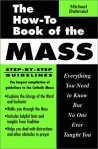
The How-To Book of the Mass by Michael Dubruiel

 not only provides the who, what, where, when, and why of the most time-honored tradition of the Catholic Church but also the how.
In this complete guide you get:
  • step-by-step guidelines to walk you through the Mass
  • the Biblical roots of the various parts of the Mass and the very prayers themselves
  • helpful hints and insights from the Tradition of the Church
  • aids in overcoming distractions at Mass
  • ways to make every Mass a way to grow in your relationship with Jesus
If you want to learn what the Mass means to a truly Catholic life—and share this practice with others—you can’t be without The How-To Book of the Mass. Discover how to:
  • Bless yourself
  • Make the Sign of the Cross
  • Genuflect
  • Pray before Mass
  • Join in Singing the Opening Hymn
  • Be penitential
  • Listen to the Scriptures
  • Hear a Great Homily Everytime
  • Intercede for others
  • Be a Good Steward
  • Give Thanks to God
  • Give the Sign of Peace
  • Receive the Eucharist
  • Receive a Blessing
  • Evangelize Others
  • Get something Out of Every Mass You Attend
"Is this not the same movement as the Paschal meal of the risen Jesus with his disciples? Walking with them he explained the Scriptures to them; sitting with them at table 'he took bread, blessed and broke it, and gave it to them."1347, Catechism of the Catholic Church

Find more about The How to Book of the Mass here.

Monday, January 30, 2017

Daily Meditation

The first step to ridding ourselves of disordered attachments
is to realize what those attachments might be. Whenever we have
a tendency to rationalize that something is “holy,” “untouchable,”
or “indispensable”—it is a pretty good indication that a disordered
attachment is at the root. Only God is our holy and
untouchable source of life. Giving anything else such a high priority
is perpetuating a lie.
"michael dubruiel"

Sunday, January 29, 2017

Sunday Gospel - the Beatitudes


(33) To bear persecution for justice sake (cf Mt 5:10).


St. Benedict references one of the Beatitudes for this counsel, "Blessed are those who are persecuted for righteousness' sake, for theirs is the kingdom of heaven," (Matthew 5:10). If we are just and right in what people choose to persecute us for, then we should bear it patiently.


Many people suffer persecution for doing what is right and unfortunately often at the hands of religious people. Our Lord told his disciples that, "indeed, the hour is coming when whoever kills you will think he is offering service to God," (John 16:2). One have only to open the papers and to read of crimes against human beings committed by people of every religious belief out of conviction that they are doing the will of God.


Jesus promised his followers, " Remember the word that I said to you, `A servant is not greater than his master.' If they persecuted me, they will persecute you," (John 15:20). Therefore, again in imitation of Our Lord we should bear persecution when we are not at fault with patience.


One of the greatest examples of this patient endurance of persecution in our own day is the nonviolent civil rights movement of the late 1950's and 1960's. There are memorials and historical markers where horrible persecutions took place in various cities through the south. The test of time has proved the righteousness of the cause, but those who stood up suffered horribly at the time. They took their example from the Scriptures.


In more recent times those who have bravely protested nonviolently in front of abortion clinics, silently praying the rosary, are great examples of the just who are persecuted for righteousness sake!


We should do the same. When we stand up for what is right and just we should not expect accolades; in fact we should be weary of the applause. What is right is seldom popular; people seem to slip into a collective hypnosis from time to time that blinds them from recognizing the truth. But God is the truth and living a lie can only distance us from Him.

Saturday, January 28, 2017

Thomas Aquinas - January 28

From 2003: 

Aquinas Thought of Everything


Below is a quote from Summa Contra Gentiles. I've been familar with the notion that St. Thomas said we'd all be 33 in Heaven regardless of when we died (before or after that age), but no one every seemed to know where he'd said it. Well here it is, along with an interesting discussion on the other qualities of the glorified body:


From Jacques Maritain Center: GC 4.88:


"STILL we must not suppose, what some have thought, that female sex has no place in the bodies of the risen Saints. For since resurrection means the reparation of the defects of nature, nothing of what makes for the perfection of nature will be withdrawn from the bodies of the risen. Now among other organs that belong to the integrity of the human body are those which minister to generation as well in male as in female. These organs therefore will rise again in both. Nor is this conclusion impaired by the fact that there will be no longer any use of these organs (Chap. LXXXIII). If that were any ground for their absence from the risen body, all the organs bearing on digestion and nutrition should be absent, for there will not be any use for them either: thus great part of the organs proper to man would be wanting in the risen body. We conclude that all such organs will be there, even organs of which the function has ceased: these will not be there without a purpose, since they will serve to make up the restored integrity of the natural body.*


Neither is the weakness of the female sex inconsistent with the perfection of the resurrection. Such weakness is no departure from nature, but is intended by nature.* This natural differentiation will argue the thoroughgoing perfection of nature, and commend the divine wisdom that arranges creation in diversity of ranks and orders. Nor is there anything to the contrary in the expression of the Apostle: Till we all meet and attain to the unity of faith and recognition of the Son of God, even to a perfect man, to the measure of the full stature of Christ (Eph. iv, 13). This does not mean that in that meeting in which the risen shall go forth to meet Christ in the air* every one shall be of the male sex, but it indicates the perfection and strength of the Church, for the whole Church shalt be like a perfect, full-grown man, going out to meet Christ.*


Again, all must rise at the age of Christ,* which is the age of perfect manhood, for the sake of the perfection of nature, which is at its best in this age above others.