Wednesday, January 16, 2019

Distractions at Mass by Michael Dubruiel

Eucharist means..."thanksgiving"

Michael Dubruiel wrote a book to help people deepen their experience of the Mass.  He titled it, How to Get the Most Out of the Eucharist.  You can read about it here. 


Excerpt


W H E N Y O U R M I N D WA N D E R S
One of the most frequent complaints that people who genuinely want to get more out of the Eucharist raise is that they find that their mind wanders at Mass. The cause of their distraction may be as simple a question as “Did I turn off the car lights?” or as weighty a concern as “I wonder how I’m going to pay the mortgage or rent this month?” It is understandable, given the hectic pace of life, that when we try to quiet ourselves in the presence of God we often find that our minds are cluttered with many distracting thoughts.
H ELP FROM THE FATHERS OF THE C HURCH
For often in the very sacrifice of praise urgent thoughts press themselves upon us, that they should have force to carry off or pollute what we are sacrificing in ourselves to God with weeping eyes. Whence when Abraham at sunset was offering up the sacrifice, he was troubled by birds of prey sweeping down on the carcasses, but he diligently drove them off,so that they might not carry off the sacrifice being offered up (cf. Gen. 15:11). So let us, when we offer a holocaust to God upon the altar of our hearts, keep it from birds of


37
prey that the evil spirits and bad thoughts may not seize upon that which our mind hopes it is offering up to God to a good end.
— S T. G REGORY THE G REAT

When Jesus came to visit the two sisters of Lazarus, the sister named Mary sat at Jesus’s feet and listened to him while the other sister, Martha, feverously worked in the kitchen to entertain their houseguest. Finally Martha came to Jesus and complained about the fact that Mary wasn’t helping her. Wandering minds, worriers, and a host of others don’t like what Jesus told Martha: “Martha, Martha, you are anxious and troubled about many things; one thing is needful.Mary has chosen the good portion, which shall not be taken away from her” (Luke 10:41–42).
I was discussing the topic of this book with a priest and he told me that in his many years of presiding at the Eucharist in churches around the world he thought that the organist was the most distracted member of almost every parish, “always fiddling with the music for the next piece, kind of a visual mind wandering.” It is easy to be caught up in worrying about doing a good job to the point that we forget why we are doing the job. Jesus tells the Martha in all of us, “One thing is needful.”
When we come to the Eucharist, are we adoring God, or worshipping something else?

Tuesday, January 15, 2019

What is the Catholic Mass?

Eucharist means..."thanksgiving"

Michael Dubruiel wrote a book to help people deepen their experience of the Mass.  He titled it, How to Get the Most Out of the Eucharist.  You can read about it here. 


Excerpt


O S T E R I N G   A N AT T I T U D E     O F E R V I C E
If you have ever held a position in a service industry then you know that one of the principal ways of fostering an attitude of service is by presuming that the customer is always right.Having been in that position myself in many different jobs over the course of my life, I know that many times the customer isn’t right,but I also know that when you treat them as if they are they are more apt to come to the truth than when you treat them in an arrogant manner.
ELP FROM THE FATHERS OF THE HURCH
Let your prayer, then, be no mere pronouncing of words with the lips. Devote your whole attention to it, enter into the retreat of your heart, penetrate its recesses as deeply as possible. May he whom you seek to please not find you negligent. May he see that you pray with your whole heart, so that he will deign to hear you when you pray with your whole heart.
— S T. A MBROSE

Fostering an attitude of service toward God in the Eucharist is not exactly the same thing as assuming that the customer is always right, however, because unlike the human customer, who may in fact be wrong, God is always right! Believing that can lead us to some rather startling conclusions,when we come to Mass and with every moment of our lives. A great illustration of this attitude of service is found in the Second Book of Samuel when King David flees Jerusalem after it has been taken over by his son Absalom. As David flees, a kinsman of King Saul named Shimei comes out as the king passes by and begins cursing him, continually throwing stones at David and his servants.One of David’s servants,Abishai, says to David,“Why should this dead dog curse my lord the king? Let me go over and take off his head” (2 Samuel 16:9).
King David’s response is to rebuke Abishai and to wonder “If he is cursing because the LORD has said to him,‘Curse David,’who then shall say, ‘Why have you done so?’ ” (2 Samuel 16:10). They travel on and Shimei continues to follow them, cursing while throwing stones and dust.
What if this were our attitude? What if we were to take a second look when something happens that isn’t in our plan, perhaps even to think that the person cursing us might be doing so because God is telling him or her to do so?


A servant is always ready to serve.This is a sacrifice that Christ demands of his followers, and one that when we embrace it will help us to get the most from the Eucharist we celebrate.

Monday, January 14, 2019

Understanding the Catholic Mass

Eucharist means..."thanksgiving"

Michael Dubruiel wrote a book to help people deepen their experience of the Mass.  He titled it, How to Get the Most Out of the Eucharist.  You can read about it here. 


Excerpt:

The following chapters illustrate how each of the actions and attitudes listed here can be applied to the celebration of the Eucharist.At the end of each chapter there are five additional helps:
1.  Keep Your Focus on Jesus offers a way to reflect on the action or attitude being discussed in the life and ministry of Jesus.
2.  Learn from the Blessed Virgin Mary offers Our Lady as a guide for getting the most from the Eucharist. Mary is the perfect Christian and looking to her is the perfect way to learn how to follow her son Jesus.Pope John Paul II has said, “If we wish to rediscover in all its richness the profound relationship between the Church and the Eucharist,we cannot neglect Mary, Mother and model of the Church. . . . Mary can guide us towards this most holy sacrament, because she herself has a profound relationship with it.”4
3.  Attitude to Foster offers a simple verse taken from Scripture to help internalize the attitude or action.
4.  Developing a Eucharistic Spirituality offers suggestions for putting the action or attitude into practice in our daily lives.
5.  A Prayer for Today offers a prayer to recite or practice to help internalize the action or attitude.
There are also other suggestions throughout the book drawn from the teachings of the Catholic Church. The method being proposed here is simple: We must let go of our judgmental attitude and replace it with a sacrificial attitude.This is so simple, in fact, that in each section I have included a lesson I have learned about putting this into practice from my three-year-old son, Joseph.You’ll find that when you approach the Eucharist with the attitude that you have a sacrifice to offer, there will be no end of things to offer God at every Eucharistic celebration!

Sunday, January 13, 2019

How to Pray at a Catholic Mass by Michael Dubruiel

Eucharist means..."thanksgiving"

Michael Dubruiel wrote a book to help people deepen their experience of the Mass.  He titled it, How to Get the Most Out of the Eucharist.  You can read about it here. 


Excerpt:

U R T H E R E L P S

1. Keep Your Focus on Jesus
Whenever you desire to “control” what happens in the Eucharist, or suffer because you sense someone else is hijacking the liturgy,
    Think of Jesus washing the feet of his disciples.
    Think of Jesus telling his followers to take up their crossand follow him.
    Think of Jesus saying that he did not come to be servedbut to serve.
Keeping your focus on Christ will prevent the devil in his attempts to distract you from the purpose of the Eucharist.
2. Learn from the Blessed Virgin Mary
Following the example of the Blessed Virgin Mary we declare ourselves at God’s service. “Behold, I am the handmaid of the Lord” (Luke 1:38) was Mary’s response to the Angel Gabriel’s
announcement that God would become incarnate within her. When we come to the Eucharist, God desires to continue the incarnation within us, and Mary teaches us how we should approach so great a gift.
Mary’s reaction to the angel’s message gives a supreme example of the sacrifice we can bring to every celebration of the Eucharist. When confronted with anything that does not go according to our plans,we need to open ourselves up to what God might be asking of us.
3. Foster an Attitude of Service
When Joshua realized that he was being confronted by a messenger of God, someone who at first he was not sure was a friend, he asked, “What does my Lord bid his servant” (Joshua 5:14)?
When we have the right stance toward God in our worship this is the question we will ask when confronted by anything that disturbs us: “What does my Lord bid his servant”?
4. Developing a Eucharistic Spirituality


Empowered by Christ, we should seek to serve God and anyone God places in our path throughout the day. “How may I serve you?” should be the question ever on our lips, whether at home, at work, or in recreation. We can find concrete ways to serve Christ in the many guises in which he comes to us in the poor and the weak.

Saturday, January 12, 2019

Books by Michael Dubruiel

Eucharist means..."thanksgiving"

Michael Dubruiel wrote a book to help people deepen their experience of the Mass.  He titled it, How to Get the Most Out of the Eucharist.  You can read about it here. 


Excerpt:


The God who is above everything we can think of, who is the very reason that we live and the reason that the universe exists, humbled himself to become a part of creation. This is in direct opposition to fallen humanity that sought “to become like God” when it disobeyed God’s command in the Garden of Eden.
Our desire to be in control is part of our fallen nature. Many of us live with an illusion that we are in control. We are taught to plan for every eventuality,to insure ourselves for every possible disaster, but if we do not realize that only God is in control, we are living in a fantasy world. Think of the parable that Jesus told of the rich man (see Luke 12:16–21) who built bigger barns to store his large harvest; he was foolish, Jesus said, because he was to die that night. His material wealth could not save or help him once he was in the grave. The rich man thought he was in control of his destiny but, like every one of us, found out that he was not — God was and is.


Jesus rescues us from the chaos that life is without him. Pope John Paul II has said, “In the Eucharist our God has shown love in the extreme, overturning all those criteria of power which too often govern human relations and radically affirming the criterion of service:‘If anyone would be first, he must be last of all and servant of all’ (Mk 9:35). It is not by chance that the Gospel of John contains no account of the institution of the Eucharist,but instead relates the ‘washing of the feet’ (cf. Jn 13:1–20): by bending down to wash the feet of his disciples, Jesus explains the meaning of the Eucharist unequivocally.6

Friday, January 11, 2019

How to Pray the Rosary by Michael Dubruiel

Michael Dubruiel conceived and put together the small hardbound book, Praying the Rosary.  Click on the cover for more information.

"Michael Dubruiel"


The Gospels show that the gaze of Mary varied depending upon the circumstances of life. So it will be with us. Each time we pick up the holy beads to recite the Rosary, our gaze at the mystery of Christ will differ depending on where we find ourselves at that moment.

Thereafter Mary’s gaze, ever filled with adoration and wonder, would never leave him. At times it would be a questioning look, as in the episode of the finding in the Temple: “Son, why have you treated us so?” (Lk 2:48); it would always be a penetrating gaze, one capable of deeply understanding Jesus, even to the point of perceiving his hidden feelings and anticipating his decisions, as at Cana (cf. Jn 2:5). At other times it would be a look of sorrow, especially beneath the Cross, where her vision would still be that of mother giving birth, for Mary not only shared the passion and death of her Son, she also received the new son given to her in the beloved disciple (cf. Jn 19:26-27). On the morning of Easter hers would be a gaze radiant with the joy of the Resurrection, and finally, on the day of Pentecost, a gaze afire with the outpouring of the Spirit (cf. Acts 1:14) [Rosarium Virginis Mariae, no. 10].


As we pray the Rosary, then, we join with Mary in contemplating Christ. With her, we remember Christ, we proclaim Him, we learn from Him, and, most importantly, as we raise our voices in prayer and our hearts in contemplation of the holy mysteries, this “compendium of the Gospel” itself, we are conformed to Him.


Thursday, January 10, 2019

Michael Dubruiel's Books


“ I HAVE GIVEN YOU AN EXAMPLE”
Jesus told his disciples that he had given them a model to follow. He said,“If you know these things,blessed are you if you do them” (John 13: 17).The traditional tale of the fall of Satan is that it was due to his refusal to serve: non serviam, “I will not serve,” was the devil’s reply to God.Inflated by pride,he would not obey.Fallen humanity shares this trait, as Jeremiah the prophet says: “For long ago you broke your yoke and burst your bonds; and you said, ‘I will not serve’ ” (Jeremiah 2:20).In opposition to Satan and fallen humanity is Jesus Christ. Jesus did not come to be served but to serve. We who follow him are “in Christ”and we are to imitate him at the liturgy.If we want to get the most out of the Eucharist we need to start by fostering the attitude of Christ the Servant.

Wednesday, January 9, 2019

Books by Michael Dubruiel


GETTING THE MOST OUT OF THE EUCHARISTIf you want to get the most out of the Eucharist you have to check your “I” at the door.The “I” that wants things, that endlessly critiques the way things are done, and  that demands things be done in exactly a certain way (meaning “my way,” not God’s way). I think it was Peter Kreeft who once said that the famous song, “I Did It My Way,” sung by such great artists as Frank Sinatra and Elvis, is the national anthem of hell. The way of the world may be to do things “our way” but the way of Christ is to do things his Way.We therefore consciously have to leave “my way” at the door and in exchange take up an attitude that asks “how may we be of service to you, Lord, in this celebration of the Eucharist?”

Tuesday, January 8, 2019

How to Get More out of Mass by Michael Dubruiel

Eucharist means..."thanksgiving"

Michael Dubruiel wrote a book to help people deepen their experience of the Mass.  He titled it, How to Get the Most Out of the Eucharist.  You can read about it here. 


How to Get the Most Out of the Eucharist gives you nine concrete steps to help you join your own sacrifice to the sacrifice of Christ as you:
  • Serve: Obey the command that Jesus gave to his disciples at the first Eucharist.
  • Adore: Put aside anything that seems to rival God in importance.
  • Confess: Believe in God’s power to make up for your weaknesses.
  • Respond" Answer in gesture, word, and song in unity with the Body of Christ.
  • Incline: Listen with your whole being to the Word of God.
  • Fast: Bring your appetites and desires to the Eucharist.
  • Invite: Open yourself to an encounter with Jesus.
  • Commune: Accept the gift of Christ in the Eucharist.
  • Evangelize :Take him and share the Lord with others.


Filled with true examples, solid prayer-helps, and sound advice, How to Get the Most Out of the Eucharist shows you how to properly balance the Mass as a holy banquet with the Mass as a holy sacrifice. With its references to Scripture, quotations from the writings and prayers of the saints, and practical aids for overcoming distractions one can encounter at Mass, this book guides readers to embrace the Mass as if they were attending the Last Supper itself.

Sunday, January 6, 2019

The Epiphany of the Lord by Michael Dubruiel

The Epiphany of the Lord

People experience darkness in a lot of ways. Some are depressed. Others experience it in ignorance.
Darkness and the experience of being blind are two ways that the scriptures often portray the condition of humans without some outside help. Many of us are aware that something isn't quite right with ourselves. We are not the person that we feel we could or should be. We don't know how to act in our own best interest or the for the good of others. We often are at the mercy of those who try to manipulate our indecisiveness and lack of vision.
To this Isaiah the prophet says, "Rise up in splendor, Jerusalem! Your light has come, the glory of the Lord shines upon you. See, darkness covers the earth,
and thick clouds cover the peoples; but upon you the LORD shines, and over you appears his glory. Nations shall walk by your light, and kings by your shining radiance". God has sent light that shines in the darkness, John tells us in his gospel--will we accept that light?

The magi traveled afar to experience it. How far are we willing to travel to experience what countless saints have experienced for the last two thousand years? How willing are we to surrender to the light? It is our choice, we can be like Herod who was threatened by the light that his true worth would be seen in its light or we can be like the magi who recognized the ultimate worth of such light shining in the darkness and brought what they had to offer in exchange for a treasure that the earth can only give in the person of the God made man.


Michael Dubruiel

Saturday, January 5, 2019

Bored at Mass?


When our Lord gave the disciples on the road to Emmaus the bread that He had blessed and broken, "he vanished out of their sight" (Luke 24:31). It was then that they recognized Him. We receive the Lord as they did in receiving the Eucharist. Now, at the moment that He is within us, we too should reflect, as they did, on the Scriptures that He has opened to us during this Mass, especially on what has made our "hearts burn."

In our consumer-minded society, we can miss the treasure that we receive if we treat it like one more thing to "get" and then go on to the next thing. Our Lord is not a "thing." He is God, who has deigned to come intimately into our lives. We should reflect on His Presence within us and ask what He would have us do.

More on The How to Book of the Mass here. 

"michael dubruiel"

Friday, January 4, 2019

January 4 - St. Elizabeth Ann Seton by Michael Dubruiel

Memorial of Saint Elizabeth Ann Seton, religious

They said to him, "Rabbi" (which translated means Teacher),"where are you staying?" Those who experienced Jesus all seem to have sensed in His presence that He had something to teach them. It is the same with us, there is a wisdom that we lack and when we come to worship Our Lord we should come with the expectation that we will learn a new way to think and a new way to live.
St. Elizabeth Ann Seton, a convert to Catholicism founded what eventually became the system of Catholic schools in the United States. It is not coincidental that those who follow Christ often embrace the profession of teaching. Teaching is one way that the followers of Christ imitate Him but the teaching of a follower of Christ is always centered on God and therein lies the difference.

Knowledge without God often makes no sense because it is experienced out of the context of the whole. A visit to Emmitsburgh where St. Elizabeth Ann Seton taught, one can visit the first school that she started there. What makes that school different from others is the presence of a chapel. Perhaps the problem with education today is that God is often absent from the lesson plans.


More from Michael Dubruiel:


Michael Dubruiel wrote a book to help people deepen their experience of the Mass.  He titled it, How to Get the Most Out of the Eucharist.  You can read about it here. 


How to Get the Most Out of the Eucharist gives you nine concrete steps to help you join your own sacrifice to the sacrifice of Christ as you:
  • Serve: Obey the command that Jesus gave to his disciples at the first Eucharist.
  • Adore: Put aside anything that seems to rival God in importance.
  • Confess: Believe in God’s power to make up for your weaknesses.
  • Respond" Answer in gesture, word, and song in unity with the Body of Christ.
  • Incline: Listen with your whole being to the Word of God.
  • Fast: Bring your appetites and desires to the Eucharist.
  • Invite: Open yourself to an encounter with Jesus.
  • Commune: Accept the gift of Christ in the Eucharist.
  • Evangelize :Take him and share the Lord with others.


Filled with true examples, solid prayer-helps, and sound advice, How to Get the Most Out of the Eucharist shows you how to properly balance the Mass as a holy banquet with the Mass as a holy sacrifice. With its references to Scripture, quotations from the writings and prayers of the saints, and practical aids for overcoming distractions one can encounter at Mass, this book guides readers to embrace the Mass as if they were attending the Last Supper itself.

Wednesday, January 2, 2019

January 2 - Memorial of Saints Basil the Great and Gregory Nazianzen


January 2 - Memorial of Saints Basil the Great and Gregory Nazianzen, bishops and doctors of the Church

I've spent the past month reading a number of books on Orthodox Christianity. Most of the books have dealt with how it is lived today in the Mediteranean but a few have dealt with American examples. Most of the books have sang the glories of Orthodoxy, one written by a Catholic has looked at it in a more playful attitude. I mention this because today's reading from John's letter reminds me of an attitude that seems to be very "orthodox" especially of the Mediteranean variety. John says:
"Who is the liar?
Whoever denies that Jesus is the Christ.
Whoever denies the Father and the Son, this is the antichrist.
Anyone who denies the Son does not have the Father,
but whoever confesses the Son has the Father as well".

This might cause embarrassment if spoken in American circles. We might want to place all types of qualifiers or include a prayer to the four winds or add a feminine element to the passage. But if we really believe that Jesus is God come in the flesh, do we dare deny Him in front of men (and women)? Jesus had a stern warning about those who would deny Him. If we truly believe we won't do that today.


More from Michael Dubruiel

Michael Dubruiel

Tuesday, January 1, 2019

New Year's Meditation by Michael Dubruiel

Octave of Christmas-Solemnity of Mary Mother of God

If I were preaching today, I would be short. When I was young this was the Feast of the circumcision and the Gospel reading was one line. "On the eight day the time for the circumcision of the child came and he was named Jesus the name the angel had given to his parents." Somewhere along the line the church changed this to the Solemnity of Mary the Mother of God and attached World Peace Day as well. So tying all of this together at the beginning of this new year we invoke the Theotokos, "the Mother of God" to intercede for us and our families that this year will be filled with God's blessing and peace. The first reading provides us with the words...
"The LORD bless you and keep you!
The LORD let his face shine upon you, and be gracious to you!
The LORD look upon you kindly and give you peace!"

Happy New Year!


Michael Dubruiel

Monday, December 31, 2018

New Year's Eve Meditation by Michael Dubruiel

v

Octave of Christmas-Seventh Day

Two readings that fit for the last day of the secular year. In the first reading John tells us that this is the "last hour" and that many antichrists have appeared. He tells us that they came from "our number" but they really didn't belong. As we close out this year we might think of the "antichrists" that we have listened to in the past year. What gospels have we accepted that have moved us further from Christ?
The Gospel reading is from the Gospel of John and is the same as the Gospel for Christmas Day--"In the beginning was the word..." As we begin a new year we should seek to align ourselves with the "Word," Our Lord.

So in the midst of our celebrations, let us be out with the old false gospels and in with the ever new gospel of Our Lord who speaks to us in the events of everyday.


More from Michael Dubruiel


The Gospels show that the gaze of Mary varied depending upon the circumstances of life. So it will be with us. Each time we pick up the holy beads to recite the Rosary, our gaze at the mystery of Christ will differ depending on where we find ourselves at that moment.

Thereafter Mary’s gaze, ever filled with adoration and wonder, would never leave him. At times it would be a questioning look, as in the episode of the finding in the Temple: “Son, why have you treated us so?” (Lk 2:48); it would always be a penetrating gaze, one capable of deeply understanding Jesus, even to the point of perceiving his hidden feelings and anticipating his decisions, as at Cana (cf. Jn 2:5). At other times it would be a look of sorrow, especially beneath the Cross, where her vision would still be that of mother giving birth, for Mary not only shared the passion and death of her Son, she also received the new son given to her in the beloved disciple (cf. Jn 19:26-27). On the morning of Easter hers would be a gaze radiant with the joy of the Resurrection, and finally, on the day of Pentecost, a gaze afire with the outpouring of the Spirit (cf. Acts 1:14) [Rosarium Virginis Mariae, no. 10].


As we pray the Rosary, then, we join with Mary in contemplating Christ. With her, we remember Christ, we proclaim Him, we learn from Him, and, most importantly, as we raise our voices in prayer and our hearts in contemplation of the holy mysteries, this “compendium of the Gospel” itself, we are conformed to Him.


Sunday, December 30, 2018

Free Catholic Book by Michael Dubruiel

I once read a personal essay written about attending Mass
where the writer advised the reader to get to church early to find
a pew where you will likely have no one sitting anywhere near
you to distract you. I confess there have been times that I have
felt this way too, but I can see how sinful such a view is—how
“separation” even in the name of God is not of God.

Jesus came to reunify all those separations brought about by
original sin—whether they be nationality, gender, or language. “For
by one Spirit we were all baptized into one body—Jews or Greeks,
slaves or free—and all were made to drink of one Spirit” (1
Corinthians 12:13). Our sinful self rebels against this notion; we
want to judge others rather than forgive in Christ. This is our cross!
If we hold it in front of us, we will have a constant reminder of the
One who died for the sins of the world—to save “them” and “us.”

From The Power of the Cross by Michael Dubruiel , available as a free download by clicking the cover below:


"michael dubruiel"

Saturday, December 29, 2018

Octave of Christmas Meditation by Michael Dubruiel

Octave of Christmas

Prayer and fasting are what Anna had been doing for years at the Temple. Now she is rewarded with a visitation of God made man who is at this moment an infant. But because of her life of prayer and fasting she is able to recognize the Christ.

It makes one wonder how often we ourselves have visitations that we miss because we are preoccupied with other things. We can change. Prayer can be done anytime at anyplace--by simply turning our hearts and mind toward God in all circumstances. Prayer necessarily requires fasting, forgoing much of what we think we need and turning instead to what we truly need---God


More from Michael Dubruiel


The Gospels show that the gaze of Mary varied depending upon the circumstances of life. So it will be with us. Each time we pick up the holy beads to recite the Rosary, our gaze at the mystery of Christ will differ depending on where we find ourselves at that moment.

Thereafter Mary’s gaze, ever filled with adoration and wonder, would never leave him. At times it would be a questioning look, as in the episode of the finding in the Temple: “Son, why have you treated us so?” (Lk 2:48); it would always be a penetrating gaze, one capable of deeply understanding Jesus, even to the point of perceiving his hidden feelings and anticipating his decisions, as at Cana (cf. Jn 2:5). At other times it would be a look of sorrow, especially beneath the Cross, where her vision would still be that of mother giving birth, for Mary not only shared the passion and death of her Son, she also received the new son given to her in the beloved disciple (cf. Jn 19:26-27). On the morning of Easter hers would be a gaze radiant with the joy of the Resurrection, and finally, on the day of Pentecost, a gaze afire with the outpouring of the Spirit (cf. Acts 1:14) [Rosarium Virginis Mariae, no. 10].


As we pray the Rosary, then, we join with Mary in contemplating Christ. With her, we remember Christ, we proclaim Him, we learn from Him, and, most importantly, as we raise our voices in prayer and our hearts in contemplation of the holy mysteries, this “compendium of the Gospel” itself, we are conformed to Him.


Friday, December 28, 2018

Octave of Christmas--Feast of the Holy Innocents by Michael Dubruiel

Octave of Christmas--Feast of the Holy Innocents

Father Aidan Nichols has argued rather convincingly, I think, that a new feast of the holy innocents should be established for the modern day victims of abortion. The feast we celebrate today celebrates the witness of those who died without knowing Christ, but who died because of the jealous rage of a king who wanted nothing to interfere with his lifestyle. So any rival claimant to his throne must be killed.
Joseph is warned in a dream to leave. I imagine that the parents of all the children who died were also warned but perhaps ignored the dream as nothing more than the result of something they ate the day before. Most of us can point to similar experiences of ignoring warnings that were given to us of impending doom or disaster.

The witness that the Holy Innocents give to us is that accepting Christ demands a decision, will we accept His complete lordship over our lives? Or will we like Herod seek to kill whatever will interfere with our pursuit of pleasure.


Michael Dubruiel

Thursday, December 27, 2018

Catholics Come Home

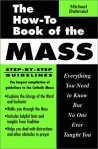
Perhaps you know someone who is contemplating coming back to Church this Christmas season. The How to Book of the Mass  by Michael Dubruiel would be a great gift for them.


Michael Dubruiel
The How-To Book of the Mass  by Michael Dubruiel is the only book that not only provides the who, what, where, when, and why of themost time-honored tradition of the Catholic Church but also the how.
In this complete guide you get:
  • step-by-step guidelines to walk you through the Mass
  • the Biblical roots of the various parts of the Mass and the very prayers themselves
  • helpful hints and insights from the Tradition of the Church
  • aids in overcoming distractions at Mass
  • ways to make every Mass a way to grow in your relationship with Jesus
If you want to learn what the Mass means to a truly Catholic life—and share this practice with others—you can’t be without The How-To Book of the Mass. Discover how to:
  • Bless yourself
  • Make the Sign of the Cross
  • Genuflect
  • Pray before Mass
  • Join in Singing the Opening Hymn
  • Be penitential
  • Listen to the Scriptures
  • Hear a Great Homily Everytime
  • Intercede for others
  • Be a Good Steward
  • Give Thanks to God
  • Give the Sign of Peace
  • Receive the Eucharist
  • Receive a Blessing
  • Evangelize Others
  • Get something Out of Every Mass You Attend
"Is this not the same movement as the Paschal meal of the risen Jesus with his disciples? Walking with them he explained the Scriptures to them; sitting with them at table 'he took bread, blessed and broke it, and gave it to them."1347, Catechism of the Catholic Church

Find more about The How to Book of the Mass here.

Wednesday, December 26, 2018

Feast of St. Stephen Meditation

Octave of Christmas--Feast of St. Stephen

The day after Christmas we celebrate the feast of the first Christian Martyr. The gospel for today places before us the message of the adult Jesus to his followers "Beware of men, for they will hand you over to courts and scourge you in their synagogues, and you will be led before governors and kings for my sake as a witness before them and the pagans. When they hand you over, do not worry about how you are to speak or what you are to say. You will be given at that moment what you are to say. For it will not be you who speak but the Spirit of your Father speaking through you. Brother will hand over brother to death, and the father his child; children will rise up against parents and have them put to death. You will be hated by all because of my name, but whoever endures to the end will be saved."
If we think these are just nice words and we needn't worry we have St. Stephen placed before us. Stephen a deacon is stoned to death for being a follower of Christ. His death in many ways mirrors the death of Jesus, in his final words he hands over his spirit.

The word martyr literally means witness. Jesus tells us that our persecution is an opportunity to witness. Stephen's witness is before a man Saul who will become the greatest Christian missionary to ever live--St. Paul. Our opportunities to witness happen daily with how we react to the every moment. Do we rely upon the Lord for what we will say?


Michael Dubruiel

Tuesday, December 25, 2018

Christmas Meditation by Michael Dubruiel

Solemnity of Christmas

A few nights ago we watched a show on one of the cable stations that advertised itself as a program that explored the origins of Christmas. The winter's solstice was mentioned. The origin of Rudolph as an advertising symbol for Montgomery Ward's was mentioned. The transformation of St. Nick to Santa Claus was mentioned. And oh yes, 45 minutes into the program some mention was made of Catholics and a few other main line Protestant churches having special services on Christmas Day to commemorate the birth of Christ. It was all very enlightening.
Today's Gospel points to the origin of all creation--"In the beginning was the Word.." Before anything there was Christ. The Word is responsible for everything that exist. Nothing exist without His willing it.
It is fitting that the season of Christmas is over for those who don't acknowledge Christ and that it is just beginning for those who do. Because when all the gifts that we exchange have rotted and even when this mortal flesh that we hold on to has wasted away in some far off grave--Christ will remain. Hopefully the Word will call us forth on that distant day because of what we celebrate on this day..."the Word became Flesh and pitched His tent in our midst."

Merry Christmas!


Michael Dubruiel

Monday, December 24, 2018

Christmas Eve Meditation

O Radiant Dawn, splendor of eternal light, sun of justice: come, shine on those who dwell in darkness and the shadow of death.
"Blessed is she who believed that the message made her by the Lord would be fulfilled." Here is where most of us fall short. We really don't believe, silently we distrust. In our actions we loudly show our unbelief.
Elizabeth praises Mary for her trust.
What do you and I really trust in?

Today ask the Blessed Virgin to give you a stronger faith, one that looks to God expectantly at every waking moment of your day and sleeps at night with the same assurance.

More from Michael Dubruiel:


Michael Dubruiel wrote a book to help people deepen their experience of the Mass.  He titled it, How to Get the Most Out of the Eucharist.  You can read about it here. 


How to Get the Most Out of the Eucharist gives you nine concrete steps to help you join your own sacrifice to the sacrifice of Christ as you:
  • Serve: Obey the command that Jesus gave to his disciples at the first Eucharist.
  • Adore: Put aside anything that seems to rival God in importance.
  • Confess: Believe in God’s power to make up for your weaknesses.
  • Respond" Answer in gesture, word, and song in unity with the Body of Christ.
  • Incline: Listen with your whole being to the Word of God.
  • Fast: Bring your appetites and desires to the Eucharist.
  • Invite: Open yourself to an encounter with Jesus.
  • Commune: Accept the gift of Christ in the Eucharist.
  • Evangelize :Take him and share the Lord with others.


Filled with true examples, solid prayer-helps, and sound advice, How to Get the Most Out of the Eucharist shows you how to properly balance the Mass as a holy banquet with the Mass as a holy sacrifice. With its references to Scripture, quotations from the writings and prayers of the saints, and practical aids for overcoming distractions one can encounter at Mass, this book guides readers to embrace the Mass as if they were attending the Last Supper itself.

Sunday, December 23, 2018

Catholics Returning for Christmas by Michael Dubruiel

Perhaps you know someone who is contemplating coming back to Church this Christmas season. The How to Book of the Mass  by Michael Dubruiel would be a great gift for them.


Michael Dubruiel
The How-To Book of the Mass is the only book that not only provides the who, what, where, when, and why of themost time-honored tradition of the Catholic Church but also the how.
In this complete guide you get:
  • step-by-step guidelines to walk you through the Mass
  • the Biblical roots of the various parts of the Mass and the very prayers themselves
  • helpful hints and insights from the Tradition of the Church
  • aids in overcoming distractions at Mass
  • ways to make every Mass a way to grow in your relationship with Jesus
If you want to learn what the Mass means to a truly Catholic life—and share this practice with others—you can’t be without The How-To Book of the Mass. Discover how to:
  • Bless yourself
  • Make the Sign of the Cross
  • Genuflect
  • Pray before Mass
  • Join in Singing the Opening Hymn
  • Be penitential
  • Listen to the Scriptures
  • Hear a Great Homily Everytime
  • Intercede for others
  • Be a Good Steward
  • Give Thanks to God
  • Give the Sign of Peace
  • Receive the Eucharist
  • Receive a Blessing
  • Evangelize Others
  • Get something Out of Every Mass You Attend
"Is this not the same movement as the Paschal meal of the risen Jesus with his disciples? Walking with them he explained the Scriptures to them; sitting with them at table 'he took bread, blessed and broke it, and gave it to them."1347, Catechism of the Catholic Church

Find more about The How to Book of the Mass here.

Friday, December 21, 2018

Friday Third Week of Advent Michael Dubruiel

O LORD AND RULER of the House of Israel, who appeared to Moses in the flame of the burning bush and gave him the law on Sinai: COME, and redeem us with outstretched arms.

The name of God was so sacred and reverred that it was only spoken by the High Priest and then only once a year. Whenever God was referred to in Scripture His name would not be written but rather "Adonai" the Hebrew word that we translate Lord, in Greek it would be "Kyrios". In this reverential "O Antiphon" we have a plea for the Lord to come and save us, the mention of Moses who mediated the redemption of the Jewish tribes from slavery and in the midst of battle won the day as long as he could keep his arms outstretched points to the Lord who will come and redeem us with arms
Michael Dubruiel
outstretch from the battle that humanity faces both from evil and death.

Redemption, I wonder how much that enters our mind this final week before we celebrate Christmas? A year ago, shortly after Christmas thousands of people were swept to sea to their deaths by a tsunami. Later in the year thousands have died here in our own country from the effects of deadly hurricanes that struck along the Gulf coast. Not to mention the millions who will not celebrate Christmas this year, whose lives ended from any variety of causes including the unnatural one of sin that infects all of creation, that we call original sin.

The "one thing necessary"--that perfect gift--won't be lying under the Christmas tree next Sunday. But the name of the day gives you a clue where you and I can find the Divine medicine offered in response to our prayer today--we will find Him with Mary His Mother and St. Joseph (who's representations stand sentinel in many Catholic Churches on either side of the altar)at Christ's Mass. Every day can be Christmas--
O Lord, Come!