From 2004 by Michael Dubruiel Taming the Wild Solanus had also been cultivating a patch of wild strawberries which he told the friars he was "taming." Father Solanus: The Story of Solnus Casey O.F.M. Cap. p.174
I had been making my lunch time pilgrimage for several months when I read a chapter from Cathy Odell's book on Solanus' time in Huntington. I had literally walked the fields and woods throughout but had never come across any wild strawberries. They must have perished when some of the land was plowed, I figured.
It was a beautiful sunlit day, not a cloud in the sky and very low humidity. I started out walking the perimeter of the property, as was my usual route, and began to pray the rosary. Normally this meant finishing the joyful mysteries by the time I reached the far forest where an Eagle Scout had cleared a trail through the woods. There I would begin the sorrowful mysteries reaching the Capuchin graveyard about the time I reached the third sorrowful mystery (the Crowing with Thorns) where I would prostrate in the direction of the simple wooden cross at the head of the graveyard and pray the prayer of St. Francis, "We adore thee O Christ and we praise Thee because by thy holy cross Thou hast redeemed the world." Then I would pray the third sorrowful mystery on my knees for the Friars and others buried there, at the same time asking for their intercession for my many needs.
Then I would retrace my steps backward in a slightly different path along the woods rather than through them. At about the same spot where I had discovered an apple tree left over from the orchard that Solanus had blessed, I looked down and spotted something red blooming. At first I thought they were small red flowers that had some how resisted the mowing the lawn had received recently. But on closer inspection I found wild strawberries almost ready to be harvested.
I thought of the irony of my discovery on the very day that I had first read about Solanus' "taming" of wild strawberries, then I thought of the whole aspect of "taming" the wild.
Looking over the property of what had once been a flourishing center of Catholic spirituality, I could not help but be struck by the apparent failure. What had been tamed here and once again become wild.
It struck me as an apt symbol for the state of Catholicism in the United States at the beginning of the Twenty-first century. The in-roads that the Church had made in converting and bringing Catholic Christianity to this country seemed to have reverted back to its wild state. Those who call themselves Catholic pick and choose what they believe and how they practice their faith. In many ways they mirror the environment they live in with very little to distinguish them from their non-Catholic neighbors.
Of course it also struck me that I suffered from this as much as anyone.
Picking up the wild strawberry, I saw how immature it was. No doubt Solanus' taming of the "wild" strawberries had resulted in them growing into substantial fruit that was enjoyed by the Huntington Capuchins. Now without that taming, the wild strawberry had once again returned to a small pitiful caricature of what it might have been.
Sadly this is what we also have become. Our influence in our culture is weak and we risk giving scandal to those who look to us as representatives of all that is Catholic. We are "wild" Cathlolics, in great need of being tamed by Our Lord Jesus Christ.
Monday, June 4, 2018
Solanus Casey

Sunday, June 3, 2018
Feast of Corpus Christi
Eucharist means..."thanksgiving"
Michael Dubruiel wrote a book to help people deepen their experience of the Mass. He titled it, How to Get the Most Out of the Eucharist. You can read about it here.

Michael Dubruiel wrote a book to help people deepen their experience of the Mass. He titled it, How to Get the Most Out of the Eucharist. You can read about it here.

How to Get the Most Out of the Eucharist gives you nine concrete steps to help you join your own sacrifice to the sacrifice of Christ as you:
- Serve: Obey the command that Jesus gave to his disciples at the first Eucharist.
- Adore: Put aside anything that seems to rival God in importance.
- Confess: Believe in God’s power to make up for your weaknesses.
- Respond" Answer in gesture, word, and song in unity with the Body of Christ.
- Incline: Listen with your whole being to the Word of God.
- Fast: Bring your appetites and desires to the Eucharist.
- Invite: Open yourself to an encounter with Jesus.
- Commune: Accept the gift of Christ in the Eucharist.
- Evangelize :Take him and share the Lord with others.
Filled with true examples, solid prayer-helps, and sound advice, How to Get the Most Out of the Eucharist shows you how to properly balance the Mass as a holy banquet with the Mass as a holy sacrifice. With its references to Scripture, quotations from the writings and prayers of the saints, and practical aids for overcoming distractions one can encounter at Mass, this book guides readers to embrace the Mass as if they were attending the Last Supper itself.
Friday, June 1, 2018
June is the month of the Sacred Heart

June is the month of the Sacred Heart.
The promises of the Sacred Heart of Jesus to Saint Margaret Mary:
1. I will give them all the graces necessary for their state of life.
2. I will give peace in their families.
3. I will console them in all their troubles.
4. I will be their refuge in life and especially in death.
5. I will abundantly bless all their undertakings.
6. Sinners shall find in my Heart the source and infinite ocean of mercy.
7. Tepid souls shall become fervent.
8. Fervent souls shall rise speedily to great perfection.
9. I will bless those places wherein the image of
My Sacred Heart shall be exposed and venerated.
10. I will give to priests the power to touch the most hardened hearts.
11. Persons who propagate this devotion shall
have their names eternally written in my Heart.
12. In the excess of the mercy of my Heart, I promise you that my all powerful love will grant to all those who will receive Communion on the First Fridays, for nine consecutive months, the grace of final repentance: they will not die in my displeasure, nor without receiving the sacraments; and my Heart will be their secure refuge in that last hour.
Wednesday, May 30, 2018
Sacred Heart Novena May 31-June 8
The Novena to the Sacred Heart begins on May 31
When Jesus ascended into heaven, he told his Apostles to stay where they were and to "wait for the gift" that the Father had promised: the Holy Spirit. The Apostles did as the Lord commanded them. "They all joined together constantly in prayer, along with the women and Mary the mother of Jesus, and with his brothers" (Acts 1:14). Nine days passed; then, they received the gift of the Holy spirit, as had been promised. May we stay together with the church, awaiting in faith with Our Blessed Mother, as we trust entirely in God, who loves us more than we can ever know.
Sunday, May 27, 2018
How to Get the Most out of the Eucharist, part 3 by Michael Dubruiel
From How to Get the Most Out of the Eucharist by Michael Dubruiel

A N O T E O F C A U T I O N
N ow, I want to be clear that what I am proposing in this book is not the “victim-ism” that was sometimes prevalent in the older spirituality of “offering it up.” In every situation we are free to choose how we will respond to an event: we can blame someone else for what is happening, or we can feel powerless and do
nothing. It is my contention that neither of these responses is Christlike.The experience of “offering up” our lives to God needs to be a positive and co-redemptive act.Thankfully, with God’s help we are all capable of freely choosing to respond in this fashion.
Those who promoted the spirituality of “offering it up” in a previous age often quoted St.Paul’s words to the Colossians:“Now I rejoice in my sufferings for your sake, and in my flesh I complete what is lacking in Christ’s afflictions for the sake of his body, that is, the church” (Colossians 1:24). In offering our sacrifice at the Eucharist, in the same way that we offer up any suffering we endure in life, we take whatever is negative and turn it into a positive, life-giving force both in our own lives and in the lives of those around us. We make up for what is “lacking” for the sake of “his body,”the Church — that is,ourselves in communion with all Christians with all of our imperfections and all of our failings. “The miracle of the church assembly lies in that it is not the ‘sum’ of the sinful and unworthy people who comprise it, but the body of Christ,” Father Alexander Schmemann remarked.3 This is the power of the cross of Jesus Christ,taking what appears to be weakness and allowing God to transform it into strength!
Saturday, May 26, 2018
How to Get the Most out of the Eucharist, part 2 by Michael Dubruiel
From How to Get the Most Out of the Eucharist by Michael Dubruiel
T H E E U C H A R I S T A S A S A C R I F I C E
The solution to this modern dilemma is simple — put Jesus back at the center of the Eucharist and you immediately change all of this. In his encyclical Pope John Paul II says, “In giving his sacrifice to the Church, Christ has also made his own the spiritual sacrifice of the Church, which is called to offer herself in union with the sacrifice of Christ.This is the teaching of the Second Vatican Council concerning all the faithful: ‘Taking part in the Eucharistic Sacrifice,which is the source and summit of the whole Christian life,they offer the divine victim to God,and offer themselves along with it.’ ”2
As we participate in the Eucharist, not only do we participate in Christ’s sacrifice on Calvary but we are called to share in that sacrifice.Just knowing this should change how we view everything that irks us at Mass. Are you:
• Suffering mental anguish — like a crown of thorns isupon your head?
• Weighed down by worldly concerns — like the weight ofthe cross is on you?
• Feeling powerless — like you are nailed to a cross?
If we take away a sacrificial attitude toward the Eucharist, we are likely to fail to see the connection between our lives and what we do at Mass.We are apt to sit in judgment, waiting to be entertained (whether we are conservative or liberal, what we want to see differs but the attitude is the same). When we fail to bring a sacrificial attitude to the Eucharist, our participation seems at times to be modeled more after Herod’s banquet, where Simone’s dance cost the Baptist his head, than after the Last Supper of Our Lord, where there was every indication that partaking in this banquet was likely to cost the disciples their own lives. (Indeed, ten of the twelve were martyred,Judas took his own life,and John survived being boiled alive in a cauldron of oil.)
When was the last time that you celebrated the Eucharist with the thought that you were being asked to “offer yourself” — to give your very life? Chances are,you haven’t thought of it,but you may have experienced it …
• By thinking “I could be doing something else.”
• By asking “Why am I here?”
Yet you weren’t doing anything else and you were there — what was missing was the free offering of “your sacrifice,” the choice to offer your suffering along with that of the Passion of Our Lord.
Participation in the Eucharist requires that we die to ourselves and live in Christ. If we want to get the most out of the Eucharist, then sacrifice is the key.This is what has been lost on many of us, and if we want to reclaim all the spiritual riches that are available to us we must relearn what it means not only to “offer it up” but indeed to offer ourselves up.
Thursday, May 24, 2018
Octave of Pentecost
The letter to the Hebrews draws a strong connection
between the cross and prayer. Because every moment of our
earthly existence is threatened by death, and we know neither the
day nor the hour when that existence will come to an end, we,
too, need to cry out to the God who can save us. Like Moses, we
need the help of our fellow Christians to hold up our arms when
they grow tired. We, too, need the help of the Holy Spirit to
make up for what is lacking in our prayer.
-The Power of the Cross by Michael Dubruiel

Wednesday, May 23, 2018
Octave of Pentecost
Steps to Take as You Follow ChristAsk— What do I do with God’s spirit?Seek—From a prayer posture, concentrate on your breathing. Asyou inhale, ask God to fill you with the Holy Spirit, to animateyour every action to do his will. As you exhale, breathe the namefrom the core of your being: Jesus. Continue to meditate on him.Knock—Meditate on Galatians 6:7–9. Reflect on the differencebetween a living person and a corpse. Are most of your actions,actions of sowing in the flesh or sowing to the spirit? Ask Godfor patience that you might endure in all things by sowing to thespirit.Transform Your Life—Make it a habit to pray the prayer ofJesus from the cross whenever you find yourself tempted to dosomething that you know is not of God: “Father, into your handsI commend my Spirit.” This prayer that Jesus has given us is thekey to moving from sowing in the flesh to sowing to the spirit.
-The Power of the Cross by Michael Dubruiel
Tuesday, May 22, 2018
St. Rita - May 22
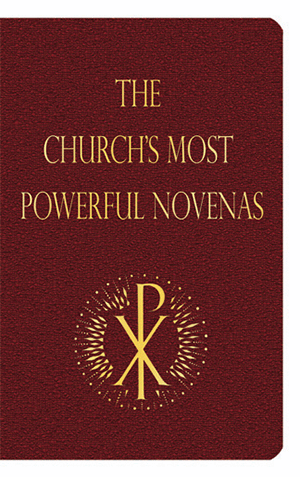
 From The Church's Most Powerful Novenas
 by Michael Dubruiel
Rita Lotti was born near Cascia in Italy in the fourteenth century, the only child of her parents, Antonio and Amata. Her parents were official peacemakers in a turbulent environment of feuding families.
At an early age Rita felt called to religious life; however, her parents arranged for her to be married to Paolo Mancini. Rita accepted this as God’s will for her, and the newlyweds were soon blessed with two sons.
One day while on his way home, Paolo was killed. Rita’s grief was compounded with the fear that her two sons would seek to avenge their father’s death, as was the custom of the time. She began praying and fasting that God would not allow this to happen. Both sons soon fell ill and died, which Rita saw as an answer to her prayers.
Now alone in the world, Rita sought to enter religious life, feeling that God had cleared the path for her to fulfill the vocation that she had felt was hers from childhood. Yet she found that the convent she so desired to enter was reluctant to accept her due to fears that the political rivals that had killed her husband would bring violence on them.
She finally brought peace between the rivals and was able to enter the Convent of St. Mary Magdalene of the Augustinian Nuns. In religious life, Rita was noted for her holiness. She spent her days not only in prayer and contemplation but also in service to the sick and the poor.
One day while kneeling in prayer and contemplating the passion of Jesus, she received the wound of one thorn from the crown of thorns that she bore until her death some fifteen years later.
Devotion to St. Rita was almost nonexistent for five hundred years, but with her canonization in 1900, all of that has changed. She is truly a saint for every state in life, having spent her life as a married woman, a mother, a widow, and a religious.
Sunday, May 20, 2018
Pentecost - A Glorious Mystery of the Rosary
Michael Dubruiel conceived and put together the small hardbound book, Praying the Rosary. Click on the cover for more information.
. 
The Gospels show that the gaze of Mary varied depending upon the circumstances of life. So it will be with us. Each time we pick up the holy beads to recite the Rosary, our gaze at the mystery of Christ will differ depending on where we find ourselves at that moment.
Thereafter Mary’s gaze, ever filled with adoration and wonder, would never leave him. At times it would be a questioning look, as in the episode of the finding in the Temple: “Son, why have you treated us so?” (Lk 2:48); it would always be a penetrating gaze, one capable of deeply understanding Jesus, even to the point of perceiving his hidden feelings and anticipating his decisions, as at Cana (cf. Jn 2:5). At other times it would be a look of sorrow, especially beneath the Cross, where her vision would still be that of mother giving birth, for Mary not only shared the passion and death of her Son, she also received the new son given to her in the beloved disciple (cf. Jn 19:26-27). On the morning of Easter hers would be a gaze radiant with the joy of the Resurrection, and finally, on the day of Pentecost, a gaze afire with the outpouring of the Spirit (cf. Acts 1:14) [Rosarium Virginis Mariae, no. 10].
As we pray the Rosary, then, we join with Mary in contemplating Christ. With her, we remember Christ, we proclaim Him, we learn from Him, and, most importantly, as we raise our voices in prayer and our hearts in contemplation of the holy mysteries, this “compendium of the Gospel” itself, we are conformed to Him.
Saturday, May 19, 2018
Pentecost Novena
When Jesus ascended into heaven, he told his Apostles to stay where they were and to "wait for the gift" that the Father had promised: the Holy Spirit. The Apostles did as the Lord commanded them. "They all joined together constantly in prayer, along with the women and Mary the mother of Jesus, and with his brothers" (Acts 1:14). Nine days passed; then, they received the gift of the Holy spirit, as had been promised. May we stay together with the church, awaiting in faith with Our Blessed Mother, as we trust entirely in God, who loves us more than we can ever know.
Thursday, May 17, 2018
College Graduation Gift
You can purchase Michael Dubruiel's books here -
Books like The How to Book of the Mass and How to Get the Most Out of the Eucharist.
How to Get the Most Out of the Eucharist gives you nine concrete steps to help you join your own sacrifice to the sacrifice of Christ as you:
Serve: Obey the command that Jesus gave to his disciples at the first Eucharist.
Adore: Put aside anything that seems to rival God in importance.
Confess: Believe in God’s power to make up for your weaknesses.
Respond" Answer in gesture, word, and song in unity with the Body of Christ.
Incline: Listen with your whole being to the Word of God.
Fast: Bring your appetites and desires to the Eucharist.
Invite: Open yourself to an encounter with Jesus.
Commune: Accept the gift of Christ in the Eucharist.
Evangelize :Take him and share the Lord with others.
Books like The How to Book of the Mass and How to Get the Most Out of the Eucharist.
How to Get the Most Out of the Eucharist gives you nine concrete steps to help you join your own sacrifice to the sacrifice of Christ as you:
Serve: Obey the command that Jesus gave to his disciples at the first Eucharist.
Adore: Put aside anything that seems to rival God in importance.
Confess: Believe in God’s power to make up for your weaknesses.
Respond" Answer in gesture, word, and song in unity with the Body of Christ.
Incline: Listen with your whole being to the Word of God.
Fast: Bring your appetites and desires to the Eucharist.
Invite: Open yourself to an encounter with Jesus.
Commune: Accept the gift of Christ in the Eucharist.
Evangelize :Take him and share the Lord with others.
Wednesday, May 16, 2018
High School Graduation Gift
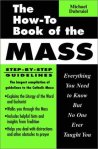
The How To Book of the Mass by Michael Dubruiel is also a great resource for inquirers and RCIA sessions.
You can find more information at this page.
You can find more information at this page.
In this complete guide you get:
- step-by-step guidelines to walk you through the Mass
- the Biblical roots of the various parts of the Mass and the very prayers themselves
- helpful hints and insights from the Tradition of the Church
- aids in overcoming distractions at Mass
- ways to make every Mass a way to grow in your relationship with Jesus
If you want to learn what the Mass means to a truly Catholic life—and share this practice with others—you can’t be without The How-To Book of the Mass.
Discover how to:
- Bless yourself
- Make the Sign of the Cross
- Genuflect
- Pray before Mass
- Join in Singing the Opening Hymn
- Be penitential
- Listen to the Scriptures
- Hear a Great Homily Everytime
- Intercede for others
- Be a Good Steward
- Give Thanks to God
- Give the Sign of Peace
- Receive the Eucharist
- Receive a Blessing
- Evangelize Others
- Get something Out of Every Mass You Attend
“Is this not the same movement as the Paschal meal of the risen Jesus with his disciples? Walking with them he explained the Scriptures to them; sitting with them at table ‘he took bread, blessed and broke it, and gave it to them.”
1347, Catechism of the Catholic Church
Monday, May 14, 2018
Novena to the Holy Spirit
(Pentecost is May 20)
When Jesus ascended into heaven, he told his Apostles to stay where they were and to "wait for the gift" that the Father had promised: the Holy Spirit. The Apostles did as the Lord commanded them. "They all joined together constantly in prayer, along with the women and Mary the mother of Jesus, and with his brothers" (Acts 1:14). Nine days passed; then, they received the gift of the Holy spirit, as had been promised. May we stay together with the church, awaiting in faith with Our Blessed Mother, as we trust entirely in God, who loves us more than we can ever know.
Sunday, May 13, 2018
Feast of the Ascension
May is Mary's month, a month we pay special attention to the rosary. The Ascension is one of the Glorious Mysteries of the Rosary. Check out this small hardbound book by Michael Dubruiel and Amy Welborn, Praying the Rosary. Click on the cover for more information.
.
The Gospels show that the gaze of Mary varied depending upon the circumstances of life. So it will be with us. Each time we pick up the holy beads to recite the Rosary, our gaze at the mystery of Christ will differ depending on where we find ourselves at that moment.
Thereafter Mary’s gaze, ever filled with adoration and wonder, would never leave him. At times it would be a questioning look, as in the episode of the finding in the Temple: “Son, why have you treated us so?” (Lk 2:48); it would always be a penetrating gaze, one capable of deeply understanding Jesus, even to the point of perceiving his hidden feelings and anticipating his decisions, as at Cana (cf. Jn 2:5). At other times it would be a look of sorrow, especially beneath the Cross, where her vision would still be that of mother giving birth, for Mary not only shared the passion and death of her Son, she also received the new son given to her in the beloved disciple (cf. Jn 19:26-27). On the morning of Easter hers would be a gaze radiant with the joy of the Resurrection, and finally, on the day of Pentecost, a gaze afire with the outpouring of the Spirit (cf. Acts 1:14) [Rosarium Virginis Mariae, no. 10].
As we pray the Rosary, then, we join with Mary in contemplating Christ. With her, we remember Christ, we proclaim Him, we learn from Him, and, most importantly, as we raise our voices in prayer and our hearts in contemplation of the holy mysteries, this “compendium of the Gospel” itself, we are conformed to Him.
Saturday, May 12, 2018
Last minute Mother's Day Gift
Michael Dubruiel conceived and put together the small hardbound book, Praying the Rosary. Click on the cover for more information.
.
The Gospels show that the gaze of Mary varied depending upon the circumstances of life. So it will be with us. Each time we pick up the holy beads to recite the Rosary, our gaze at the mystery of Christ will differ depending on where we find ourselves at that moment.
Thereafter Mary’s gaze, ever filled with adoration and wonder, would never leave him. At times it would be a questioning look, as in the episode of the finding in the Temple: “Son, why have you treated us so?” (Lk 2:48); it would always be a penetrating gaze, one capable of deeply understanding Jesus, even to the point of perceiving his hidden feelings and anticipating his decisions, as at Cana (cf. Jn 2:5). At other times it would be a look of sorrow, especially beneath the Cross, where her vision would still be that of mother giving birth, for Mary not only shared the passion and death of her Son, she also received the new son given to her in the beloved disciple (cf. Jn 19:26-27). On the morning of Easter hers would be a gaze radiant with the joy of the Resurrection, and finally, on the day of Pentecost, a gaze afire with the outpouring of the Spirit (cf. Acts 1:14) [Rosarium Virginis Mariae, no. 10].
As we pray the Rosary, then, we join with Mary in contemplating Christ. With her, we remember Christ, we proclaim Him, we learn from Him, and, most importantly, as we raise our voices in prayer and our hearts in contemplation of the holy mysteries, this “compendium of the Gospel” itself, we are conformed to Him.
Friday, May 11, 2018
Pentecost Novena
(Pentecost is May 20)
When Jesus ascended into heaven, he told his Apostles to stay where they were and to "wait for the gift" that the Father had promised: the Holy Spirit. The Apostles did as the Lord commanded them. "They all joined together constantly in prayer, along with the women and Mary the mother of Jesus, and with his brothers" (Acts 1:14). Nine days passed; then, they received the gift of the Holy spirit, as had been promised. May we stay together with the church, awaiting in faith with Our Blessed Mother, as we trust entirely in God, who loves us more than we can ever know.
Feast of the Sacred Heart of Jesus - June 8
1. I will give them all the graces necessary for their state of life.
2. I will give peace in their families.
3. I will console them in all their troubles.
4. I will be their refuge in life and especially in death.
5. I will abundantly bless all their undertakings.
6. Sinners shall find in my Heart the source and infinite ocean of mercy.
7. Tepid souls shall become fervent.
8. Fervent souls shall rise speedily to great perfection.
9. I will bless those places wherein the image of
My Sacred Heart shall be exposed and venerated.
10. I will give to priests the power to touch the most hardened hearts.
11. Persons who propagate this devotion shall
have their names eternally written in my Heart.
12. In the excess of the mercy of my Heart, I promise you that my all powerful love will grant to all those who will receive Communion on the First Fridays, for nine consecutive months, the grace of final repentance: they will not die in my displeasure, nor without receiving the sacraments; and my Heart will be their secure refuge in that last hour.
-Michael Dubruiel
Thursday, May 10, 2018
Ascension Thursday
May is Mary's month, a month we pay special attention to the rosary. The Ascension is on of the Glorious Mysteries of the Rosary. Check out this small hardbound book by Michael Dubruiel and Amy Welborn, Praying the Rosary. Click on the cover for more information.
. Ascension Thursday
Ascension Thursday
The Gospels show that the gaze of Mary varied depending upon the circumstances of life. So it will be with us. Each time we pick up the holy beads to recite the Rosary, our gaze at the mystery of Christ will differ depending on where we find ourselves at that moment.
Thereafter Mary’s gaze, ever filled with adoration and wonder, would never leave him. At times it would be a questioning look, as in the episode of the finding in the Temple: “Son, why have you treated us so?” (Lk 2:48); it would always be a penetrating gaze, one capable of deeply understanding Jesus, even to the point of perceiving his hidden feelings and anticipating his decisions, as at Cana (cf. Jn 2:5). At other times it would be a look of sorrow, especially beneath the Cross, where her vision would still be that of mother giving birth, for Mary not only shared the passion and death of her Son, she also received the new son given to her in the beloved disciple (cf. Jn 19:26-27). On the morning of Easter hers would be a gaze radiant with the joy of the Resurrection, and finally, on the day of Pentecost, a gaze afire with the outpouring of the Spirit (cf. Acts 1:14) [Rosarium Virginis Mariae, no. 10].
As we pray the Rosary, then, we join with Mary in contemplating Christ. With her, we remember Christ, we proclaim Him, we learn from Him, and, most importantly, as we raise our voices in prayer and our hearts in contemplation of the holy mysteries, this “compendium of the Gospel” itself, we are conformed to Him.
Tuesday, May 8, 2018
Fulton Sheen birthday - May 8 by Michael Dubruiel
Today, May 8, is Fulton Sheen's 123rd birthday.

Bishop Sheen’s “Now-moment” corresponds to the thinking of the great spiritual writer Jean Pierre de Caussade. In Abandonment to Divine Providence, Fr. Caussade gives the reader a sure way of knowing the will of God at any moment—by simply confronting the present moment with all its reality. It seems simple, but if we reflect for a second most of us will find that we spend most of our lives avoiding the present moment.
A few years ago an English translation of the Father Caussade’s work appeared in the United States changing the original title to read “The Sacrament of the Present Moment.” This captures the essence of Father Caussade’s work and Bishop Sheen’s meditation that in the present time we are presented with an opportunity that is truly unique. Each moment is sacramental.
Most of us are capable of presenting ourselves with some amount of reflection as we celebrate the sacraments. If we celebrated the sacrament of Baptism as an adult certainly we came expecting to be changed by God. Each time we enter a confessional surely we have examined our conscience beforehand and are penitent expecting to be forgiven by God. Undoubtedly every time we approach the altar to receive the Eucharist we expect to encounter God. But what about the other moments of our lives?
As we awake in the morning, is our first thought of God? As we greet our brothers and sisters throughout the day do we expect that God might be present? Every moment of our lives is an opportunity to encounter God who is always present.
Spend some time reflecting on the following:
1. Go over the events of the present day and ask yourself where God might have been in each of them. Is there a consistent pattern to your day?
2. Reflect on the life of your favorite saint, and meditate on how he or she dealt with the people they met in their daily journeys. How could you imitate this saint? What enabled the saint to act in the way he or she did toward others?
3. Imagine as you leave from this time of prayer that God wishes to continue to be present to you as you go forth. How will you react to his presence in others?
PrayerLord, help me to search for you in the garden of life in the same way that St. Mary Magdalene did when she found your tomb empty. May my search be rewarded as hers was by knowledge of your abiding presence. Amen.
Monday, May 7, 2018
How to Get More Out of the Catholic Mass: Part 1
Eucharist means..."thanksgiving"
Michael Dubruiel wrote a book to help people deepen their experience of the Mass. He titled it, How to Get the Most Out of the Eucharist. You can read about it here.
The following is an excerpt from the introduction:
Michael Dubruiel wrote a book to help people deepen their experience of the Mass. He titled it, How to Get the Most Out of the Eucharist. You can read about it here.
The following is an excerpt from the introduction:
Problems… I had the opportunity to speak about the Eucharist to various groups of people in almost every part of the United States since the release of The How To Book of the Mass, a book I wrote several years ago. No matter where I happened to be, I received the same response. A dissatisfaction of sorts often rooted in how things were being done at their home parish.
Some of these same people longed for the “old” days of the Tridentine liturgy (and an alarming number of young Catholics). Yet I know from conversations that I've had with older priests that the old liturgy was subject to many of the same problems as today's Mass.
What was different forty years ago is the attitude that Catholics brought to the Eucharist back then was more sacrificial. A term that one often heard older Catholics use was "to offer it up" when things didn't go the way you expected or wished. This sacrificial attitude made a previous generation of Catholics focus not on themselves but on what God wanted of them.
By the time I attended a Catholic College in the early 1980’s people were being made fun of if they still had this attitude. I remember a very pious student one day suggesting to another student who was complaining about the difficulty of an upcoming test that he “offer-up” the suffering he was undergoing for the poor souls in Purgatory. His fellow student replied, “Are you nuts?” Everyone at the table laughed. It was symbolic of a change in the Catholic psyche.
The Eucharist was viewed almost entirely as a banquet; a picnic table replaced the stone altar in the chapel, it was moved from the front of the chapel to the center. The emphasis was more horizontal. The pendulum was swinging in the other direction, after many years where it would have been difficult to think of the Mass as a meal, now it was nearly impossible to encounter the Eucharist as a sacrifice.
Some twenty years later the pendulum is returning to the middle. My college chapel has been renovated yet again. The table is gone replaced by a very ornate altar that is located in the middle of the congregation. Images once removed have returned and there is more of a flow of the feeling that both God and humans occupy this worship space.
Pope John Paul in his Encyclical on the Eucharist Ecclesia de Eucharistia has mentioned as one of the modern “shadows” or problems with the way Catholics understand the Eucharist is that "Stripped of its sacrificial meaning, it is celebrated as if it were simply a fraternal banquet[i]."
It is my belief that this downplaying the sacrificial nature of the Eucharist is the main reason that many of us are not getting the most out of the Eucharist. Over time we lose sight of why we even go or worst the Eucharist gets relegated to one more social obligation that one can easily decide not to attend.
[i] Ecclesia De Eucharistia (10)
How to Get the Most Out of the Eucharist gives you nine concrete steps to help you join your own sacrifice to the sacrifice of Christ as you:
- Serve: Obey the command that Jesus gave to his disciples at the first Eucharist.
- Adore: Put aside anything that seems to rival God in importance.
- Confess: Believe in God’s power to make up for your weaknesses.
- Respond" Answer in gesture, word, and song in unity with the Body of Christ.
- Incline: Listen with your whole being to the Word of God.
- Fast: Bring your appetites and desires to the Eucharist.
- Invite: Open yourself to an encounter with Jesus.
- Commune: Accept the gift of Christ in the Eucharist.
- Evangelize :Take him and share the Lord with others.
Sunday, May 6, 2018
Michael Dubruiel's Books
The first step to ridding ourselves of disordered attachments
is to realize what those attachments might be. Whenever we have
a tendency to rationalize that something is “holy,” “untouchable,”
or “indispensable”—it is a pretty good indication that a disordered
attachment is at the root. Only God is our holy and
untouchable source of life. Giving anything else such a high priority
is perpetuating a lie.
Saturday, May 5, 2018
Mother's Day is May 13, 2018
Michael Dubruiel conceived and put together the small hardbound book, Praying the Rosary. Click on the cover for more information.
.
The Gospels show that the gaze of Mary varied depending upon the circumstances of life. So it will be with us. Each time we pick up the holy beads to recite the Rosary, our gaze at the mystery of Christ will differ depending on where we find ourselves at that moment.
Thereafter Mary’s gaze, ever filled with adoration and wonder, would never leave him. At times it would be a questioning look, as in the episode of the finding in the Temple: “Son, why have you treated us so?” (Lk 2:48); it would always be a penetrating gaze, one capable of deeply understanding Jesus, even to the point of perceiving his hidden feelings and anticipating his decisions, as at Cana (cf. Jn 2:5). At other times it would be a look of sorrow, especially beneath the Cross, where her vision would still be that of mother giving birth, for Mary not only shared the passion and death of her Son, she also received the new son given to her in the beloved disciple (cf. Jn 19:26-27). On the morning of Easter hers would be a gaze radiant with the joy of the Resurrection, and finally, on the day of Pentecost, a gaze afire with the outpouring of the Spirit (cf. Acts 1:14) [Rosarium Virginis Mariae, no. 10].
As we pray the Rosary, then, we join with Mary in contemplating Christ. With her, we remember Christ, we proclaim Him, we learn from Him, and, most importantly, as we raise our voices in prayer and our hearts in contemplation of the holy mysteries, this “compendium of the Gospel” itself, we are conformed to Him.
Thursday, May 3, 2018
Easter Season Reflection by Michael Dubruiel
From The Power of the Cross by Michael Dubruiel
Coming to the tomb of Jesus that first Easter morning, the
women discovered an angel there, the rock rolled away. It was a
shocking and unexpected sight. The guards, who were there to
This is the power of
the cross for the follower
of Christ, no matter
what happens to us or can
happen to us we are not
defeated.
make sure that the disciples did not steal the body of the Lord,
were also witnesses to this. They were overcome with fear—to the
point of being “like dead men.”
One experience, two groups of people, two different reactions.
One group looks at the empty tomb and rushes to tell what
they have witnessed. The other group is paralyzed by the life
event. This wasn’t just something that happened thousands of
years ago; it happens every moment of every day. Those who see
the cross as the end of their life, meet death there; those who
believe and place their trust in God, find in the cross life and victory.
Wednesday, May 2, 2018
First Communion Gift Idea
Perhaps The How to Book of the Mass is a bit too advanced for your normal second grader, but parents of First Communicants often find themselves inspired to learn more about the Eucharist as their children study, learn and receive Communion.
The How to Book of the Mass by Michael Dubruiel is an excellent resource.
If you want to know more, go to this page which contains the table of contents, purchase links and an excerpt.

The How to Book of the Mass by Michael Dubruiel is an excellent resource.
If you want to know more, go to this page which contains the table of contents, purchase links and an excerpt.
Tuesday, May 1, 2018
Pray the Rosary in May
Michael Dubruiel conceived and put together the small hardbound book, Praying the Rosary. Click on the cover for more information.
.
The Gospels show that the gaze of Mary varied depending upon the circumstances of life. So it will be with us. Each time we pick up the holy beads to recite the Rosary, our gaze at the mystery of Christ will differ depending on where we find ourselves at that moment.
Thereafter Mary’s gaze, ever filled with adoration and wonder, would never leave him. At times it would be a questioning look, as in the episode of the finding in the Temple: “Son, why have you treated us so?” (Lk 2:48); it would always be a penetrating gaze, one capable of deeply understanding Jesus, even to the point of perceiving his hidden feelings and anticipating his decisions, as at Cana (cf. Jn 2:5). At other times it would be a look of sorrow, especially beneath the Cross, where her vision would still be that of mother giving birth, for Mary not only shared the passion and death of her Son, she also received the new son given to her in the beloved disciple (cf. Jn 19:26-27). On the morning of Easter hers would be a gaze radiant with the joy of the Resurrection, and finally, on the day of Pentecost, a gaze afire with the outpouring of the Spirit (cf. Acts 1:14) [Rosarium Virginis Mariae, no. 10].
As we pray the Rosary, then, we join with Mary in contemplating Christ. With her, we remember Christ, we proclaim Him, we learn from Him, and, most importantly, as we raise our voices in prayer and our hearts in contemplation of the holy mysteries, this “compendium of the Gospel” itself, we are conformed to Him.
Subscribe to:
Posts (Atom)