Thursday, October 26, 2017

Daily Spiritual Meditation by Michael Dubruiel

The human race has been fighting the battle against pride
since the Fall. Discontent with the lofty position God had given
them, they wanted to be just like God—but independent of
him. This disordered desire continues to be at the heart of human
nature. Only when God’s spirit lives within us to the fullest are
we able to be most fully human. And the only way to be filled
with God’s spirit is to empty ourselves of any false sense of who
we are, or who we think we have to be. This is the way of humility,
what St. Paul calls having “the mind of Christ” (1 Corinthians
2:16).
In the gospels, Jesus warns his disciples against desiring titles
and lofty honors. If we achieve greatness in life, as Cardinal del
Val did, we must guard against becoming attached to the position
or to the glory attached to it. Cardinal del Val gave the following
spiritual advice often to those who came to him for
counsel:
Have a great devotion to the Passion of Our Lord.
With peace and resignation, put up with your daily
troubles and worries. Remember that you are not a disciple
of Christ unless you partake of His sufferings and
are associated with His Passion. The help of the grace
of silence was the only thing that enabled the saints to
carry their extremely heavy crosses. We can show our
love for Him by accepting with joy the cross He sends
our way.
The cross sheds light on the way of humility; it is the path
that Christ took and the surest path for us to receive all the blessings
that Christ wishes to bestow upon us.

-The Power of the Cross by Michael Dubruiel


"michael dubruiel"

Wednesday, October 25, 2017

Michael Dubruiel's Books

The first step to ridding ourselves of disordered attachments
is to realize what those attachments might be. Whenever we have
a tendency to rationalize that something is “holy,” “untouchable,”
or “indispensable”—it is a pretty good indication that a disordered
attachment is at the root. Only God is our holy and
untouchable source of life. Giving anything else such a high priority
is perpetuating a lie.

Saturday, October 21, 2017

Should Catholics Celebrate Halloween? by Michael Dubruiel

The Great Christian Feast-Halloween - by Michael Dubruiel


This is one of those thoughts that comes to you in a moment of clarity with such force that you wonder how it could be that everyone just doesn't see the truth of it.

Last night when I made one of my few trips to the door to hand out candy, it just hit me. There I was confronted with a skull painted white on the face of an African American, who was standing there holding open a bag, expecting something from me.

A home invasion? No.

Trick or Treat!

I gladly obliged his request with a handful of candy and he turned and went on his merry way to join the other hordes of beggars that flooded our streets.

I had just fulfilled the mandate of the Gospel of Jesus Christ! I had just welcomed Him in the guise of the hungry, "When I was hungry, you gave me something to eat." Matthew 25!

"When did we see you Lord?"

"Whenever you did it to the least of my brethren, you did it to me."

Is there anytime left in our year when Americans are so blatantly Christian, welcoming the strangers that come to their door? Is there anytime that we reward those who on purpose try to repulse us by their costumes?

Yet the thought that it is better to give than receive dominates this day and truly the day fulfills its purpose of being the eve of All Saints Day! For if we are ever to join the saints we must learn to make everyday Halloween!

So that today when we meet those we might otherwise demonize, we give what we have freely as though we were meeting Christ Himself in the streets (and if we believe the Gospel message we are in fact meeting him)!

I used to joke that strangers could in fact be demons, (this was when the angel rage was in full swing and I use to make the point that yes a stranger might be an angel but who is to say if it is a good one or a bad one--sort of a twist of the Glenda the Good Witch's question to Dorothy in the Wizard of OZ, "Are you a good witch or a bad witch?"), but I would ask you to reflect on Halloween a bit more with me.

If we give to the stranger, indeed we welcome them as Christ. But if we look at the stranger only as someone who has something to give and we judge them based on that we are apt to conclude that all strangers are demons!

For example if we start viewing every middle eastern looking Arab that we do not know personally as a terrorist we are forgoing an opportunity to see them as Christ (who happened to be of middle eastern descent). Abraham was visited by three strangers (one would presume of middle eastern descent) and he fed them--they turned out to be angels and they gave him a blessing! But let's suppose that we in fact do come across some terrorists in our daily activities. What if our interaction with them, seeing them as Christ and giving them whatever we have to give at that moment (even if it is only a smile of acceptance) led them to change their whole way of viewing Americans?

It is sad to think that a day that is the perfect example of what it means to be a Christian has been protested by so many Christians in this country. Do they read the Gospels?

No one is celebrating or worshipping demons on Halloween. The children who dress up in their costumes are playacting and giving the individual behind every door an opportunity to imitate Christ.

It is also sad that many miss the point in the other direction. They overdo it in the name of "everyone else is doing it" and light their houses up as though it is Christmas, rather than encountering the little masked Christs in the darkness the way it is intended to happen and does happen in daily lives. The vacuous nature of their souls demands making a show of their giving. Sadly they have already received their reward--the empty praise of their neighbors and friends.

There have been moves lately among some Catholics to have children dress up as saints-- this may be a fine thing to do on All Saints day but it totally misses the point of Halloween. We will never be saints, nor will we imitate them, until we open the door everyday and welcome the ghouls we encounter as though they are Christ.


Friday, October 20, 2017

Bored Again Catholic?

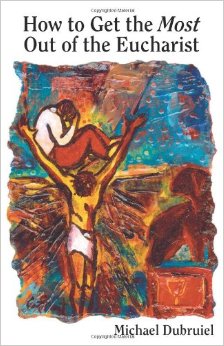
Michael Dubruiel wrote the book, How to Get the Most Out of the Eucharist.  You can read about it here. 
How to Get the Most Out of the Eucharist gives you nine concrete steps to help you join your own sacrifice to the sacrifice of Christ as you:
  • Serve: Obey the command that Jesus gave to his disciples at the first Eucharist.
  • Adore: Put aside anything that seems to rival God in importance.
  • Confess: Believe in God’s power to make up for your weaknesses.
  • Respond" Answer in gesture, word, and song in unity with the Body of Christ.
  • Incline: Listen with your whole being to the Word of God.
  • Fast: Bring your appetites and desires to the Eucharist.
  • Invite: Open yourself to an encounter with Jesus.
  • Commune: Accept the gift of Christ in the Eucharist.
  • Evangelize :Take him and share the Lord with others.
Filled with true examples, solid prayer-helps, and sound advice, How to Get the Most Out of the Eucharist shows you how to properly balance the Mass as a holy banquet with the Mass as a holy sacrifice. With its references to Scripture, quotations from the writings and prayers of the saints, and practical aids for overcoming distractions one can encounter at Mass, this book guides readers to embrace the Mass as if they were attending the Last Supper itself.

Michael Dubruiel


Michael Dubruiel and his books

Thursday, October 19, 2017

Feast of the North American Martyrs- November 19

From Michael Dubruiel, 2001


Today is the Feast of St. Isaac Jogues and North American Jesuit Martyrs. I spent one month of my life living at the Shrine of the North American Martyrs in Auriesville, NY making a 30 day retreat in 1992. A month of silence and vivid dreams on the very land where Rene Groupil, John LaLande and Isaac Jogues were martyred. The dream I remember most was being chased by someone who had a hatchet in their hand. Read about St. Isaac Jogues and you can probably figure out where that came from. - Michael Dubruiel, originally published 10/19/01


Prayer of Petition

O God, who inflamed the hearts of your blessed Martyrs with an admirable zeal for the salvation of souls, grant me, I beseech you, my petions and all the requests recommended here today, (here name your request) so that the favours obtained through their intercession may make manifest before all the power and the glory of your name. Amen.


St. Jean de Brébeuf, pray for us.
St. Isaac Jogues, pray for us.

St. Gabriel Lalemant, pray for us.

St. Antoine Daniel, pray for us.

St. Charles Garnier, pray for us.
St. Noël Chabanel, pray for us.
St. René Goupil, pray for us.

St. Jean de Lalande, pray for us.

Holy Mary, Queen of Martyrs, pray for us.

In the U.S.... National Shrine of Our Lady of Martyrs

In Canada...Martyrs' Shrine

Wednesday, October 18, 2017

Fr. Solanus Casey Beatification November 18

From 2004

Taming the Wild


Solanus had also been cultivating a patch of wild strawberries which he told the friars he was "taming."

Father Solanus: The Story of Solnus Casey O.F.M. Cap. p.174

by Michael Dubruiel


I had been making my lunch time pilgrimage for several months when I read a chapter from Cathy Odell's book on Solanus' time in Huntington. I had literally walked the fields and woods throughout but had never come across any wild strawberries. They must have perished when some of the land was plowed, I figured.


It was a beautiful sunlit day, not a cloud in the sky and very low humidity. I started out walking the perimeter of the property, as was my usual route, and began to pray the rosary. Normally this meant finishing the joyful mysteries by the time I reached the far forest where an Eagle Scout had cleared a trail through the woods. There I would begin the sorrowful mysteries reaching the Capuchin graveyard about the time I reached the third sorrowful mystery (the Crowing with Thorns) where I would prostrate in the direction of the simple wooden cross at the head of the graveyard and pray the prayer of St. Francis, "We adore thee O Christ and we praise Thee because by thy holy cross Thou hast redeemed the world." Then I would pray the third sorrowful mystery on my knees for the Friars and others buried there, at the same time asking for their intercession for my many needs.


Then I would retrace my steps backward in a slightly different path along the woods rather than through them. At about the same spot where I had discovered an apple tree left over from the orchard that Solanus had blessed, I looked down and spotted something red blooming. At first I thought they were small red flowers that had some how resisted the mowing the lawn had received recently. But on closer inspection I found wild strawberries almost ready to be harvested.


I thought of the irony of my discovery on the very day that I had first read about Solanus' "taming" of wild strawberries, then I thought of the whole aspect of "taming" the wild.


Looking over the property of what had once been a flourishing center of Catholic spirituality, I could not help but be struck by the apparent failure. What had been tamed here and once again become wild.


It struck me as an apt symbol for the state of Catholicism in the United States at the beginning of the Twenty-first century. The in-roads that the Church had made in converting and bringing Catholic Christianity to this country seemed to have reverted back to its wild state. Those who call themselves Catholic pick and choose what they believe and how they practice their faith. In many ways they mirror the environment they live in with very little to distinguish them from their non-Catholic neighbors.


Of course it also struck me that I suffered from this as much as anyone.


Picking up the wild strawberry, I saw how immature it was. No doubt Solanus' taming of the "wild" strawberries had resulted in them growing into substantial fruit that was enjoyed by the Huntington Capuchins. Now without that taming, the wild strawberry had once again returned to a small pitiful caricature of what it might have been.


Sadly this is what we also have become. Our influence in our culture is weak and we risk giving scandal to those who look to us as representatives of all that is Catholic. We are "wild" Cathlolics, in great need of being tamed by Our Lord Jesus Christ.

Sunday, October 15, 2017

October 15 - Teresa of Avila by Michael Dubruiel


From the Office of Readings:

All blessings come to us through our Lord. He will teach us, for in beholding his life we find that he is the best example.

What more do we desire from such a good friend at our side? Unlike our friends in the world, he will never abandon us when we are troubled or distressed. Blessed is the one who truly loves him and always keeps him near. Let us consider the glorious Saint Paul: it seems that no other name fell from his lips than that of Jesus, because the name of Jesus was fixed and embedded in his heart.

Once I had come to understand this truth, I carefully considered the lives of some of the saints, the great contemplatives, and found that they took no other path: Francis, Anthony of Padua, Bernard, Catherine of Siena. A person must walk along this path in freedom, placing himself in God’s hands. If God should desire to raise us to the position of one who is an intimate and shares his secrets, we ought to accept this gladly.

Whenever we think of Christ we should recall the love that led him to bestow on us so many graces and favours, and also the great love God showed in giving us in Christ a pledge of his love; for love calls for love in return. Let us strive to keep this always before our eyes and to rouse ourselves to love him. For if at some time the Lord should grant us the grace of impressing his love on our hearts, all will become easy for us and we shall accomplish great things quickly and without effort.

-Michael Dubruiel 

Saturday, October 14, 2017

October is Rosary Month

Michael Dubruiel conceived and put together the small hardbound book, Praying the Rosary.  Click on the cover for more information.
"Michael Dubruiel"
The Gospels show that the gaze of Mary varied depending upon the circumstances of life. So it will be with us. Each time we pick up the holy beads to recite the Rosary, our gaze at the mystery of Christ will differ depending on where we find ourselves at that moment.
Thereafter Mary’s gaze, ever filled with adoration and wonder, would never leave him. At times it would be a questioning look, as in the episode of the finding in the Temple: “Son, why have you treated us so?” (Lk 2:48); it would always be a penetrating gaze, one capable of deeply understanding Jesus, even to the point of perceiving his hidden feelings and anticipating his decisions, as at Cana (cf. Jn 2:5). At other times it would be a look of sorrow, especially beneath the Cross, where her vision would still be that of mother giving birth, for Mary not only shared the passion and death of her Son, she also received the new son given to her in the beloved disciple (cf. Jn 19:26-27). On the morning of Easter hers would be a gaze radiant with the joy of the Resurrection, and finally, on the day of Pentecost, a gaze afire with the outpouring of the Spirit (cf. Acts 1:14) [Rosarium Virginis Mariae, no. 10].

As we pray the Rosary, then, we join with Mary in contemplating Christ. With her, we remember Christ, we proclaim Him, we learn from Him, and, most importantly, as we raise our voices in prayer and our hearts in contemplation of the holy mysteries, this “compendium of the Gospel” itself, we are conformed to Him.
 

Friday, October 13, 2017

October 13- Miracle of the Sun

Michael Dubruiel conceived and put together the small hardbound book, Praying the Rosary.  Click on the cover for more information.

"Michael Dubruiel"


The Gospels show that the gaze of Mary varied depending upon the circumstances of life. So it will be with us. Each time we pick up the holy beads to recite the Rosary, our gaze at the mystery of Christ will differ depending on where we find ourselves at that moment.

Thereafter Mary’s gaze, ever filled with adoration and wonder, would never leave him. At times it would be a questioning look, as in the episode of the finding in the Temple: “Son, why have you treated us so?” (Lk 2:48); it would always be a penetrating gaze, one capable of deeply understanding Jesus, even to the point of perceiving his hidden feelings and anticipating his decisions, as at Cana (cf. Jn 2:5). At other times it would be a look of sorrow, especially beneath the Cross, where her vision would still be that of mother giving birth, for Mary not only shared the passion and death of her Son, she also received the new son given to her in the beloved disciple (cf. Jn 19:26-27). On the morning of Easter hers would be a gaze radiant with the joy of the Resurrection, and finally, on the day of Pentecost, a gaze afire with the outpouring of the Spirit (cf. Acts 1:14) [Rosarium Virginis Mariae, no. 10].


As we pray the Rosary, then, we join with Mary in contemplating Christ. With her, we remember Christ, we proclaim Him, we learn from Him, and, most importantly, as we raise our voices in prayer and our hearts in contemplation of the holy mysteries, this “compendium of the Gospel” itself, we are conformed to Him.


Thursday, October 12, 2017

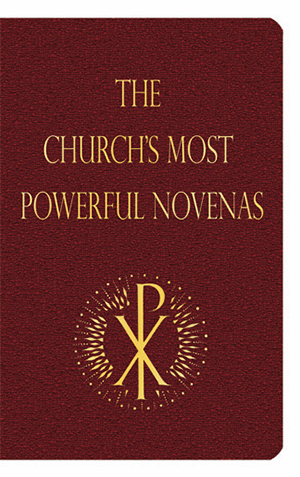
St. Teresa of Avila Novena


When Jesus ascended into heaven, he told his Apostles to stay where they were and to "wait for the gift" that the Father had promised: the Holy Spirit.  The Apostles did as the Lord commanded them. "They all joined together constantly in prayer, along with the women and Mary the mother of Jesus, and with his brothers" (Acts 1:14). Nine days passed; then, they received the gift of the Holy spirit, as had been promised. May we stay together with the church, awaiting in faith with Our Blessed Mother, as we trust entirely in God, who loves us more than we can ever know. 
 
"michael Dubruiel"

Wednesday, October 11, 2017

Michael Dubruiel Interview

You can listen to an interview program with Michael Dubruiel about the first four chapters of his book, The Power of the Cross. The interview is with Kris McGregor of KVSS radio.


Episode 2 – The Cross of Christ teaches us…

– Michael discusses:

 Day 1 – Our Mission Day
2 – To Live the Gospel Day
3 – How to Pray Day
4 – About Repentance Day
5 – How to Trust and Give Thanks Day
 6 – Reconciliation Day
7 – How to Love
"michael Dubruiel"


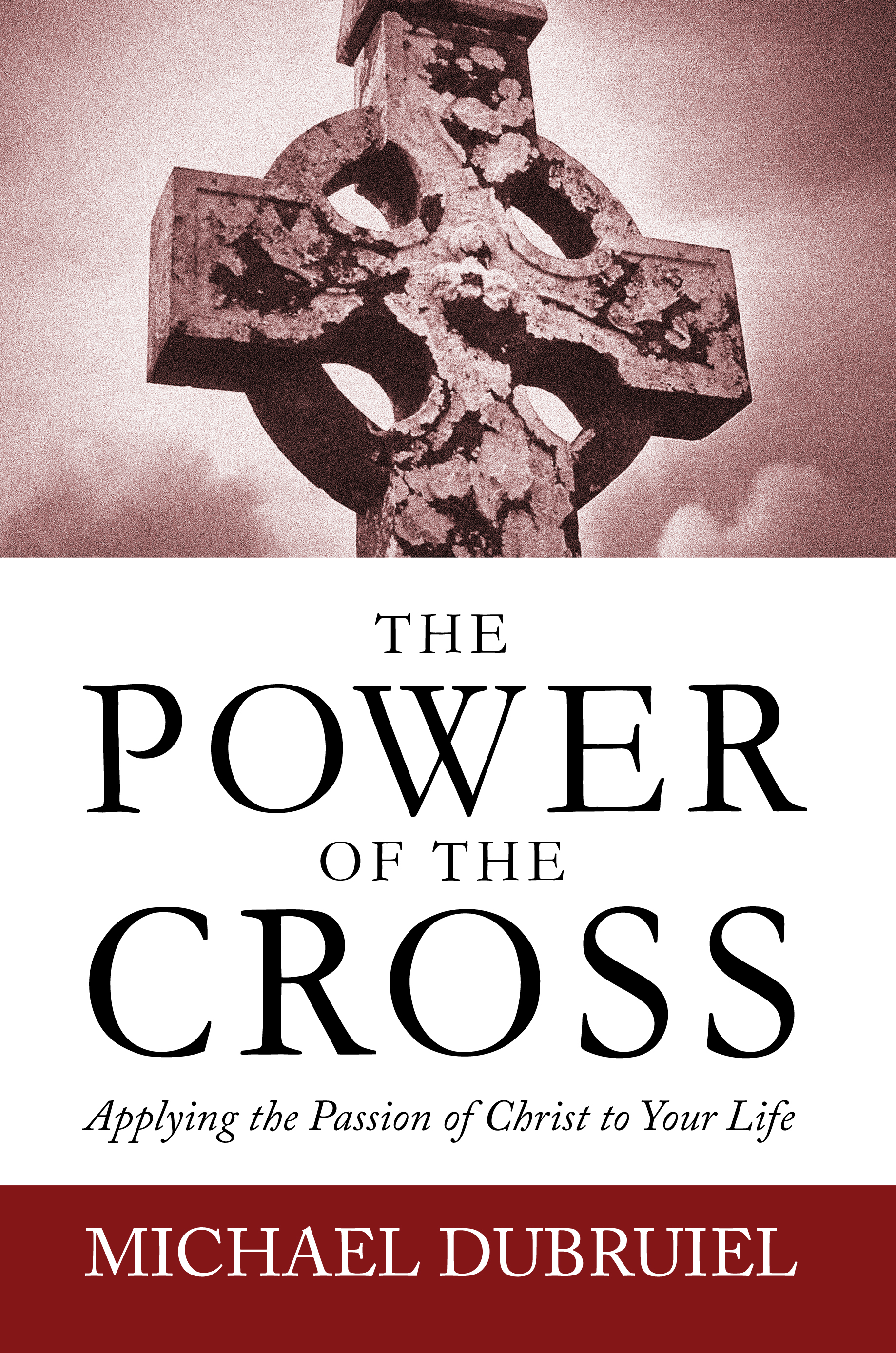
You can find out more about The Power of the Cross here, including a free download of the book. 

Tuesday, October 10, 2017

73 Steps to Communion with God - 72 - by Michael Dubruiel

This is a continuation of the 73 Steps to Communion with God by Michael Dubruiel. The previous postings are found in the archives to the right. This is the 72nd Step:


(72) To make peace with an adversary before the setting of the sun.


We should always strive to remain at peace with everyone. One wonders how different life would be if everyone were to embrace this counsel and practice it in their daily life. Would there ever be another war? Would anyone have reason to live in fear anymore?


But such is not the case and I cannot live with my focus on what others are or are not doing. I can only put this counsel into practice myself. Do I allow the sun to set without making peace with those who I'm either angry with or those who are angry with me.


I have worked with people who practice this counsel and it can be rather tiresome when they come up to you to make peace and you weren't even aware that you were at "war" with them. But in the long run it is much better to have these summits of peace than to have people around you stewing about some slight that you have committed against them.


And what of us?


Are we aware of the control that others have over us by their actions and words?


Really this is a counsel to make sure that any time God is Lord over you. When we make someone an enemy we are in danger of making them an idol that we worship and serve. They and the actions that they commit against us are not all-powerful and do not deserve the time and emotion that we often waste on them. Making peace with our adversaries means making peace with God first, asking God to empower us to forgive and acknowledging that God is the judge over all. We let go and let God be God in our lives.

Saturday, October 7, 2017

Feast of the Holy Rosary - October 7

October 7 is the feast of Our Lady of the Rosary

Michael Dubruiel conceived and put together the small hardbound book, Praying the Rosary.  I wrote the introductory material. Click on the cover for more information.

Friday, October 6, 2017

73 Steps to Communion with God by Michael Dubruiel -

This is a continuation of the 73 Steps to Communion with God by Michael DubruielThe previous steps are found in the archives. This is step 71:


71) To pray for one's enemies in the love of Christ.


"Father, forgive for they know not what they do," are the words that come to mind when we reflect on this counsel to "pray for one's enemies in the love of Christ." Jesus not only preached this counsel of Benedict's but He also left us an example of how to do it. Yet it is pretty tough to do when we start putting faces to the word enemy.


We could start by those who personally affront us and pray for them. Do we believe that they really didn't know what they were doing when they hurt us? I'll be that if you share the incident with an objective person they would offer you some insight into the ignorance that probably was at work on the other end. Perhaps our enemies are insane, misled or plain stupid and this is the evil that we live with in the world that things are not quite what they could be or should be at any given time.


Even those who are moved by greed and dispense with poisons that injure and kill thousands daily (many of whom are quite respected in our communities) should be prayed for because could anyone really know what they are doing--and still do it if it had such horrible results. One can easily look at the insanity of a Hitler or Stalin but what of those who market items that kill (feel free to fill in the blanks with all known cancer and disease causing products that one can still buy at the local convenience store).


We are to pray for these people--those who hurt us and threaten us personally and the same for those who we fear in a more global way. In doing so we also are made aware of our own ignorance and how we too are responsible for the pain and hurt we cause others.


In praying for our enemies we change them into our brothers and sisters. We recognize their frailty. We bring them back down to earth where we are. We destroy our idols (albeit idols that we fear). In the process God almighty is restored to His rightful place in our lives as the Supreme Being who should be our one concern.

Thursday, October 5, 2017

73 Steps to Spiritual Communion - 70 - by Dubruiel

This is a continuation of the 73 Steps to Spiritual Communion with God by Michael Dubruiel. The previous posts are found in the archives. This is step #70:


(70) To love the younger.


Benedict's advice to love the junior monk is a counsel that may not mean as much to us in a culture that prizes youth. There was a real danger in a culture where wisdom and age are seen as equal to see youth as foolish and of little significance.


Of course in the Gospel Jesus had told his disciples that "out of the mouths of babes" comes wisdom. The Christian realizes that there is a wisdom that comes not from years and reflection but directly from God.


The idealism of youth often carries with it a wisdom that can be lost with age. The high ideals that we both strive for and expect from others when we are young can grow into disillusion and cynicism with age. Having youth around whether at home, in the work place or in the church can greatly enhance our lives.


What is lost on modern man is this exclusion of youth from its midst. Modern people do not love "youth" meaning "others" as much as they love the idea of '"youth" for themselves.


There are many applications to this counsel for non monks. We should welcome children into our lives. We should see them as having much to offer in helping us to understand the ways of God in this life.


It should also be added that the abuse of children shows why this counsel is so important. If we see children as precious beings who must be protected and cared for, i.e. truly loved, then we will stand up and defend them whenever they come under attack from those who would use their innocence to use them sexually or damage their young souls in any way.

Wednesday, October 4, 2017

St. Francis of Assisi - October 4


St. Francis of Assisi taught his followers to reverence Christ and
his cross wherever they might find themselves. The prayer attributed
to St. Francis that begins, “Lord, make me a channel of your
peace,” was in fact not composed by St. Francis; it was misapplied
to him in a prayer book. The true prayer of St. Francis was one
he taught his friars to pray whenever they would pass a Church
or the sign of the cross made by two branches in a tree. They were
to prostrate themselves toward the church or the cross and pray,
“We adore you Christ and we praise you present here and in all
the Churches throughout the world, because by your holy cross
you have redeemed the world.”
The cross reminds us of the true Christ, the one in the
Gospels who was constantly misjudged by the religious figures
of his day. If we are not careful, he will be misjudged by us as well.
We need to worship him alone.

From The Power of the Cross , by Michael Dubruiel available as a free download by clicking the cover below:


"michael dubruiel"

Tuesday, October 3, 2017

October is Rosary Month by Michael Dubruiel

Michael Dubruiel conceived and put together the small hardbound book, Praying the Rosary.  Click on the cover for more information.

"Michael Dubruiel"


The Gospels show that the gaze of Mary varied depending upon the circumstances of life. So it will be with us. Each time we pick up the holy beads to recite the Rosary, our gaze at the mystery of Christ will differ depending on where we find ourselves at that moment.

Thereafter Mary’s gaze, ever filled with adoration and wonder, would never leave him. At times it would be a questioning look, as in the episode of the finding in the Temple: “Son, why have you treated us so?” (Lk 2:48); it would always be a penetrating gaze, one capable of deeply understanding Jesus, even to the point of perceiving his hidden feelings and anticipating his decisions, as at Cana (cf. Jn 2:5). At other times it would be a look of sorrow, especially beneath the Cross, where her vision would still be that of mother giving birth, for Mary not only shared the passion and death of her Son, she also received the new son given to her in the beloved disciple (cf. Jn 19:26-27). On the morning of Easter hers would be a gaze radiant with the joy of the Resurrection, and finally, on the day of Pentecost, a gaze afire with the outpouring of the Spirit (cf. Acts 1:14) [Rosarium Virginis Mariae, no. 10].


As we pray the Rosary, then, we join with Mary in contemplating Christ. With her, we remember Christ, we proclaim Him, we learn from Him, and, most importantly, as we raise our voices in prayer and our hearts in contemplation of the holy mysteries, this “compendium of the Gospel” itself, we are conformed to Him.


Friday, September 29, 2017

73 Steps to Spiritual Communion with God - 69 Joseph Dubruiel

This is a continuation of the 73 Steps to Spiritual Communion with God by Michael Dubruiel. The previous posts are found in the archives. This is step # 69:


(69) To honor the aged.


Life that has been lived long has acquired wisdom that can not be learned in books. The idealism of youth often finds quick solutions to problems that the person with wisdom will merely smile at. They have seen it all and have grown to appreciate what is of the utmost importance and what is trivial in a way that those of us who are still learning have not.


There is nothing more valuable in a culture than those who have been around for a long time and can provide this perspective to life. I was blessed to live near my grandparents and to enjoy their wisdom as I was growing up. There is a perspective to life that they can give that younger parents can not.


Benedict's counsel encourages us to honor the gift of life that has been bestowed upon our elders; to hold them in high esteem, to seek their counsel. To learn from them when we disagree with them.


Our culture unfortunately has not followed this counsel of late. We present youth as the ideal. Older people are made to feel that their time is past. This is a tragedy and the lasting effects are yet to manifest themselves in our culture.


Honoring anyone is a sign that we recognize the value that they possess not only to us but also to all. Honor the older people you encounter today. Take time to say hello, take time to learn from them. Allow yourself to receive their blessing.

Thursday, September 28, 2017

73 Steps to Spiritual Communion with God by Michael Dubruiel - 68

This is a continuation of the 73 Steps to Spiritual Communion with God by Michael Dubruiel. The previous steps are in the archives to the right. This is the 68th step:


(68) Not to love pride.


A direct translation of the Latin for this counsel would be to "flee" pride. Yet it would be fair to say that I think few people actually flee pride these days. There is a reason it is a vice and sadly there is nothing worst than a vice that is presented as a virtue.


"Looking out for #1" became something of a slogan starting in the 1970's and with it an explosion of the love of pride. Pride for many is no longer a sin but a sign of psychological maturity. This is sad because pride always mask a secret belief that deep down I really know that I'm not all that good and that is a tragedy!


We all can relate to a person who constantly is blowing their own horn and how tiresome this can be. But imagine for a moment that the person who is doing this is your child. I think if you asked yourself why they were doing it and tried to enter their skin you would see that sadly they really don't believe it and they are proclaiming it hoping that someone will affirm it.


Unfortunately such pride merely leads to people heaping scorn upon the individual in unsuccessful attempts to bring them back down to earth. And the sad individual becomes mired in an ever deepening pool of self-pity.


Contrast this individual with the saints. Although esteemed by others they hold themselves in low esteem. They realized their faults and they realize their gifts. Their gifts they realize are just that, presents from a God and they thank God continuously for them.


The saints are truly those who look out for #1, and they manifest this in their lives. They live in reality and know that God is number one and seek Him in the poor, in others and most of all constantly in prayer.

Wednesday, September 27, 2017

How to pray a Novena


When Jesus ascended into heaven, he told his Apostles to stay where they were and to "wait for the gift" that the Father had promised: the Holy Spirit.  The Apostles did as the Lord commanded them. "They all joined together constantly in prayer, along with the women and Mary the mother of Jesus, and with his brothers" (Acts 1:14). Nine days passed; then, they received the gift of the Holy spirit, as had been promised. May we stay together with the church, awaiting in faith with Our Blessed Mother, as we trust entirely in God, who loves us more than we can ever know. 

"michael Dubruiel"

Tuesday, September 26, 2017

73 Steps to Spiritual Communion with God by Michael Dubruiel - 67

This is a continuation of the 73 Steps to Spiritual Communion with God by Michael Dubruiel. The previous steps are found in the archives to the right. This is step 67:


(67) Not to love strife.


Another way of translating this counsel of St. Benedict's is "not to love confrontation." There is not a counsel here to avoid it, but simply not to "love" it. There are some who literally love to pick a fight; who are entertained by creating an environment of unease.


The model must be Christ who was no stranger to confrontation or as our Lord say, "bringing the sword." His attitude is one of repairing the damage that has been inflicted or is in the process of being created by others. We should love the imitation of Christ at all times and seeking to do what Christ would do in any situation, mindful that we are in Christ.


This necessarily means confronting evil wherever we encounter it. But it does not mean loving that confrontation. There comes a point and it is a fine point where good people can become evil. Critics of Christianity often point out the damage done by "good" Christians. What they are highlighting is not the work of good Christians but rather the work of evil people who have allowed their love of strife to overtake their love of Christ.


The goal is never to destroy a person but rather to seek their salvation. Christ alone can save the person, not us. We can merely point out the way, most of the time painfully risking the loss of friendship from those who prefer darkness to light. This should grieve us too and move us to prayer.


Whether we live this counsel or not can be judged by our reaction to the way we deal with confrontation in our lives. Does it give us a feeling of satisfaction or sorrow? Our Lord was moved to tears when He approached Jerusalem because they did not know the time of their visitation. Is our response the same?

Monday, September 25, 2017

73 Steps to Spiritual Communion with God 66 by Michael Dubruiel

This is a continuation of the 73 Steps to Spiritual Communion with God by Michael Dubruiel. The previous postings are available in the archives to the right. This the 66th step:


(66) Not to be jealous; not to entertain envy.


Perhaps the saddest of sins both of these arise from a failure to acknowledge and give thanks for tall the ways in which God has blessed us. Our focus is not on our own giftedness but rather on someone else. God has blessed us, and we are blessed right now. Looking at someone else as more blessed or focusing on their gifts as something that we want for ourselves is a waste of time.


This is especially true in the quest for sanctity. We do not become holy by becoming someone else. We become holy by being fully who God created us to be. Saints are as varied in their gifts as are people.


Knowing ourselves is not always self-evident. Many times everyone around us seems to know who we are better than we know ourselves. And often we know others better too and are able to admire the gifts that others possess more than the ones that we do ourselves. This is the crux of the problem.


Jealousy and envy should be treated in the same way we would treat a rash on our body--as an indication of a problem. The answer to jealousy and envy is to thank God also for the gifts that He has given to others. We need to look upon others not as a threat but as a blessing.


We need to thank God for the gifts that he has given us. Like the steward who took the gifts left with him by the master and multiplied them a hundredfold we need to focus on what God has given us and how it might benefit others. Our one goal should be that we use our gifts in accordance with His will.

Sunday, September 24, 2017

Questions from Returning Catholics

Perhaps you know someone who came back to Mass at Christmas and has some questions.  The How to Book of the Mass  by Michael Dubruiel would be a great gift for them.


Michael Dubruiel
The How-To Book of the Mass by Michael Dubruiel is the only book that not only provides the who, what, where, when, and why of themost time-honored tradition of the Catholic Church but also the how.
In this complete guide you get:
  • step-by-step guidelines to walk you through the Mass
  • the Biblical roots of the various parts of the Mass and the very prayers themselves
  • helpful hints and insights from the Tradition of the Church
  • aids in overcoming distractions at Mass
  • ways to make every Mass a way to grow in your relationship with Jesus
If you want to learn what the Mass means to a truly Catholic life—and share this practice with others—you can’t be without The How-To Book of the Mass. Discover how to:
  • Bless yourself
  • Make the Sign of the Cross
  • Genuflect
  • Pray before Mass
  • Join in Singing the Opening Hymn
  • Be penitential
  • Listen to the Scriptures
  • Hear a Great Homily Everytime
  • Intercede for others
  • Be a Good Steward
  • Give Thanks to God
  • Give the Sign of Peace
  • Receive the Eucharist
  • Receive a Blessing
  • Evangelize Others
  • Get something Out of Every Mass You Attend
"Is this not the same movement as the Paschal meal of the risen Jesus with his disciples? Walking with them he explained the Scriptures to them; sitting with them at table 'he took bread, blessed and broke it, and gave it to them."1347, Catechism of the Catholic Church
Find more about The How to Book of the Mass here.

Saturday, September 23, 2017

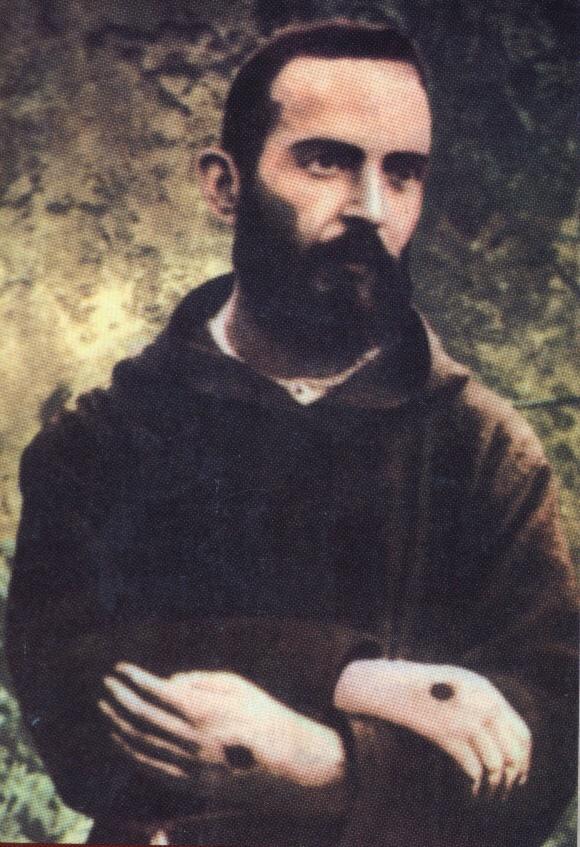
Padre Pio - September 23 by Michael Dubruiel


Padre Pio...

From the Canonization Homily by Pope John Paul II:

"But may I never boast except in the cross of Our Lord Jesus Christ" (Gal 6,14).

Is it not, precisely, the "glory of the Cross" that shines above all in Padre Pio? How timely is the spirituality of the Cross lived by the humble Capuchin of Pietrelcina. Our time needs to rediscover the value of the Cross in order to open the heart to hope.

Throughout his life, he always sought greater conformity with the Crucified, since he was very conscious of having been called to collaborate in a special way in the work of redemption. His holiness cannot be understood without this constant reference to the Cross.

In God's plan, the Cross constitutes the true instrument of salvation for the whole of humanity and the way clearly offered by the Lord to those who wish to follow him (cf. Mk 16,24). The Holy Franciscan of the Gargano understood this well, when on the Feast of the Assumption in 1914, he wrote: "In order to succeed in reaching our ultimate end we must follow the divine Head, who does not wish to lead the chosen soul on any way other than the one he followed; by that, I say, of abnegation and the Cross" (Epistolario II, p. 155).

-Michael Dubruiel 

Friday, September 22, 2017

73 Steps to Spiritual Communion with God 65 by Michael Dubruiel

This is a continuation of the 73 Steps to Spiritual Communion with God by Michael Dubruiel. The previous entries are found in the archive to the right.


(65) To hate no one.


Christianity introduced a radical concept into the world that has seldom been lived out--to love everyone as God loves him or her. Our Lord counseled his disciples to "love their enemies" and to "love one's neighbor." When asked by one of His hearers who their neighbor was, Jesus used the example of what undoubtedly would have been the questioners idea of an enemy--a Samaritan as the good who was "neighbor" to the unfortunate fallen soul along the roadside.


Benedict's maxim almost takes this a step further in counseling us in the first place to "hate no one." This may seem impossible to do but only if we are convinced that we ourselves have been set up as the supreme judge over all people. Every person that we might "hate" is an invitation for us to turn to God again and to acknowledge that God alone knows what His designs have for both the person and us in question.


We should pray for those who abuse and mistreat us. We are to try to understand those who "hate" us. Hatred by its very nature is evil.


The example that usually drives the point home is to imagine that the person in question is your child. Could you hate your own flesh? Would you not wish for their salvation? If they are doing wrong would you not do everything in your power to help them to do right so that they might be saved?


In the Kingdom of God we are all brothers and sisters, God's children.


The genius of St. Benedict's counsel is that it does not play the game of saying that you can love someone but not like them--which I have always found rather ridiculous. We are to hate no one and to see "hate" as an obstacle to love.

Thursday, September 21, 2017

Free Catholic Book

What will we say when the messengers of Our Lord come to us
and tell us that the time is at hand, and the Lord wishes for us
to prepare for his Passover? Will we open the door of our hearts
and welcome him?
Maria Montessori, founder of the Montessori method of
learning, wrote a book in the early twentieth century about the
Mass for Children. She began by describing the inside of a
church: candles lit, altar cloths set on the altar. Something very
special must be about to take place here, she said. Just as the disciples
prepared for the Passover, the Last Supper of the Lord, so
we must prepare to welcome the Savior before we approach his
banquet.
Being prepared for Mass is essential to the disciple and follower
of Jesus Christ who wishes to be enriched with his teaching
and be fed with his Body and Blood. St. Paul’s admonition
to examine ourselves is paramount if we are not to eat and drink
judgment upon ourselves—but rather partake in the Way, the
Truth, and the Life.

From The Power of the Cross by Michael Dubruiel , available as a free download by clicking the cover below:


"michael dubruiel"

Wednesday, September 20, 2017

73 Steps to Spiritual Communion with God - 64

This is a continuation of the 73 Steps to Spiritual Communion with God by Michael DubruielThe previous entries are found in the archive to the right.


(64) To love chastity.


St. Benedict's counsel to "love" chastity applies to every Christian regardless of their state of life. The monk will be chaste in a way that is different than a married person but both are required to be chaste in their dealings with all people. Chastity is an attitude toward the other that sees the beauty of the person but does not wish to take or consume the other.


Being chaste means never making an object of anyone. While we think of this in sexual terms, sex is really just the tip of the iceberg. Seeing a person as a person and not making an object of them helps us to truly be reverent toward the person. Being chaste means being open to seeing others as God sees them. We desire to be in a good relationship with all people but we do not seek to enslave the other.


Some were shocked some years ago when Pope John Paul II stated that even a married man could commit a sin of lust with his own wife. What the Pope was pointing out was that even marriage does not give a man or woman the license to treat the their spouse like their property. In the same way we are called to treat all with respect.


In Latin this counsel is made up of two words, "love" and "chastity." In reality the two are equal. We are called to love all people chastely, in imitation of God who loves all of His creation.

Tuesday, September 19, 2017

St. Januarius - September 19 by Michael Dubruiel

Feast of St. Januarius


A sealed glass vial containing a dark unknown substance, allegedly the clotted blood of San Gennaro (St Januarius), is shown several times a year to a packed crowd in the Cathedral of Napoli (Naples). Whilst the container is being handled during a solemn ceremony, the solid mass suddenly liquefies before everybody's eyes. [1, 2]


This well-documented phenomenon is still regarded as unexplained [3] by believers and sceptics alike. Noted parapsychologist Hans Bender defined it the paranormal phenomenon with the best and historical documentation; [4] physicist Enrico Fermi seems to have expressed interest as well.


It is also one of the few recurrent non-medical, physical "miracles" that might be studied scientifically.


Above from CICAP, the Italian Committee for the Investigation of Claims on the Paranormal

-Michael Dubruiel


Monday, September 18, 2017

73 Steps to Communion with God by Michael Dubruiel - 63


This is a continuation of the 73 Steps to Communion with God by Michael Dubruiel. The previous steps appear throughout the Archives, available to the right. This is the 63rd step:


(63) To fulfil daily the commandments of God by works.


Most of us think of the commandments as "something" not to do, but this is not Benedict's take. He sees them as something that requires action on our part daily. The type of action required is either to "fight" against the urges that keep us from fulfilling God's commands or to "flee" the devil as we run toward God.


Fighting or fleeing are the actions demanded of the disciple of Christ. Most of us may find that we are moved to do neither. It could be that in our complacent lifestyle that following God's commandments doesn't seem to ask much of us. We peer out of the windows of our house or car and see the world outside of our selves and are quite unmoved by the plight of those who live down the street or in another neighborhood. We somehow listen to the Gospels and confuse Jesus with someone who "didn't care" and wouldn't have lifted a finger to help anyone.


If this definition hits close to home, then you know what you must "fight" in order to fulfill God's commands daily--indifference. If on the other hand this definition makes you angry and you don't like the mean guy saying that perhaps you aren't a "good" Christian after all, then you need to flee the devil who has taken hold of your life (coming no doubt as an angel of light) and run to God who will empower you to fulfill His commands.


This counsel is against complacency. It is against thinking that we have ever arrived and now all we need to do is sit back and relax. It is a warning against the riches that can blind us to the truth of the Gospel which can neither be lost by the gnawing of a moth or the rot of rust. Works are demanded of us daily in order that God's will might be done on earth as it is in Heaven.

Friday, September 15, 2017

Our Lady of Sorrows - September 15 Dubruiel

In northern Ohio there is a church dedicated to Our Lady
of Sorrows; in the basement is a room containing signs of
weakness that have been left behind by those who have experienced
the power of God at that shrine. Among whiskey bottles,
cigarettes, crutches, and leg braces is a mat that once
carried a paralyzed man there—who left empowered by God
to walk again.

I suspect that the most powerful stories of healing, however,
come from those who were unable to leave anything behind.
Their weakness, whatever it was, remained with them; however,
they had been empowered to carry their weakness in the power
of God. This type of healing often goes unnoticed. Even so, it is
the greater healing, because it enables us to share in the cross of
Christ, to embrace our weakness in the power of God. For the
follower of Christ, weakness need not mean defeat!


-The Power of the Cross by Michael Dubruiel
"michael dubruiel"

Thursday, September 14, 2017

Exaltation of the Holy Cross - September 14 Dubruiel

Michael Dubruiel

Here's a link to a page with a free download of Michael Dubruiel's book The Power of the Cross.

It's in .pdf format.

Also on the page is a link to a series of interviews Michael did with Catholic radio station KVSS on the book.

St. Francis of Assisi taught his followers to reverence Christ and
his cross wherever they might find themselves. The prayer attributed
to St. Francis that begins, “Lord, make me a channel of your
peace,” was in fact not composed by St. Francis; it was misapplied
to him in a prayer book. The true prayer of St. Francis was one
he taught his friars to pray whenever they would pass a Church
or the sign of the cross made by two branches in a tree. They were
to prostrate themselves toward the church or the cross and pray,
“We adore you Christ and we praise you present here and in all
the Churches throughout the world, because by your holy cross
you have redeemed the world.”

The cross reminds us of the true Christ, the one in the
Gospels who was constantly misjudged by the religious figures
of his day. If we are not careful, he will be misjudged by us as well.
We need to worship him alone.

Monday, September 11, 2017

73 Steps to Communion with God - 62 by Michael Dubruiel

This is a continuation of the 73 Steps to Communion with God by Michael DubruielThe previous steps appear throughout the Archives, available to the right. This is the 62nd step:


(62) Not to desire to be called holy before one is; but to be holy first, that one may be truly so called.


Holiness comes from God's grace. One's desire should be to be in a good relationship with God and not to be well thought of by others. In fact Our Lord declared that "Blessed are you when men revile you and persecute you and utter all kinds of evil against you falsely on my account," Matthew 5:11. It would matter little then, if people thought of us as vile and pagan if that were not the truth.


There was a group of holy men in Russia who sought to live this out quite literally, to no avail. They are know as the "holy fools of Russia" and would do everything humanly possible to be thought of us vile and "unholy" to the point of publicly fornicating with prostitutes, walking naked through the public squares and uttering every kind of vulgarity loudly. But the populace knew that this was all so that they would not be well thought of and so they revered them anyway!


We do not have to go to such lengths to avoid being well thought of by others but we shouldn't lose the point of their witness--that holiness is something to be rather than something that others think we are. Holiness is not an act but rather is the result of a relationship with God. Our motivation should always be to seek the Kingdom of God in our lives first and sometimes that will lead to others thinking poorly of us. But Jesus tells us that we are blessed and that is what matters.


The civil rights leaders of the late 1950's and early 1960's were religious people. They were motivated by their belief in God to reject the way black people were being treated in this country. They sang praise to God as they marched in front of State Capitals, sat at lunch counters or entered school buildings. Other so-called "Christians" reviled them declaring them to be atheists, troublemakers and Communists. But they were blessed and now we look upon them as saints and martyrs.


When we are gone from this earth, then we hope people will think of us as holy.

Sunday, September 10, 2017

73 Steps to Communion with God 61 Michael Dubruiel

This is a continuation of the 73 Steps to Communion with God by Michael Dubruiel. The previous steps appear throughout the Archives, available to the left. This is the 61st step:


(61) To obey the commands of the Abbot in all things, even though he himself (which Heaven forbid) act otherwise, mindful of that precept of the Lord: "What they say, do ye; what they do, do ye not" (Mt 23:3).


The Abbot is the head of the monastery, and even though you and I may not be in a monastery we all have human authorities that we should respect and obey. Like the previous counsel where St. Benedict taught us to hate our own will, here we are taught to obey those whom God has placed over us even if the person in authority isn't the most God-like person.


Benedict quotes Our Lord injunction to obey the Pharisees who He says sat in the seat of Moses. A quick survey of the Gospels will find that Jesus often condemned the behavior of the Pharisees but in this passage says that they should be obeyed anyway because God had put them in their positions of authority.


We also have the example of Our Lord's journey to the cross where He is handed over by the High Priests and then made subject to Pilate. He tells Pilate that Pilate has no authority over Him unless it were given from above from God. So Our Lord accepts Pilate's authority to put Him to death.


This way of looking at authority should lead us to pray for those who God has placed over us that they too will seek to do God's will. The person who truly believes in God will trust that even a corrupt authority will unwittingly do the will of God. The Scriptures are filled with examples of evil kings doing the will of God even though they were unaware of it and might have had evil motives at the time.


The example of Joseph in Genesis, sold into slavery by his brothers who later bow before him imploring his mercy stands as the premier example of this trust that we all should have that God works through whoever He wills. Joseph faced with his brothers says, "what you did to me you meant for evil but God meant it for good to bring about the salvation of many."


Being obedient but without following the example of bad authority allows us to worship God alone.

Saturday, September 9, 2017

73 Steps to Communion with God 60 Joseph Dubruiel

This is a continuation of the 73 Steps to Communion with God by Michael DubruielThe previous steps appear throughout the Archives, available to the left. This is the 60th step:


(60) To hate one's own will:


Someone who seeks to be in communion with God has to learn to subject themselves entirely to God's will. Jesus who was the Son of God still prayed in His humanity that "not his will be done but the Father's." We all have "our way" of looking at life and "our way" of doing things and the Scriptures are quite clear that "our way is not God's way."


We all suffer because we believe that happiness lies in fulfilling our will. But if we have the gift to reflect on our past, we quickly come to the realization that much of what we "will" does not bring us happiness and in fact is quite fleeting and arbitrary--changing with the wind.


To fight "our will" does not mean going off into another direction but rather facing reality. Our "will" often pulls us away from what most needs our attention. We often will to be somewhere other than where we are, to be doing something other than what needs to be done and to be with someone other than the one we are with at the present moment. These are exactly the moments when we are to "hate" our own will and seek to do the will of God.


God had placed us where we are right at this very moment. He has also placed us in a situation that demands our attention at this moment. The person who is before us has been placed there by God. Being attentive to all that God has placed in our midst will bring a contentment that we will never find if we are constantly seeking to flee from the cross.

Friday, September 8, 2017

Nativity of Mary - Pray the RosaryNativity of Mary - Pray the Rosary

Michael Dubruiel conceived and put together the small hardbound book, Praying the Rosary.  Click on the cover for more information.

"Michael Dubruiel"


The Gospels show that the gaze of Mary varied depending upon the circumstances of life. So it will be with us. Each time we pick up the holy beads to recite the Rosary, our gaze at the mystery of Christ will differ depending on where we find ourselves at that moment.

Thereafter Mary’s gaze, ever filled with adoration and wonder, would never leave him. At times it would be a questioning look, as in the episode of the finding in the Temple: “Son, why have you treated us so?” (Lk 2:48); it would always be a penetrating gaze, one capable of deeply understanding Jesus, even to the point of perceiving his hidden feelings and anticipating his decisions, as at Cana (cf. Jn 2:5). At other times it would be a look of sorrow, especially beneath the Cross, where her vision would still be that of mother giving birth, for Mary not only shared the passion and death of her Son, she also received the new son given to her in the beloved disciple (cf. Jn 19:26-27). On the morning of Easter hers would be a gaze radiant with the joy of the Resurrection, and finally, on the day of Pentecost, a gaze afire with the outpouring of the Spirit (cf. Acts 1:14) [Rosarium Virginis Mariae, no. 10].


As we pray the Rosary, then, we join with Mary in contemplating Christ. With her, we remember Christ, we proclaim Him, we learn from Him, and, most importantly, as we raise our voices in prayer and our hearts in contemplation of the holy mysteries, this “compendium of the Gospel” itself, we are conformed to Him.